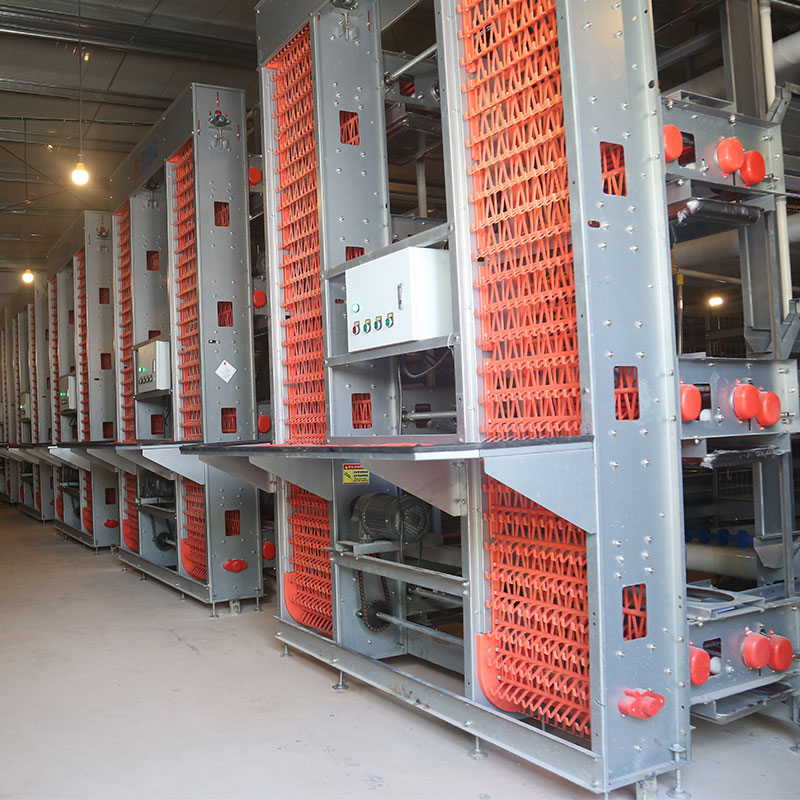
Forget the outdated image of cramped, wirefloored coops. The world of poultry farming is undergoing a quiet revolution, driven by animal welfare concerns, technological innovation, and a demand for sustainable food production. Modern chicken cages, or more accurately, modern poultry housing systems, represent this shift. They are engineered environments designed to balance hen health, farm efficiency, and egg quality. Whether you're a commercial producer scaling up operations or a serious backyard enthusiast seeking the best for your flock, understanding these systems is crucial.
This guide delves deep into the evolution, types, benefits, and key considerations of contemporary chicken housing. We'll move beyond simplistic definitions to explore the engineering and ethology (animal behavior) behind creating a space where chickens can thrive.
The traditional battery cage, defined by its small size and barren wire environment, has become increasingly regulated and phased out across many regions due to profound animal welfare criticisms. The modern chicken cage system is a direct response to this. The driving forces are:
Animal Welfare Legislation: Laws in the EU, UK, several U.S. states, and others mandate more space per bird, enrichments, and specific design features.
Consumer Demand: Shoppers actively seek eggs labeled "cagefree," "freerange," or "enriched colony."
Farm Efficiency & Biosecurity: Modern systems aim to improve bird health (lowering mortality and medication use) while automating feeding, watering, and egg collection.
Sustainability Goals: Better manure management and resource use are built into new designs.
It's more accurate to discuss housing systems rather than just "cages." Here are the predominant modern setups:
This is the most direct evolution of the traditional cage. Enriched colonies provide significantly more space per hen than old battery cages and are legally required to include:
Perches: For roosting, a natural chicken behavior.
Nesting Areas: Private, darkened spaces for laying eggs.
Scratching Areas/Substrate: Often astroturf or matting that allows foraging and dustbathing behaviors.
Claw Shorteners: To prevent overgrown claws.
They offer a controlled environment with automated systems while addressing key behavioral needs.
In these systems, hens roam freely within a large barn or building. They are not kept in cages but have access to multiple vertical levels.
Key Features: Includes litter floors for scratching/dustbathing, perches at various heights, private nest boxes on walls, and automated resources on different tiers.
Advantages: Allows for full expression of natural behaviors like flying short distances, foraging, and social interaction.
Considerations: Requires excellent management to control litter quality, prevent floor eggs (eggs laid outside nests), and manage flock dynamics.
These systems combine indoor aviarystyle housing with regulated outdoor access.
Certification Standards: Terms like "freerange" often have legal definitions (e.g., minimum outdoor space/hen).
Benefits: Maximum behavioral freedom; often perceived as the most natural by consumers.
Operational Challenges: Higher land use need; increased risk from predators and weather; potential for variable egg production.
A hybrid approach gaining popularity in Europe. Hens are housed in an enriched colony system that includes a small private nest and perch but features large popholes that open during the day onto a littered scratch area or veranda. This gives birds choice: security of a defined space or access to a more open area.
A modern system is defined by its features:
| Component | Traditional Cage | Modern System Evolution |
| : | : | : |
| Space Allowance | Often < 67 sq in/hen | Legally 116144+ sq in/hen (Enriched) or unlimited (aviary) |
| Environmental Control | Basic ventilation | Computercontrolled climate (temp., humidity, ammonia levels) |
| Feeding/Watering | Trough lines | Nipple drinkers with catchcups; precise chain/belt feeders |
| Egg Collection | Manual or basic belts | Gentle conveyor belts moving eggs directly to packing room |
| Manure Management | Deeppit below cages | Drying belts/tunnels beneath tiers reducing ammonia & allowing easier removal |
| Lighting | Fixed schedules | Programmable LED lighting simulating dawn/dusk for welfare |
Advanced Tech Integrations:
IoT Sensors: Monitor temperature, humidity, water consumption in realtime.
Robotics: Some farms deploy robots that roam barns gently herding birds from litter areas at night (to reduce floor eggs) or monitoring flock health via cameras/thermal imaging.
Selecting the right system isn't onesizefitsall. Consider this matrix:
1. Flock Size & Scale: A backyard flock of 30 hens has vastly different needs than a commercial farm with 30K hens.
2. Primary Goal: Are you optimizing for highvolume egg production? Premium welfare marketing? Or personal sustainability?
3. Labor & Management Expertise: Cagefree systems require more skilled daily management than highly automated enriched colonies.
4. Initial Investment vs Operational Cost: Enriched colony cages have high upfront costs but can lower labor costs later. Pasture systems may have lower infrastructure costs but higher daily labor inputs.
5. Market Access & Regulations: What do your buyers want? What does your local legislation require? Compliance is nonnegotiable.
The trajectory points toward systems that prioritize behavioral outcomes. Future innovations may focus on:
Further precision livestock farming using AI for individual bird health tracking.
Designs based entirely on "positive welfare" indicators—ensuring opportunities for comfort, play,and choice rather than just preventing suffering.
The term "cage" itself may fade away,in favor of "welfareoptimized housing environment."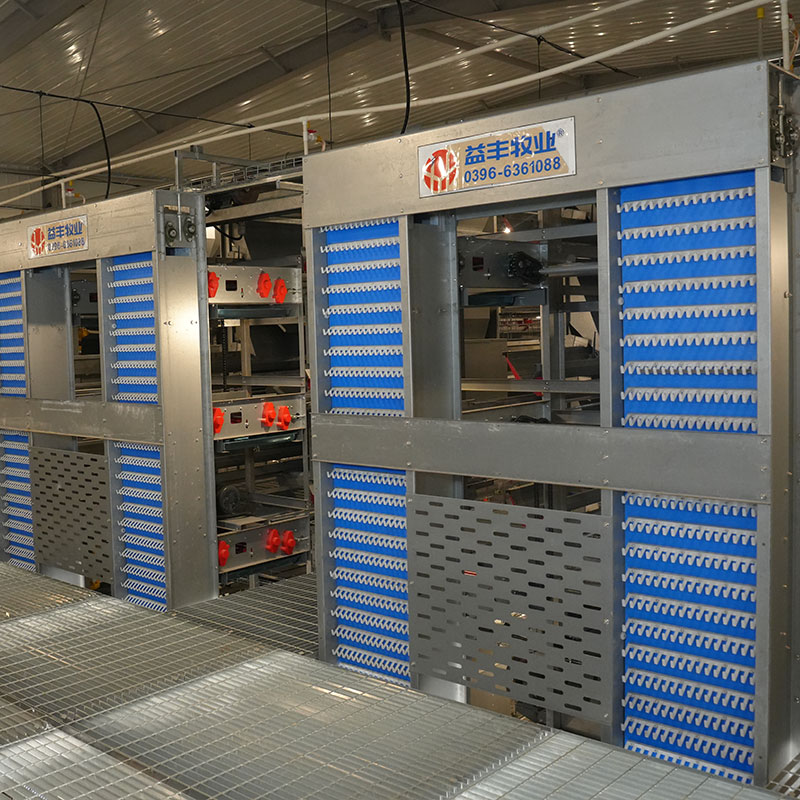
Modern chicken cages represent not just new equipment,but a new philosophy in poultry care.They are complex tools designed to meet the biologicaland behavioral needs of the chicken while ensuring farm viability.From enriched colonies providinga controlled upgrade to vast aviaries enabling flight,the core principle is choiceand speciesspecific design.For anyone involved inpoultry,the imperative is clear:invest timein understanding these systems.The right choice leads to healthier birds,sustainable operations,and products that meetthe ethical standardsof our time.
Q1: What exactly is meant by a "modern chicken cage"?
A modern chicken cage typically refers to an Enriched Colony System.It provides more space per hen than old battery cagesand includes legally mandated enrichments like perches,nesting areas,and scratching pads.It representsa significant stepup in animal welfare withina housed system.
Q2: Are modern cage systems considered humane?
Humane certification depends on the specific systemand certifying body(e.g.,Humane Farm Animal Care).Enriched colonies address major criticisms of battery cagesby allowing natural behaviors.Cagefree avariessystemsare generally seen as offering higher welfare standards.Most industry experts agree modernsystemsare vastlymore humane than their predecessors.
Q3: What's the difference between "cagefree"and "freerange"?
"Cagefree"means hens live indoorsin an open barnor aviarywith no cagesbut they do not necessarilyhave outdoor access."Freerange"requires(certified)cagefree indoor housingplus meaningfuloutdoor accessfor at least partof their life.Regulationsvaryby country.
Q4: How much space doesa hen getin an enriched colony cage?
Space requirements varyby jurisdiction.In the EU,the minimumis750 cm²per hen(about116 square inches),plusa nestareaand scratching area.U.S.stateswith lawslike California(Prop12)require144 square inchesper henin enrichedsystems.
Q5: Do chickensin modern cagelikesystems get sunlight?
In fully indoor systems(enriched colonies,barn aviaries),lightis providedvia programmedLED lightingthat can mimic natural cycles.Sunlight exposure typically only occursin freerangeor pasturebasedsystems.Designs with"verandas"(covered outdoor spacesattachedto barns)offer some environmentalvariationwithout full pastureaccess.
Q6: How does egg quality compare between modern cagedand cagefree systems?
Egg safety(like Salmonella risk)and internal quality(yolk color,firmness)can be managed wellin all systemswith proper management.Shell strengthmay be slightlyhigherin cagedsystems due toreduced activity.Eggsfrom freerangesystemsoften have darker yolksdue todietarycarotenoidsfrom forage.Consumer perceptionof qualityoften linksdirectlyto perceivedwelfareofthe system.
Q7: What isthe biggest challengein managinga cagefree aviarysystem?
Two major challengesare managinglitter quality(to preventammonia buildupand disease)and minimizing"floor eggs"—eggslaidonthe barn floorinsteadof innest boxes.This requires skilledstockmanship,trained pullets,and sometimesroboticassistanceto gentlymovebirdsat night.
Q8: Are modern automatedsystems expensivefor small farmers?
Yes,the capitalinvestmentfor commercialscaleenrichedor aviarysystemsis veryhigh,makingit challengingforsmaller farmersto upgradewithout financialassistance.Many optfor smallerscaleversionsor modifiedbarn designs.For backyardflocks,many prebuiltcoopdesignsnow incorporatewelfare enrichmentslike variedperchesand private nestsat amuch smaller scale.
Q9: How does manure management workina multitier modern system?
Advancedsystemsuse manure beltsunder each tier.The beltsrun periodicallyto move droppingsinto adrying tunnelor centralcollection point.This dramaticallyreducesammonia emissionsinside the houseimprovesair qualityfor birdsand workers,and createsdryer,easiertohandlefertilizerproduct.
Q10:What happensif apower failureoccursina fully automatedmodern house?
Backup powergeneratorsare absolutelycritical.Barns relyon ventilationfor temperaturecontrol airquality.If powerfailsfans stoptemperaturescan soar rapidlyleadingto massivestock loss.Generatorsmust kickin automaticallywithin minutes.
Q11:Dochickensin enrichedcolonies exhibit fewer stress behaviorsthan thosein battery cages?
Yesresearch consistentlyshows reductionsinstereotypicbehaviorslike feather peckingwhenhenshave accessto key enrichmentsparticularlynestingareas.Perchesallowfor normalroostingwhich reducesfoot problemsand stress.
Q12:Isworld movingtowards completelycagefreefuture?
Consumer trendslegislationcertainlypointtoward reducedrelianceon any cagedsystemHowever enrichedcoloniesremain importantpartofthe landscapeespeciallyin regionswhere landclimateor biosecurityconcerns makefull indooroutdooraccess challenging.The futurelikelyholds diversityof highwelfaresystems tailoredtodifferent contextsnot one single solution.
1. Drinking system include the water pipes, water pressure adjuster, drinking nipples, Waterline front-end device, dosing system etc, choose them according to customer's needs.
2. High-quality water drinking pipes, pressure regulating valves and water drinking nipples can effectively prevent the water leakage. Drinking system adopt the closed piping system, which can minimize the water pollution.
3. 360-degree drinking nipples provide adequate drinking water for poultry at all stages.
4. The automatic drinking water system mainly adopts the steel ball drinking nipple. lt uses imported high-grad stainless steel, POM resin, and APS engineering material, which is wearing resistant, and the durability can be used for long time.



1. Automatic feeding machine can be chosen between gantry and ladder feeding machine. Gantry type feeding machine is a relatively economical and practical machine with simple operation, remote control walking character, easy to manage.
2. Mechanical transmission device running smoothly, low noise, long service life.
3. With the use of automatic control, the feeding system can adjust the amount of material.
4. Feeding with arched structure, high carrying capacity, not easily deformed.
5. Saving man power, saving feed, greatly improving the efficiency of Large-scale farming.
6. The walking speed of gantry feeding machine is 9--12 m/min.




1. Manure removing system included scraper type and conveyor belt type, Which can reduce the labor intensity and labor cost, keep the chicken shed dry and clean.
2. A type chicken cage can use scraper type or conveyor belt type.


3. The scraper type is suitable for A type cages, which can clean two or three rows. For the starters, this type is a good choice. lt can not only save some labor cost, but also save some investment in the whole project. The cleaning speed is 6-10 meters per minute.
4. Conveyor belt type is more suitable for large scale farming. The manure removing belt we use is high quality PP material (polypropylene). The walking speed is 2-4 meters per minute.



High Quality Pellets Made by Mobile Pellet Machine
1. It has professional designed angle of the blade. After the dynamic balance test one by one, the blade can operate smoothly.
2. The air volume is consistent in the whole life of the fan. Bearings has advantage of high strength, low noise, durable and so on.
1. The cooling pads uses high-quality wet curtain paper and adopts space cross-linking technology, which has the advantages of high water absorption, high water resistance, anti-toxicity and long service life.
2. The cooling efficiency is over 80%, without surfactant, natural water absorption, fast diffusion speed and long-lasting effect.
3. The product does not contain phenol and other chemical substances that are easy to cause skin allergies. It is non-toxic and harmless to the human body and chicken when installed and used. It is green, safe, energy-saving, environmentally friendly, economical, and easy to install.
4. The frame aluminum alloy has high strength, good corrosion resistance, durability and beautiful appearance.
5. Use a special filter for the cooling pad at the upper water to ensure clean water quality and support efficient water circulation components.
6. Combined with a negative pressure fan, it can effectively lower the indoor temperature.
The window is made of special selected high-quality engineering plastic, with high strength and long service life, together with superior anti-aging and anti-UV performance.
Function: Ventilation of the chicken house, usually used in the winter.
This system can adjust the wind speed and direction, thus the cold air will not reach chicken directly , which can effectively prevent the phenomenon of cold stress in chicken.
Environmental control system equipment is suitable for large-scale and intensive farming. According to customer requirements, we can provide various types of smart poultry equipment.
1. Our poultry management system is a modular system that manages all aspects of the chicken house, such as climate, temperature, humidity, ammonia, feeding, feed weighing, lighting and ventilation systems, and can monitor the situation of the chicken house in real time through a computer and mobile phone.
2. The management computer is the heart of the poultry farm, allowing you to easily monitor the entire poultry farm.

 WeChat:+8617838608255