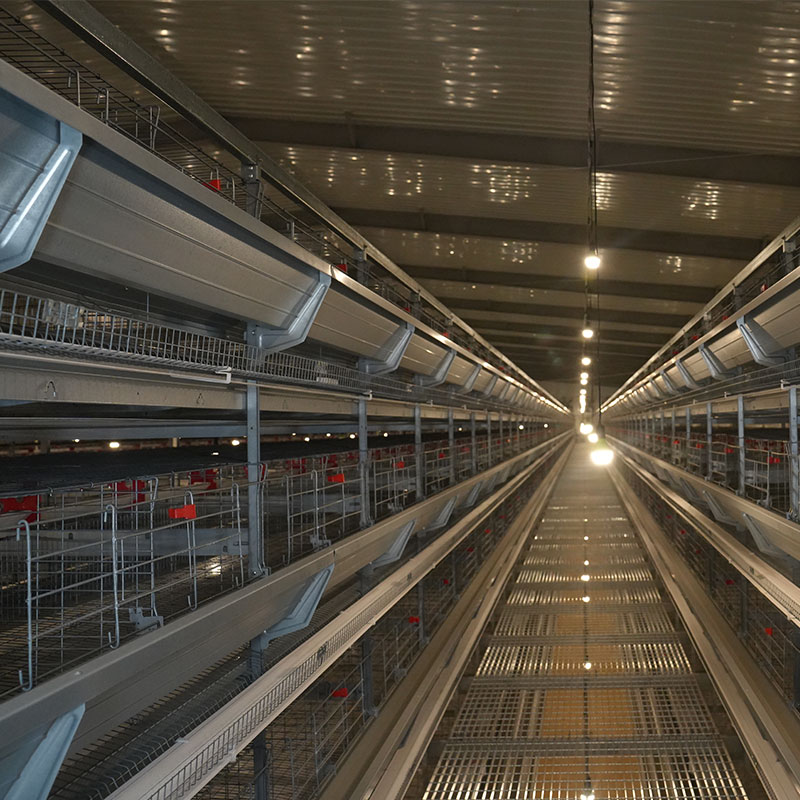
Modern Chicken Cage Systems: A Practical Guide for Poultry Farmers
Poultry farming has evolved significantly over the years, and one of the most impactful advancements is the adoption of modern chicken cage systems. These systems optimize space, improve bird health, and streamline farm operations. For farmers looking to maximize productivity while maintaining animal welfare, understanding the features and benefits of modern cages is essential.
Why Modern Cage Systems Matter
Traditional free-range and battery cage systems have limitations—space inefficiency, higher labor costs, and increased disease risks. Modern cage designs address these challenges by incorporating durable materials, automated feeding, and waste management solutions. Farmers using these systems report better flock uniformity, reduced mortality, and higher egg production.
Features of Modern Chicken Cages
1. Modular Design
Modern cages are built in stackable tiers, allowing farmers to house more birds without expanding floor space. A three-tier system, for example, can triple capacity compared to single-layer setups. The modular structure also makes it easier to isolate sick birds or manage different age groups separately.
2. Automated Feeding and Watering
Manual feeding is time-consuming and inconsistent. Modern cages integrate nipple drinkers and conveyor-based feed systems that deliver precise portions. When a bird pecks at a nipple, water is released, reducing spillage and keeping litter dry. Feed conveyors run on timers, ensuring all birds receive equal nutrition without human intervention.
3. Sloped Flooring for Egg Collection
Instead of eggs rolling onto a shared tray, modern cages use gently sloped wire floors that guide eggs onto a collection belt. This minimizes breakage and keeps eggs clean. In larger operations, the belts transport eggs directly to a grading room, cutting labor costs.
4. Manure Management Systems
Accumulated waste leads to ammonia buildup and respiratory issues. Modern designs include scrapers or belts beneath cages that remove droppings daily. Some systems dry manure quickly, reducing odor and making it easier to compost or sell as fertilizer.
5. Ventilation and Climate Control
Poor airflow increases heat stress and disease spread. Modern cages work in tandem with tunnel ventilation—fans pull fresh air through the house while exhaust vents expel humidity. Sensors adjust fan speed based on temperature, ensuring optimal conditions year-round.
Comparing Cage Types: Which One Fits Your Farm?
Not all cage systems are the same. The right choice depends on flock size, budget, and production goals.
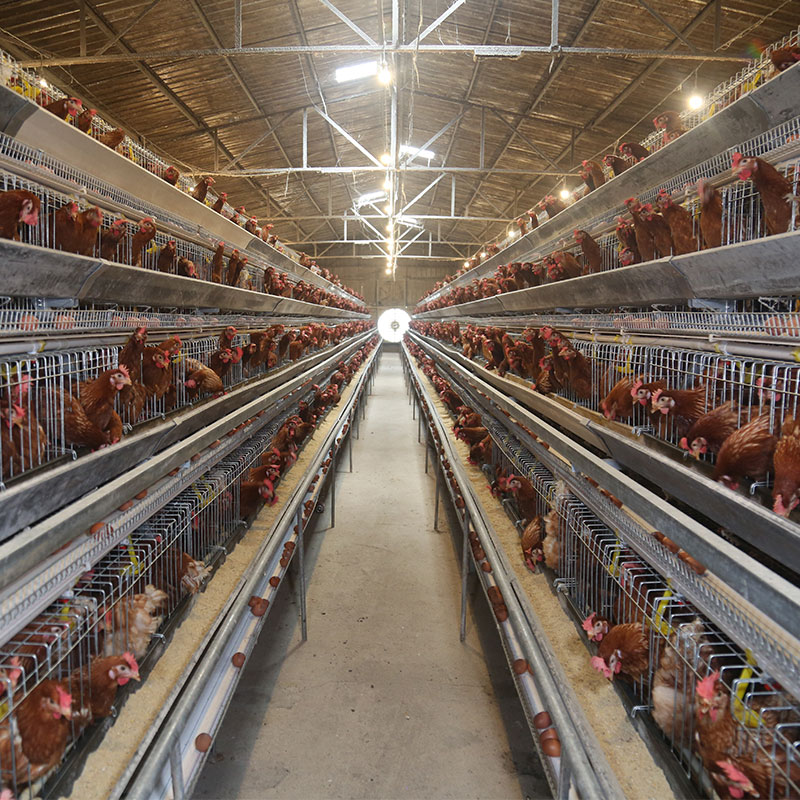
1. Battery Cages (Conventional)
- Best for: High-density egg production.
- Drawbacks: Limited space per bird; banned in some regions due to welfare concerns.
- Example: A 10,000-bird house using battery cages may fit 5-6 birds per cage, with feed and water delivered via central troughs.
2. Enriched Colony Cages
- Best for: Farmers complying with animal welfare regulations.
- Features: Includes perches, scratch pads, and nesting areas.
- Example: In the EU, enriched cages must provide at least 750 cm² per hen, with nests for egg-laying and space for wing-stretching.
3. A-Frame and Stacked Cages
- Best for: Small to mid-sized farms with limited space.
- Advantages: Easy to install, cost-effective.
- Example: A 1,000-bird setup with A-frame cages allows easy access for cleaning and egg collection without automation.
4. Free-Range with Supplemental Caging
- Best for: Farmers marketing pasture-raised eggs but needing protection from predators.
- How It Works: Birds roam during the day but return to secure cages at night.
Cost Considerations and ROI
Switching to modern cages requires upfront investment, but the long-term savings justify the cost.
- Labor Reduction: Automated systems cut feeding and egg collection time by up to 70%.
- Feed Efficiency: Precise portioning reduces waste—saving 5-10% on feed costs annually.
- Disease Control: Better hygiene lowers medication expenses and mortality rates.
A mid-sized farm investing $20,000 in modern cages may break even within 2-3 years through higher production and lower operational costs.
Common Mistakes to Avoid

- Overcrowding: Even in modern cages, exceeding recommended densities increases pecking and stress. Follow guidelines for space per bird.
- Poor Ventilation Setup: Placing cages too close to walls blocks airflow. Ensure at least 3 feet of clearance for proper circulation.
- Neglecting Maintenance: Rusted wires or clogged nipples lead to bigger problems. Inspect systems monthly.
Final Thoughts
Modern chicken cage systems are transforming poultry farming by merging efficiency with animal welfare. Whether upgrading an existing operation or starting new, choosing the right cage design can mean the difference between struggling and thriving. By leveraging automation, optimizing space, and prioritizing bird health, farmers can achieve consistent, high-quality production with fewer headaches.
For those ready to take the next step, consulting with equipment suppliers and visiting farms using these systems provides real-world insights before investing. The future of poultry farming is here—smart, scalable, and sustainable.
1. Drinking system include the water pipes, water pressure adjuster, drinking nipples, Waterline front-end device, dosing system etc, choose them according to customer's needs.
2. High-quality water drinking pipes, pressure regulating valves and water drinking nipples can effectively prevent the water leakage. Drinking system adopt the closed piping system, which can minimize the water pollution.
3. 360-degree drinking nipples provide adequate drinking water for poultry at all stages.
4. The automatic drinking water system mainly adopts the steel ball drinking nipple. lt uses imported high-grad stainless steel, POM resin, and APS engineering material, which is wearing resistant, and the durability can be used for long time.



1. Automatic feeding machine can be chosen between gantry and ladder feeding machine. Gantry type feeding machine is a relatively economical and practical machine with simple operation, remote control walking character, easy to manage.
2. Mechanical transmission device running smoothly, low noise, long service life.
3. With the use of automatic control, the feeding system can adjust the amount of material.
4. Feeding with arched structure, high carrying capacity, not easily deformed.
5. Saving man power, saving feed, greatly improving the efficiency of Large-scale farming.
6. The walking speed of gantry feeding machine is 9--12 m/min.




1. Manure removing system included scraper type and conveyor belt type, Which can reduce the labor intensity and labor cost, keep the chicken shed dry and clean.
2. A type chicken cage can use scraper type or conveyor belt type.


3. The scraper type is suitable for A type cages, which can clean two or three rows. For the starters, this type is a good choice. lt can not only save some labor cost, but also save some investment in the whole project. The cleaning speed is 6-10 meters per minute.
4. Conveyor belt type is more suitable for large scale farming. The manure removing belt we use is high quality PP material (polypropylene). The walking speed is 2-4 meters per minute.



High Quality Pellets Made by Mobile Pellet Machine
1. It has professional designed angle of the blade. After the dynamic balance test one by one, the blade can operate smoothly.
2. The air volume is consistent in the whole life of the fan. Bearings has advantage of high strength, low noise, durable and so on.
1. The cooling pads uses high-quality wet curtain paper and adopts space cross-linking technology, which has the advantages of high water absorption, high water resistance, anti-toxicity and long service life.
2. The cooling efficiency is over 80%, without surfactant, natural water absorption, fast diffusion speed and long-lasting effect.
3. The product does not contain phenol and other chemical substances that are easy to cause skin allergies. It is non-toxic and harmless to the human body and chicken when installed and used. It is green, safe, energy-saving, environmentally friendly, economical, and easy to install.
4. The frame aluminum alloy has high strength, good corrosion resistance, durability and beautiful appearance.
5. Use a special filter for the cooling pad at the upper water to ensure clean water quality and support efficient water circulation components.
6. Combined with a negative pressure fan, it can effectively lower the indoor temperature.
The window is made of special selected high-quality engineering plastic, with high strength and long service life, together with superior anti-aging and anti-UV performance.
Function: Ventilation of the chicken house, usually used in the winter.
This system can adjust the wind speed and direction, thus the cold air will not reach chicken directly , which can effectively prevent the phenomenon of cold stress in chicken.
Environmental control system equipment is suitable for large-scale and intensive farming. According to customer requirements, we can provide various types of smart poultry equipment.
1. Our poultry management system is a modular system that manages all aspects of the chicken house, such as climate, temperature, humidity, ammonia, feeding, feed weighing, lighting and ventilation systems, and can monitor the situation of the chicken house in real time through a computer and mobile phone.
2. The management computer is the heart of the poultry farm, allowing you to easily monitor the entire poultry farm.

 WeChat:+8617838608255