
MultiTier Poultry Housing: A Comprehensive Guide to Maximizing Space and Efficiency
In the quest for sustainable and profitable poultry farming, space optimization is no longer a luxury—it’s a necessity. Multitier poultry housing has emerged as a revolutionary solution, transforming how farmers approach layer, broiler, and pullet management. Moving beyond the traditional singlelevel shed, this innovative system stacks bird cages or rearing spaces vertically, dramatically increasing stock density without expanding the farm's footprint. But is it right for your operation? This definitive guide delves deep into the world of multitier systems, examining their designs, critical management requirements, economic implications, and welfare considerations. We’ll equip you with the expert knowledge needed to make an informed decision and implement best practices for success.
Multitier poultry housing, often called cage battery systems or aviaries (for noncage systems), involves arranging bird enclosures in vertical stacks, typically ranging from two to eight levels. This design is fundamentally different from conventional deeplitter or singletier houses.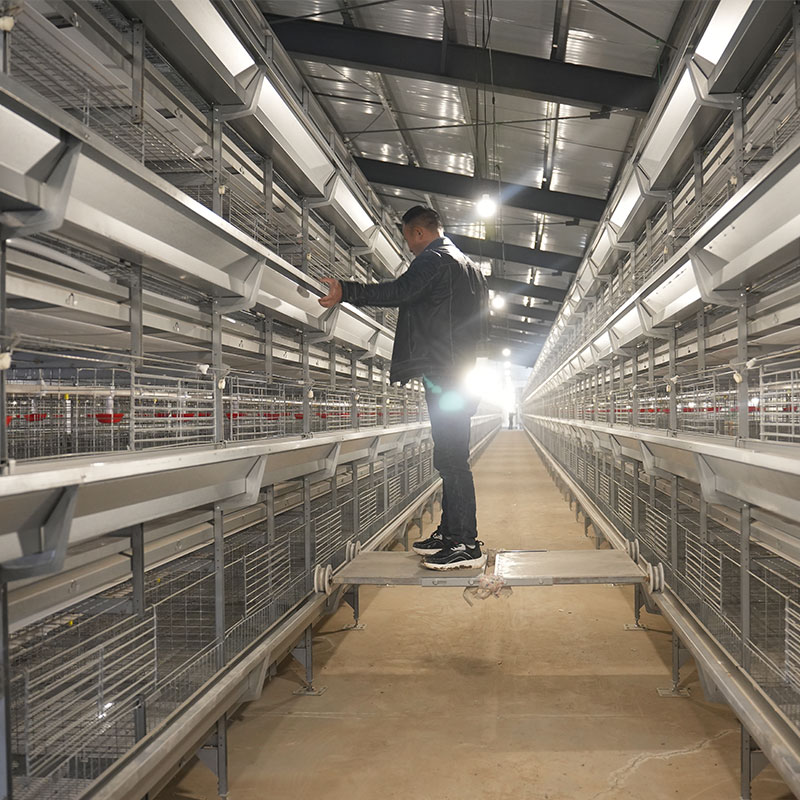
The primary driver is spatial efficiency. By utilizing the cubic air space of a building, farmers can house significantly more birds per square meter of land. This system has evolved from simple manualstack cages to highly automated environments where feed, water, egg collection, and manure removal are managed with minimal labor.
It’s crucial to distinguish between two main applications:
For Layers: Primarily cage systems (including enriched colonies) or multitier aviaries where birds have access to different vertical levels.
For Broilers: Less common in caged tiers due to welfare concerns; however, multilevel rearing systems for broilers are gaining traction in controlled environments.
Choosing the right configuration depends on your bird type, flock size, budget, and local welfare regulations.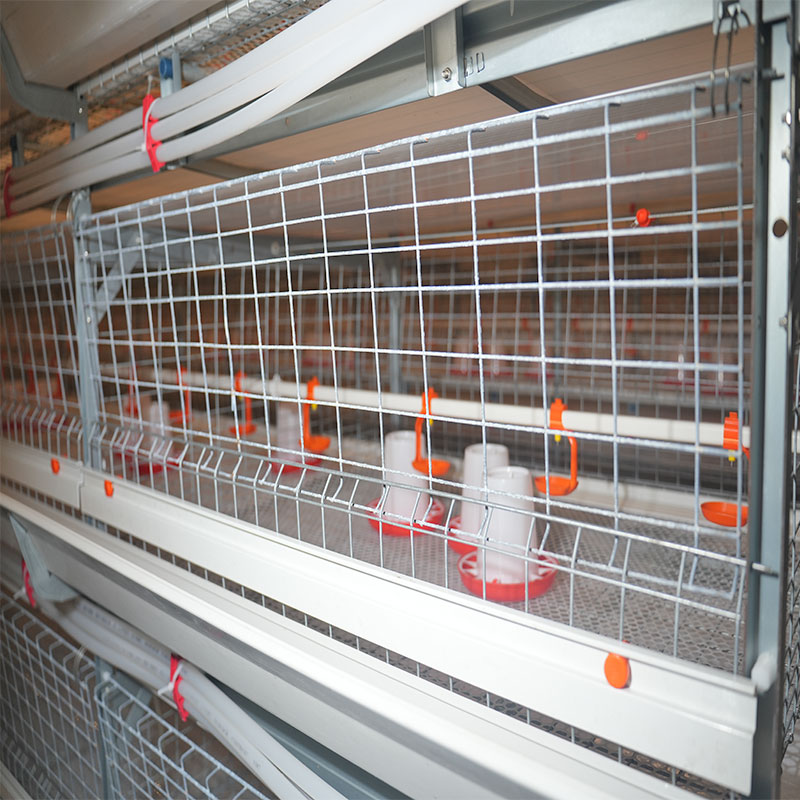
The traditional model features rows of small wire cages stacked in tiers. Manure belts run beneath each tier for daily removal. While criticized for welfare limitations, modern versions are highly automated.
Best For: Largescale commercial egg production with a focus on efficiency and yield.
Considerations: Increasingly regulated or phased out in many regions (e.g., EU) due to animal welfare directives.
An evolution of the battery cage designed to meet higher welfare standards. These provide more space per hen and include essential features like perches, nesting areas, and scratching mats.
Best For: Farmers needing compliance with stricter welfare codes while maintaining a high degree of automation and control.
Birds roam freely on littered floors but have access to multiple elevated levels equipped with perches, feeders, and nest boxes. This system allows for natural behaviors like flying between tiers.
Best For: Noncage egg production (marketed as barn or freerange eggs if pop holes are provided).
Considerations: Requires excellent management to prevent floor eggs and ensure even bird distribution.
Specifically designed for rearing young chicks into pointoflay pullets in a multistory environment that acclimates them to future laying house systems.
Best For: Integrated operations that want pullets accustomed to vertical movement before transfer to layer aviaries.
Comparison Table: MultiTier System Types
| System Type | Bird Type | Key Features | Welfare Level | Automation Potential |
| : | : | : | : | : |
| Cage Battery | Layers | High density, manure belts below cages | Basic | Very High |
| Enriched Colony| Layers | Perches, nest box, scratching area | Improved | Very High |
| MultiTier Aviary| Layers/Pullets| Litter floor + elevated tiers | High (allows natural behaviors) | ModerateHigh |
| Broiler Tiers | Broilers | Specialized platforms for controlled growth | Variable (system dependent) | High |
1. Unmatched Land Efficiency: The most significant benefit. You can double or triple your flock size without acquiring more land.
2. Enhanced Operational Efficiency & Labor Savings: Centralized automation for feeding, watering, egg collection (via inclined conveyor belts), and manure drying/removal drastically reduces daily labor costs.
3. Improved Bird Health Management (When Managed Well): Birds are separated from their manure by belts or slats reducing contact with pathogens like E.coli and parasites like coccidia.
4. Superior Feed Conversion Ratio (FCR): Reduced bird movement in cage systems can lead to lower energy expenditure and better FCR—a critical metric for profitability.
5. Higher Egg Quality & Cleanliness: Eggs roll away immediately upon laying onto collection belts resulting in cleaner shells with fewer cracks or checks compared to floor eggs.
6. Precise Environmental Control: Easier to maintain uniform temperature ventilation humidity across all birds within enclosed automated house compared vast singlefloor space
Multitier complexity demands exceptional management skills; shortcomings quickly escalate into major problems:
A vertical temperature gradient will form—hotter air rises making top tiers warmer than bottom ones Your ventilation system (tunnel ventilation combined with vertical fans) must be expertly designed counteract this stratification Uniform air quality ammonia levels across all tiers nonnegotiable
Accumulated manure generates heat ammonia moisture:
Observing individual birds becomes challenging higher tiers Automated monitoring weight gain water consumption mortality rates becomes crucial Watch signs feather pecking cannibalism especially noncage multitier aviaries require proper beak treatment environmental enrichment distraction
Staff need training troubleshoot automated equipment identify sick birds different levels perform humane depopulation complex structures Routine inspections maintenance feed lines nipple drinkers manure belts electrical systems vital prevent catastrophic failures
Implementing multitier housing requires substantial capital expenditure:
However ROI can compelling through:
A detailed financial projection considering your local input costs market prices essential before proceeding
1. Stocking Density Compliance: Always adhere strictly recommended densities breed chosen system Overstocking any tier leads rapid deterioration welfare productivity regardless system type
2. Lighting Program Precision: Ensure even light distribution all levels Use diffusers reflective surfaces prevent darker lower tiers which can affect lay uniformity feeding behavior
3. Layered Vaccination & Health Strategy: Work veterinarian develop health program accounts challenges delivering vaccines uniformly birds across multiple levels may require novel administration methods
4 Regular Equipment Audits Schedule daily checks automated feeding watering lines weekly inspections manure belt tension tracking monthly professional servicing critical components
5 Meticulous Record Keeping Track performance metrics separately different house sections tiers identify problem zones early Use data drive management decisions
Multitier poultry housing represents pinnacle intensive efficient production offering powerful solution farmers constrained land rising labor costs However not simply matter installing equipment; represents fundamental shift towards technologydriven dataintensive management philosophy Success hinges unwavering commitment optimal environmental control vigilant health monitoring robust staff training
For largescale producers aiming maximize output fixed land base while maintaining control over key production variables multitier systems offer compelling path forward For smaller farms or those prioritizing lowestcost entry barrier traditional singlelevel housing may remain suitable choice Ultimately decision must align your specific operational goals resources longterm vision sustainable profitable poultry business
Q1: What is the main purpose of multitier poultry housing?
A1: The primary purpose is to maximize the number of birds housed within a given building footprint by utilizing vertical space This dramatically increases stock density improves operational efficiency through centralized automation feeding watering egg collection manure removal
Q2: How many tiers are common in layer houses?
A2 Commercial layer operations commonly use between 8 tiers most prevalent being 6 tier configurations The optimal number depends ceiling height breed type chosen system automation level local regulations
Q3 Can broilers be raised in multitier systems?
A3 Yes specialized multilevel platforms used broiler rearing particularly controlled environment settings However differs significantly layer cages focuses providing flat accessible spaces growth requires careful management prevent leg issues ensure welfare
Q4 What biggest challenge managing multitier house?
A4 Maintaining uniform environmental conditions especially temperature air quality across all vertical levels Heat ammonia rise creating gradient top bottom Effective tunnel ventilation combined targeted mixing fans essential overcome challenge
Q5 How does manure handling work these systems?
A5 Most modern systems utilize continuous loop conveyor belts installed beneath each tier Manure drops onto belt which transports out house daily where it dried processed stored preventing buildup ammonia moisture inside living space
Q6 Are multitier cage systems banned?
A6 Conventional battery cages banned European Union several other countries Many regions moving towards enriched colony systems provide more space behavioral amenities like perches nests Regulations vary greatly check your specific national provincial codes before investing
Q7 Do hens have difficulty accessing resources upper tiers?
A7 In welldesigned aviary enriched colony systems no Tiers connected ramps staggered platforms allow hens move freely between levels Feed water provided every tier ensuring all birds easy access In pullet rearing acclimating birds vertical movement during rearing phase critical success
Q8 What average cost building automated multitier layer house?
A8 Costs vary widely based location scale technology but represent significant investment Automated tier house including construction equipment range $50$150 bird compared $30$60 conventional barn Professional feasibility study detailed quotes necessary accurate planning
Q9 How affect egg quality?
A9 Typically improves external egg quality Eggs roll collection belt immediately after laying reducing contact with manure litter resulting cleaner shells lower risk bacterial contamination cracking Automated gentle collection also minimizes physical damage eggs during gathering process
Q10 Is special training required manage such farm?
A10 Absolutely Staff require thorough training operate troubleshoot complex automated systems monitor bird health across multiple levels perform maintenance Understanding principles ventilation manure management behavior observation within vertical environment crucial successful outcomes
1. Drinking system include the water pipes, water pressure adjuster, drinking nipples, Waterline front-end device, dosing system etc, choose them according to customer's needs.
2. High-quality water drinking pipes, pressure regulating valves and water drinking nipples can effectively prevent the water leakage. Drinking system adopt the closed piping system, which can minimize the water pollution.
3. 360-degree drinking nipples provide adequate drinking water for poultry at all stages.
4. The automatic drinking water system mainly adopts the steel ball drinking nipple. lt uses imported high-grad stainless steel, POM resin, and APS engineering material, which is wearing resistant, and the durability can be used for long time.



1. Automatic feeding machine can be chosen between gantry and ladder feeding machine. Gantry type feeding machine is a relatively economical and practical machine with simple operation, remote control walking character, easy to manage.
2. Mechanical transmission device running smoothly, low noise, long service life.
3. With the use of automatic control, the feeding system can adjust the amount of material.
4. Feeding with arched structure, high carrying capacity, not easily deformed.
5. Saving man power, saving feed, greatly improving the efficiency of Large-scale farming.
6. The walking speed of gantry feeding machine is 9--12 m/min.




1. Manure removing system included scraper type and conveyor belt type, Which can reduce the labor intensity and labor cost, keep the chicken shed dry and clean.
2. A type chicken cage can use scraper type or conveyor belt type.


3. The scraper type is suitable for A type cages, which can clean two or three rows. For the starters, this type is a good choice. lt can not only save some labor cost, but also save some investment in the whole project. The cleaning speed is 6-10 meters per minute.
4. Conveyor belt type is more suitable for large scale farming. The manure removing belt we use is high quality PP material (polypropylene). The walking speed is 2-4 meters per minute.



High Quality Pellets Made by Mobile Pellet Machine
1. It has professional designed angle of the blade. After the dynamic balance test one by one, the blade can operate smoothly.
2. The air volume is consistent in the whole life of the fan. Bearings has advantage of high strength, low noise, durable and so on.
1. The cooling pads uses high-quality wet curtain paper and adopts space cross-linking technology, which has the advantages of high water absorption, high water resistance, anti-toxicity and long service life.
2. The cooling efficiency is over 80%, without surfactant, natural water absorption, fast diffusion speed and long-lasting effect.
3. The product does not contain phenol and other chemical substances that are easy to cause skin allergies. It is non-toxic and harmless to the human body and chicken when installed and used. It is green, safe, energy-saving, environmentally friendly, economical, and easy to install.
4. The frame aluminum alloy has high strength, good corrosion resistance, durability and beautiful appearance.
5. Use a special filter for the cooling pad at the upper water to ensure clean water quality and support efficient water circulation components.
6. Combined with a negative pressure fan, it can effectively lower the indoor temperature.
The window is made of special selected high-quality engineering plastic, with high strength and long service life, together with superior anti-aging and anti-UV performance.
Function: Ventilation of the chicken house, usually used in the winter.
This system can adjust the wind speed and direction, thus the cold air will not reach chicken directly , which can effectively prevent the phenomenon of cold stress in chicken.
Environmental control system equipment is suitable for large-scale and intensive farming. According to customer requirements, we can provide various types of smart poultry equipment.
1. Our poultry management system is a modular system that manages all aspects of the chicken house, such as climate, temperature, humidity, ammonia, feeding, feed weighing, lighting and ventilation systems, and can monitor the situation of the chicken house in real time through a computer and mobile phone.
2. The management computer is the heart of the poultry farm, allowing you to easily monitor the entire poultry farm.

 WeChat:+8617838608255