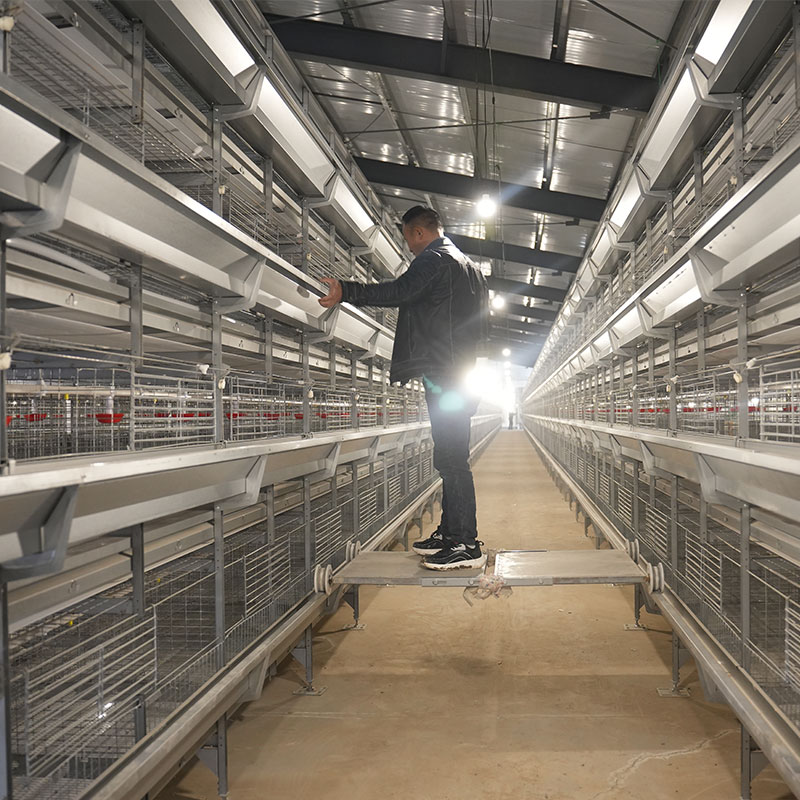
For poultry farmers weighing the decision between new and used equipment, the 3-layer chicken layer cage with manure belt represents a significant infrastructure investment that directly impacts daily operations and long-term profitability. These vertically stacked systems, designed to house laying hens across three levels, create a controlled environment where feeding, watering, egg collection, and manure management follow an efficient, integrated workflow. The inclusion of four doors per cage tier and a dedicated manure removal belt transforms labor-intensive chores into streamlined processes, whether for a modest homestead flock or a more substantial commercial enterprise.
Structural Integrity and Design
The core of this system is its welded steel frame, typically fabricated from heavy-gauge wire coated with a protective layer like galvanization or epoxy. This isn't just about preventing rust; it’s about withstanding the constant corrosive assault from ammonia in chicken manure and the pecking and scratching of the birds themselves. A farmer running a used cage system will immediately inspect the coating at joints and high-traffic areas for any chips or wear that could become a starting point for corrosion. The structural strength ensures that when a bird on the top tier moves suddenly, the vibration doesn’t spook the hens on the levels below, maintaining a calmer environment.
The design featuring four doors per tier is a critical ergonomic improvement. Instead of reaching across a long, single-opening cage to retrieve an egg from the far corner or check on a bird, a caretaker can access each compartment directly. This is particularly valuable during health inspections. If a hen appears lethargic in the back of a compartment, a farmer can open the nearest door to isolate her without disturbing the entire group, allowing for quicker diagnosis and treatment. This direct access also simplifies the process of introducing new pullets to the system or removing spent hens at the end of their lay cycle.
The Manure Belt: A System Within a System
Perhaps the most transformative component is the manure belt. In a traditional deep-litter system or a cage without a belt, manure accumulates, requiring frequent manual scraping and cleaning. This laborious task releases dust and ammonia into the air, posing respiratory risks to both birds and humans. The manure belt, a durable rubber or PVC conveyor running beneath each tier, automates this process.
Here’s how it functions in practice: droppings from hens on the top tier fall onto the top belt. The design of the cages ensures that manure from the middle and bottom tiers also lands on their respective belts, preventing the birds below from being soiled. A farmer can set a timer to automatically advance these belts once or twice daily. This movement transports the fresh manure to a collection point at the end of the row—often a chute into a cart or a compost bin. The immediate removal of waste drastically reduces ammonia levels inside the poultry house. Lower ammonia means healthier respiratory systems for the flock, which correlates directly to better feed conversion and more consistent egg production. It also means a cleaner egg, as there is less fecal matter in the environment to contaminate the shells.
Space Allocation and Animal Welfare Considerations
Modern cage designs are developed with specific space allowances per bird. A common configuration might provide 67 square inches of space per hen, but this can vary. This isn't just an empty number; it's the difference between a bird having enough room to stand upright, turn around, and access the feed trough and water line without excessive competition. Overcrowding leads to feather pecking, increased stress, and a higher incidence of floor eggs—eggs laid outside the designated nesting area, which are more likely to be cracked or dirty.
The cage floor is typically sloped, gently rolling eggs laid in the common area to a protected collection gutter at the front. This design minimizes the number of eggs that remain in the cage, where they can be trampled or pecked. The feed trough runs the length of the cage, and nipple drinkers are positioned at a height accessible to all birds. A farmer observing his flock will note if the birds are able to eat and drink comfortably. If smaller or more timid hens are being pushed away from the resources, it may be a sign of overcrowding or an issue with the feeder/drinker placement.
New vs. Used: A Practical Cost-Benefit Analysis
The decision between a new and a used 3-layer cage system is a fundamental financial calculation with operational ramifications.

A new system offers certainty. Every component—from the welds on the frame to the rollers on the manure belt—is pristine. The protective coating is intact, promising a long service life. It often comes with a manufacturer's warranty, protecting against defects in materials or workmanship. For a farmer establishing a new operation or one who has experienced recurring maintenance issues with old equipment, this predictability is valuable. The initial capital outlay is higher, but the first five years of operation will likely involve minimal repair costs beyond routine lubrication and belt tension checks.
A used system, conversely, requires a more discerning eye. The purchase price may be 40-60% lower than a new equivalent, freeing up capital for other needs like bird stock or feed. However, this lower cost comes with inherent risks. A thorough, hands-on inspection is non-negotiable. areas to scrutinize include:
Structural Rust: Surface rust can be scraped and treated, but pitting or scaling rust, especially on load-bearing vertical supports, indicates advanced corrosion that compromises the cage's strength and may lead to a catastrophic collapse.
Manure Belt Integrity: The belt must be checked for cracks, brittleness, and stretching. A cracked belt will tear under load; a stretched belt will slip off its track. Replacing all the belts on a large used system can represent a significant unexpected expense.
Mechanical Components: The drive system for the manure belt—the motor, gears, and rollers—must be tested. A worn-out motor may struggle to move a fully loaded belt, leading to burnout. Worn rollers can create uneven movement, causing the belt to drift and jam.
Door Latches and Feeders: Every door latch should open and close securely. A faulty latch can allow a bird to escape or, worse, trap a bird in a dangerous position. The feed trough should be examined for dents or gaps that could cause feed to spill or become inaccessible.
A used system is often a prudent choice for a farmer who possesses mechanical aptitude and has the time and resources to perform necessary refurbishments. It can also be ideal for a smaller, diversified farm where the poultry enterprise is just one part of the overall business and a lower initial investment is crucial.
Integration into Farm Operations
Implementing this type of cage system changes the daily rhythm of a poultry farm. The workflow becomes more linear and efficient. Feeding is centralized through the automated trough. Watering is consistent and clean via the nipple system. Egg collection involves gathering from the easy-access gutters rather than searching through litter. Manure management shifts from a weekly, physically demanding chore to a daily, automated process that produces a concentrated, easily handled waste product ideal for composting.
The manure collected by the belt is a valuable byproduct. Because it is relatively dry and not mixed with litter, it is easier to handle and compost into a high-nitrogen fertilizer. Many farmers find they can sell this compost, creating an additional revenue stream that partially offsets the cost of the cage system itself.
The system’s design also impacts bird health. By separating the birds from their manure, the incidence of parasitic worms and certain bacterial infections is reduced. The controlled environment makes it easier to monitor feed and water consumption, which are early indicators of health issues. A sudden drop in water intake, for instance, is quickly noticeable and can prompt an immediate investigation.

Ultimately, the choice of a 3-layer chicken layer cage with a manure belt, whether new or used, is a strategic decision focused on maximizing efficiency and animal welfare while controlling labor costs. It represents a move away from reactive, labor-heavy management and toward a proactive, systematic approach to poultry farming. The initial investment, in either capital for a new system or time and effort for a used one, is repaid through smoother daily operations, a healthier flock, and a more consistent, high-quality product.
1. Drinking system include the water pipes, water pressure adjuster, drinking nipples, Waterline front-end device, dosing system etc, choose them according to customer's needs.
2. High-quality water drinking pipes, pressure regulating valves and water drinking nipples can effectively prevent the water leakage. Drinking system adopt the closed piping system, which can minimize the water pollution.
3. 360-degree drinking nipples provide adequate drinking water for poultry at all stages.
4. The automatic drinking water system mainly adopts the steel ball drinking nipple. lt uses imported high-grad stainless steel, POM resin, and APS engineering material, which is wearing resistant, and the durability can be used for long time.



1. Automatic feeding machine can be chosen between gantry and ladder feeding machine. Gantry type feeding machine is a relatively economical and practical machine with simple operation, remote control walking character, easy to manage.
2. Mechanical transmission device running smoothly, low noise, long service life.
3. With the use of automatic control, the feeding system can adjust the amount of material.
4. Feeding with arched structure, high carrying capacity, not easily deformed.
5. Saving man power, saving feed, greatly improving the efficiency of Large-scale farming.
6. The walking speed of gantry feeding machine is 9--12 m/min.




1. Manure removing system included scraper type and conveyor belt type, Which can reduce the labor intensity and labor cost, keep the chicken shed dry and clean.
2. A type chicken cage can use scraper type or conveyor belt type.


3. The scraper type is suitable for A type cages, which can clean two or three rows. For the starters, this type is a good choice. lt can not only save some labor cost, but also save some investment in the whole project. The cleaning speed is 6-10 meters per minute.
4. Conveyor belt type is more suitable for large scale farming. The manure removing belt we use is high quality PP material (polypropylene). The walking speed is 2-4 meters per minute.



High Quality Pellets Made by Mobile Pellet Machine
1. It has professional designed angle of the blade. After the dynamic balance test one by one, the blade can operate smoothly.
2. The air volume is consistent in the whole life of the fan. Bearings has advantage of high strength, low noise, durable and so on.
1. The cooling pads uses high-quality wet curtain paper and adopts space cross-linking technology, which has the advantages of high water absorption, high water resistance, anti-toxicity and long service life.
2. The cooling efficiency is over 80%, without surfactant, natural water absorption, fast diffusion speed and long-lasting effect.
3. The product does not contain phenol and other chemical substances that are easy to cause skin allergies. It is non-toxic and harmless to the human body and chicken when installed and used. It is green, safe, energy-saving, environmentally friendly, economical, and easy to install.
4. The frame aluminum alloy has high strength, good corrosion resistance, durability and beautiful appearance.
5. Use a special filter for the cooling pad at the upper water to ensure clean water quality and support efficient water circulation components.
6. Combined with a negative pressure fan, it can effectively lower the indoor temperature.
The window is made of special selected high-quality engineering plastic, with high strength and long service life, together with superior anti-aging and anti-UV performance.
Function: Ventilation of the chicken house, usually used in the winter.
This system can adjust the wind speed and direction, thus the cold air will not reach chicken directly , which can effectively prevent the phenomenon of cold stress in chicken.
Environmental control system equipment is suitable for large-scale and intensive farming. According to customer requirements, we can provide various types of smart poultry equipment.
1. Our poultry management system is a modular system that manages all aspects of the chicken house, such as climate, temperature, humidity, ammonia, feeding, feed weighing, lighting and ventilation systems, and can monitor the situation of the chicken house in real time through a computer and mobile phone.
2. The management computer is the heart of the poultry farm, allowing you to easily monitor the entire poultry farm.

 WeChat:+8617838608255