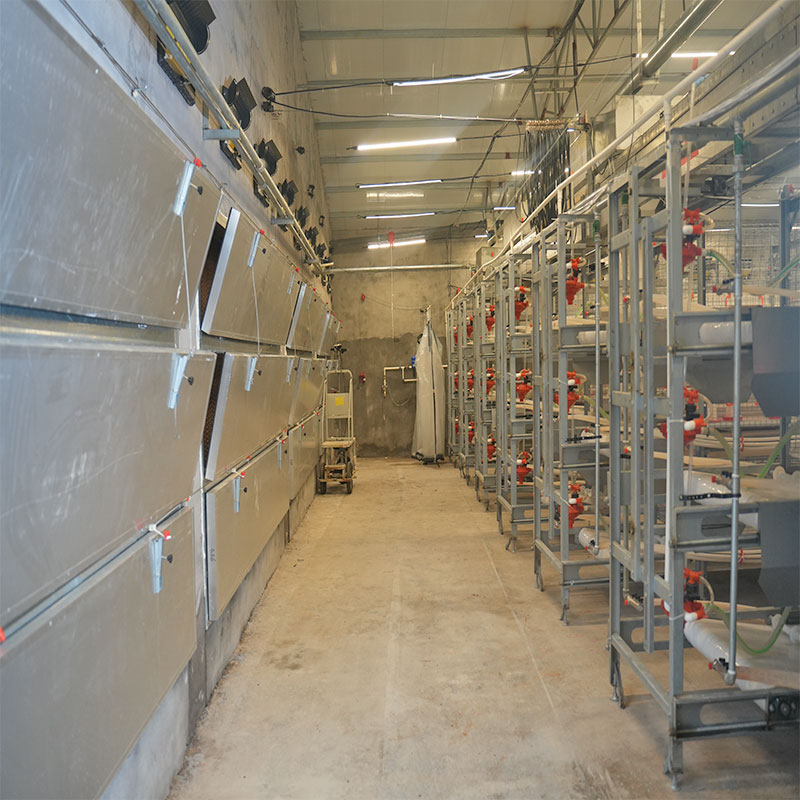
The rhythmic clatter of feeding carts echoes through the pre-dawn light, a sound as familiar to generations of poultry farmers as their own heartbeat. For decades, this sound signified a day’s work beginning—the back-breaking labor of manually distributing feed and checking waterers across long, low-slung coops. This traditional model, while steeped in practice, presented a constant battle against inefficiency, inconsistent bird performance, and the physical limits of the farmer. The landscape of layer farming, however, is being fundamentally reshaped. Central to this transformation is the widespread adoption of the 4-Tier H-Type Layer Cage system, a structure engineered not just to house chickens, but to integrate seamlessly with automated feeding and drinking machines, creating a unified production unit.
The “H-Type” designation is not merely a marketing term; it describes the core architectural principle of the system. Imagine a series of vertical frames, each resembling a tall, sturdy letter “H”. The two vertical legs of the “H” are the primary support columns, while the horizontal crossbar represents the tier upon which the cages are mounted. This design is fundamentally different from the older A-type or ladder-style cages, where tiers are stacked at an angle. The vertical, in-line configuration of the H-type is its greatest strength. It creates a clear, unobstructed vertical shaft from the top tier to the bottom, a feature that is absolutely critical for the operation of modern automation.
At the heart of this system are the cages themselves, typically arranged in a back-to-back configuration. A single column of four tiers forms a “stack,” and multiple stacks are placed side-by-side to form a long row, often running the entire length of a poultry house. Each cage is a carefully calculated environment. The floor is sloped, not level. When a hen lays an egg, it doesn’t remain where it was laid. Instead, it gently rolls forward onto a dedicated egg collection belt, safely out of reach of the birds’ feet and beaks, preserving shell quality and dramatically reducing the number of dirty or cracked eggs. The front of the cage features the feeding line and drinking system, while the rear houses the manure removal system.
This leads to the first critical automated component: the manure drying plates. In a four-tier system, managing waste from thousands of birds is one of the most significant challenges. The H-type design addresses this with a series of deflector plates installed beneath each tier. A layer of chickens in the top-tier cage deposits manure onto a plate. This plate is not a solid shelf; it is designed to allow air to circulate, and its angle lets the manure partially dry. The manure from the second tier falls onto another plate below it, and so on. By the time the waste from all four tiers collects in the deep pit beneath the entire system, it has lost a substantial amount of moisture. This process transforms a potential slurry into a more manageable, semi-solid waste product that is easier to handle, has a significantly reduced ammonia odor, and is more valuable as an organic fertilizer. This is a passive yet highly effective form of environmental control built directly into the structure.
The true operational synergy of the system, however, is unlocked by the automated feeding machine. This is not a simple cart on a rail. It is a precision instrument that travels along a track mounted at the front of the cage rows. Inside the machine’s hopper is the complete, balanced ration for the entire flock. As it moves slowly and steadily down the length of the house, it performs two functions simultaneously. First, it distributes a fresh, uniform layer of feed into the trough running the entire length of each tier. Second, and just as importantly, it “activates” the feed. Chickens are naturally inclined to peck and scratch. If feed is left static for long periods, the birds will selectively eat the most palatable parts (like the corn) and leave the finer, vitamin-rich powder at the bottom of the trough, leading to an imbalanced diet. The regular passage of the feeder encourages the birds to eat, and its action mixes the feed, ensuring every beakful is nutritionally complete.
The timing and frequency of the feeder’s runs can be programmed. A common strategy is to run it multiple times a day, perhaps just before the lights come on in the morning to stimulate appetite, again midday, and a final time in the late afternoon to ensure the birds go to roost with full crops. This eliminates the peaks and troughs in nutrient intake common with once- or twice-a-day manual feeding. The result is a flock with more consistent energy levels, better overall health, and a more uniform rate of egg production. The farmer’s role shifts from manual laborer to system manager, monitoring the machine’s operation and feed levels from a central control panel.
Hydration is the other pillar of flock management, and the automated drinking system is its silent guardian. The most common system used in these cages is the nipple drinker. A small, stainless-steel nipple is positioned at the front of each cage. When a chicken is thirsty, it pecks at the nipple, which releases a few drops of water directly into its beak. The advantages of this system are profound. Unlike open troughs or bell drinkers, the water in a nipple system remains enclosed in a pipeline until the moment of consumption. This means it is protected from dust, feed, dander, and fecal contamination. The water in the pipe stays clean, drastically reducing the risk of waterborne diseases like E. coli or Salmonella spreading through the flock.
The water line is a pressurized system. A central regulator maintains constant pressure, and at the end of each line, a pressure-reducing valve ensures that when a bird activates a nipple, it receives a gentle drip, not a forceful spray that could startle it or waste water. The entire system is connected to a central water source and a medicator, a device that allows for the precise and uniform administration of vaccines, vitamins, or medications through the drinking water. When a flock needs to be vaccinated, the farmer simply adds the concentrate to the medicator, and within hours, every single bird has received the correct dose simply by drinking, a task that would be logistically impossible and incredibly stressful if done manually.
The third key automated system works in the background, dealing with the byproducts of this efficient production: the eggs and the manure. The egg collection system consists of a soft, rubberized belt that runs the length of each tier. As mentioned, eggs roll out of the cages onto this belt. At set intervals, a motor engages, and the belt moves, transporting all the eggs laid in that row to one end of the house. They are then gently transferred to a central collection table or onto a cross-conveyor that carries them to the egg packing room. This process happens multiple times a day, minimizing the time eggs spend in the poultry house and reducing the chances of them being broken or soiled. The quality of the final product—clean, intact eggs—is directly enhanced by this continuous, gentle handling.
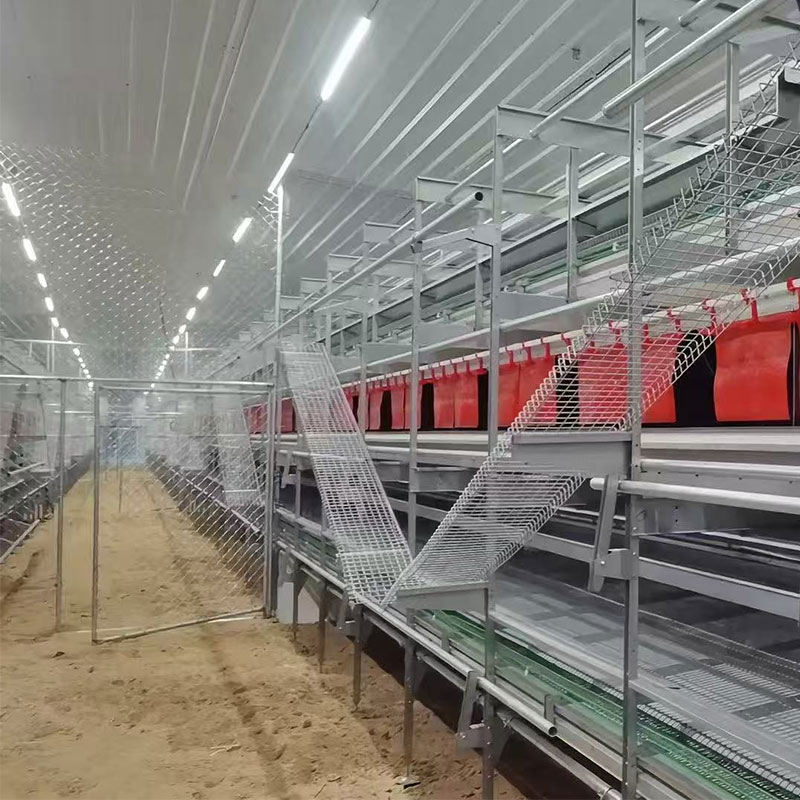
Simultaneously, the manure removal system operates on a similar principle. Beneath the lowest tier, a heavy-duty scraper blade is installed. On a programmed schedule, this blade traverses the entire length of the manure pit, pushing the accumulated, partially dried waste out of the house and into a waiting wagon or storage bunker. This can be done daily, weekly, or on another schedule suited to the farm’s operation. The critical point is that it removes the primary source of ammonia and humidity from the bird environment without requiring human entry into the pit, creating a better environment for both animal welfare and worker safety.
Integrating these four automated subsystems—feeding, drinking, egg collection, and manure removal—creates a powerful data feedback loop for the farmer. Because the systems are mechanized and programmable, their operation can be linked to environmental controllers. For instance, if a temperature sensor detects the house is getting too warm, the controller can not only turn on cooling fans but also slightly increase the frequency of the feeding machine’s runs. Why? Because the act of eating generates body heat. In hot weather, encouraging birds to eat during the cooler parts of the day and early morning helps manage their heat load. This level of integrated environmental and nutritional management was unimaginable in a manually operated house.
The economic rationale for transitioning to a 4-Tier H-Type system is compelling, but it requires a shift in perspective from a labor-centric to a capital-centric model. The initial investment is substantial, encompassing the cost of the cages, all the automation equipment, and potentially reinforcing the poultry house structure to handle the weight. This is not a minor upgrade; it is a foundational change to the farm’s infrastructure.
However, this capital outlay is offset by dramatic and sustained operational savings. The most obvious is labor. A single worker can manage a house containing tens of thousands of birds, with their time focused on monitoring system performance, checking bird health, and managing data, rather than on physical chores. Feed conversion ratios consistently improve. With precise, frequent feeding and always-available clean water, less feed is wasted through scattering, spoilage, or selective eating. More of the nutritional value of the feed is converted into eggs.
Mortality rates often decrease. The controlled environment, reduced disease transmission via the water system, and less physical stress on the birds from constant human activity contribute to a healthier, more stable flock. The quality and quantity of the manure byproduct also improve. The drier, more manageable waste is easier to dispose of and commands a higher price from composting operations or crop farmers, turning a disposal problem into a minor revenue stream.
The decision to install such a system is not without its technical considerations. The choice of galvanized steel for the cage structure is non-negotiable. The environment inside a poultry house is highly corrosive due to ammonia and moisture. A cage made from painted or inferior steel will quickly rust, compromising its structural integrity and creating a constant maintenance nightmare. High-quality hot-dipped galvanization provides a durable barrier that ensures the system’s longevity.
The stocking density—the number of birds per cage—must be calculated with care. It is a balance between economic efficiency and animal welfare. Overcrowding leads to stress, increased feather pecking, and a higher risk of disease. Under-crowding wastes capital investment. The optimal density allows each hen sufficient space to access feed and water without competition and to exhibit natural behaviors like preening and stretching. Modern welfare codes and certification standards often provide clear guidelines on this.

Furthermore, the system demands reliable electricity. A power outage that halts the feeders, water pumps, or ventilation fans can have catastrophic consequences within hours. A backup generator is not a luxury; it is an essential component of the overall system, as vital as the cages themselves.
The rise of the 4-Tier H-Type Layer Cage system represents more than just a new piece of equipment; it signifies the evolution of poultry farming from an artisanal practice to a precision bio-industry. It redefines the role of the farmer from one of manual execution to one of strategic oversight and data-informed management. By creating a stable, controllable, and highly efficient environment, this integrated system empowers farmers to achieve a level of consistency, productivity, and product quality that meets the demands of the modern market, while simultaneously creating a more sustainable and manageable working life. The sound of the farm is no longer the clatter of the feed cart, but the quiet, purposeful hum of machines working in concert, a testament to a new era in egg production.
1. Drinking system include the water pipes, water pressure adjuster, drinking nipples, Waterline front-end device, dosing system etc, choose them according to customer's needs.
2. High-quality water drinking pipes, pressure regulating valves and water drinking nipples can effectively prevent the water leakage. Drinking system adopt the closed piping system, which can minimize the water pollution.
3. 360-degree drinking nipples provide adequate drinking water for poultry at all stages.
4. The automatic drinking water system mainly adopts the steel ball drinking nipple. lt uses imported high-grad stainless steel, POM resin, and APS engineering material, which is wearing resistant, and the durability can be used for long time.



1. Automatic feeding machine can be chosen between gantry and ladder feeding machine. Gantry type feeding machine is a relatively economical and practical machine with simple operation, remote control walking character, easy to manage.
2. Mechanical transmission device running smoothly, low noise, long service life.
3. With the use of automatic control, the feeding system can adjust the amount of material.
4. Feeding with arched structure, high carrying capacity, not easily deformed.
5. Saving man power, saving feed, greatly improving the efficiency of Large-scale farming.
6. The walking speed of gantry feeding machine is 9--12 m/min.




1. Manure removing system included scraper type and conveyor belt type, Which can reduce the labor intensity and labor cost, keep the chicken shed dry and clean.
2. A type chicken cage can use scraper type or conveyor belt type.


3. The scraper type is suitable for A type cages, which can clean two or three rows. For the starters, this type is a good choice. lt can not only save some labor cost, but also save some investment in the whole project. The cleaning speed is 6-10 meters per minute.
4. Conveyor belt type is more suitable for large scale farming. The manure removing belt we use is high quality PP material (polypropylene). The walking speed is 2-4 meters per minute.



High Quality Pellets Made by Mobile Pellet Machine
1. It has professional designed angle of the blade. After the dynamic balance test one by one, the blade can operate smoothly.
2. The air volume is consistent in the whole life of the fan. Bearings has advantage of high strength, low noise, durable and so on.
1. The cooling pads uses high-quality wet curtain paper and adopts space cross-linking technology, which has the advantages of high water absorption, high water resistance, anti-toxicity and long service life.
2. The cooling efficiency is over 80%, without surfactant, natural water absorption, fast diffusion speed and long-lasting effect.
3. The product does not contain phenol and other chemical substances that are easy to cause skin allergies. It is non-toxic and harmless to the human body and chicken when installed and used. It is green, safe, energy-saving, environmentally friendly, economical, and easy to install.
4. The frame aluminum alloy has high strength, good corrosion resistance, durability and beautiful appearance.
5. Use a special filter for the cooling pad at the upper water to ensure clean water quality and support efficient water circulation components.
6. Combined with a negative pressure fan, it can effectively lower the indoor temperature.
The window is made of special selected high-quality engineering plastic, with high strength and long service life, together with superior anti-aging and anti-UV performance.
Function: Ventilation of the chicken house, usually used in the winter.
This system can adjust the wind speed and direction, thus the cold air will not reach chicken directly , which can effectively prevent the phenomenon of cold stress in chicken.
Environmental control system equipment is suitable for large-scale and intensive farming. According to customer requirements, we can provide various types of smart poultry equipment.
1. Our poultry management system is a modular system that manages all aspects of the chicken house, such as climate, temperature, humidity, ammonia, feeding, feed weighing, lighting and ventilation systems, and can monitor the situation of the chicken house in real time through a computer and mobile phone.
2. The management computer is the heart of the poultry farm, allowing you to easily monitor the entire poultry farm.

 WeChat:+8617838608255