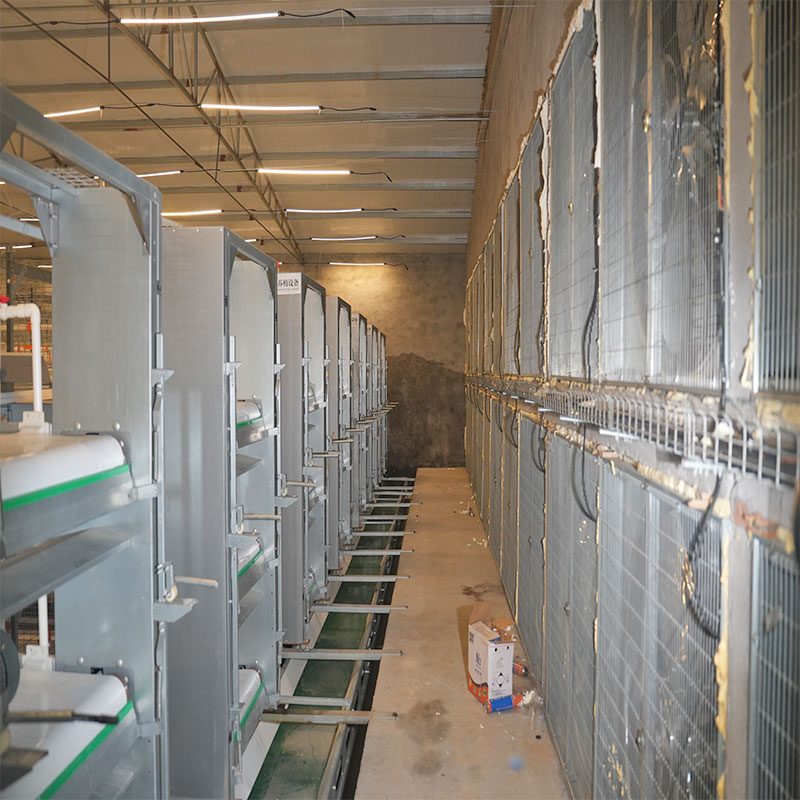
The modern poultry farm operates on precision. Every square foot, every calorie of feed, every hour of labor must be justified by a return in healthy, market-weight birds. For broiler producers, the choice of housing system sits at the core of this efficiency equation. While open-floor barns have long been a standard, the adoption of purpose-built broiler cage systems represents a significant technological shift, one that demands a thorough understanding of its mechanics and management.
Unlike the multi-tiered battery cages used for layers, broiler cages are typically single-level structures. The primary reason is weight. A flock of broilers ready for processing represents a massive live load. The system, therefore, is engineered from the ground up to manage density, welfare, and waste in a controlled, automated environment.
The Anatomy of a Broiler Cage System

A broiler cage setup is not a single piece of equipment but an integrated system. It begins with the pen itself. These are large, rectangular enclosures, often constructed from heavy-gauge, galvanized steel wire to resist corrosion from moisture and ammonia. The mesh floor is a critical component. It is not a simple grid; it’s engineered with a specific floor gradient, usually around 5-7 degrees. This slight slope is not enough to cause birds to slip or struggle but is perfectly calculated to allow manure to drop through cleanly while eggs from breeding stock roll gently to a collection tray at the front. The mesh size is precise: small enough to provide secure footing for day-old chicks, preventing leg injuries, but open enough to permit droppings to pass through without smearing.
Beneath this raised floor lies the manure removal system. This is where a major labor saving is realized. The most common configuration is a deep pit, where manure accumulates over the entire grow-out cycle and is removed after the birds are depopulated. More advanced setups feature belt systems. A continuous, slow-moving conveyor belt runs beneath the rows of cages, transporting manure to one end of the house into a cross-conveyor or collection bin. This can be done daily or weekly, drastically reducing ammonia levels and improving overall air quality inside the house.
Feed and water delivery are fully automated. A feed trolley system runs on a monorail along the front of the cages. It makes scheduled trips, dispensing a precise amount of feed into the trough that spans the length of each cage row. The timing and amount are programmable, allowing for phase-feeding strategies where the nutritional content of the ration changes as the birds grow. Similarly, nipple drinker lines are installed within easy reach of the birds. Their height is adjustable and should be raised as the birds grow to maintain the correct angle for drinking, ensuring water efficiency and keeping the litter drier.
Operational Advantages: Precision and Control
The shift to cages is fundamentally a shift towards greater control over the production environment. This control manifests in several key operational benefits.
The most immediate impact is on feed conversion ratio (FCR). In a cage system, there is no feed wastage. Birds cannot scratch, spill, or foul their feed. Every gram of the carefully formulated ration is consumed. Furthermore, the birds’ energy expenditure is reduced. They are not traversing a large barn or competing as aggressively for resources at the feed line. This conserved energy is diverted directly into growth. It’s common for producers to see an improvement of several points in FCR. On the scale of a 20,000-bird house, saving just 0.1 in FCR translates to thousands of kilograms of feed saved per cycle.
Health management and biosecurity are profoundly enhanced. The physical barrier of the cage drastically reduces bird-to-bird contact, slowing the transmission of pathogens. A sickness that might race through a floor-raised flock can be contained to a single pen. This isolation makes disease monitoring more straightforward; a caretaker can quickly identify a pen where water consumption has dropped or birds appear lethargic. Treating that specific pen with medications via the water line is targeted and efficient, reducing overall antibiotic use and cost.
The separation from manure is a cornerstone of flock health. Birds on the floor are in constant contact with their own waste, which is a breeding ground for parasites like coccidia and bacteria like E. coli. The raised wire floor breaks this cycle. While ammonia from the pit below must still be managed through ventilation, the birds themselves are not standing in, pecking at, or dust-bathing in manure. This leads to markedly lower rates of footpad dermatitis (foot burns), breast blisters, and other condemnations at the processing plant. Cleaner birds mean higher quality carcasses and fewer downgrades.
From a labor perspective, the automation is transformative. Tasks that are physically demanding and time-consuming in a floor system—such as catching birds for processing—become streamlined. The cages are often designed with large doors that allow for easy manual catching. In highly advanced systems, the entire cage module can be unlatched and transported directly to the processing plant, a practice known as modular harvesting, which eliminates the stressful catching and loading process entirely. Daily walks shift from manually checking feeders and waterers to monitoring system controls and observing bird behavior.

Considerations and Management Adaptations
Adopting a cage system is not merely an equipment change; it is a management revolution. It requires a different skillset and attention to new details.
Ventilation becomes even more critical. While the birds are off the floor, ammonia and moisture still rise from the manure pit or belts. The ventilation system must be precisely calibrated to remove these gases while maintaining the perfect temperature and humidity for the birds. A static environment is the goal. Because the birds cannot move to a more comfortable part of the barn, the entire house must be uniformly comfortable. Hot spots or cold drafts will have an immediate and negative impact on bird performance. Investing in a modern, computer-controlled ventilation system is not an option; it is a necessity.
Stocking density is a carefully calculated figure, balancing welfare with economics. Overcrowding in a cage will lead to heat stress, increased aggression, and poorer performance. Guidelines must be strictly followed, ensuring each bird has adequate space to access feed and water without competition. The behavior of the birds is the ultimate indicator. If they are panting, piling, or showing signs of feather pecking, density is too high or environmental conditions are off.
Perhaps the most significant management shift is in monitoring. A farmer can no longer judge flock health by walking through the birds and seeing them scatter. Instead, observation is more nuanced. Caretakers must learn to "read" the cages. They listen for the sound of contented feeding and drinking. They watch for uniform distribution of birds within the pen. They check for consistent feed and water consumption data from the automated systems. A pen that is quiet when others are active is a pen that requires immediate investigation.
Economic and Welfare Dimensions
The decision to invest in a cage system is a major capital expenditure. The initial outlay for the cages, manure systems, and enhanced environmental controls is substantial. The business case is built on the long-term ROI through the factors previously mentioned: superior FCR, reduced mortality, lower medication costs, higher yield from fewer condemnations, and dramatic labor savings. The payback period must be calculated based on the specific operation’s volume and market.
The topic of animal welfare is an active and important conversation. Proponents of well-managed cage systems point to the tangible health benefits: reduced disease load, elimination of contact with manure, and protection from predators (like other birds within the flock). The controlled environment ensures all birds have equal access to feed and water, preventing weaker birds from being outcompeted. Critics often raise concerns about behavioral restrictions, namely the ability to perform natural behaviors like full-range foraging, dust bathing, and wing flapping.
The industry’s response has been the development of enriched cage systems. These provide more vertical space, perches for roosting, and scratch pads or areas to encourage foraging behavior. The key is that welfare is not determined by the system alone, but by the quality of management within it. A poorly managed cage system is detrimental to welfare, just as a poorly managed free-range barn can be. The best producers view the cage not as a constraint, but as a tool to deliver a higher standard of consistent care, where every bird is guaranteed access to fresh air, clean water, and balanced nutrition without having to fight for it.
The modern broiler cage is a tool of precision agriculture. It is a capital-intensive solution that demands a high level of management expertise. For the producer who masters its intricacies, it offers a path to unprecedented levels of efficiency, biosecurity, and product quality. The decision to implement such a system is a strategic one, moving the operation from an artisanal endeavor to a tightly controlled production process, where every variable is measured, managed, and optimized for the health of the bird and the sustainability of the business.
1. Drinking system include the water pipes, water pressure adjuster, drinking nipples, Waterline front-end device, dosing system etc, choose them according to customer's needs.
2. High-quality water drinking pipes, pressure regulating valves and water drinking nipples can effectively prevent the water leakage. Drinking system adopt the closed piping system, which can minimize the water pollution.
3. 360-degree drinking nipples provide adequate drinking water for poultry at all stages.
4. The automatic drinking water system mainly adopts the steel ball drinking nipple. lt uses imported high-grad stainless steel, POM resin, and APS engineering material, which is wearing resistant, and the durability can be used for long time.



1. Automatic feeding machine can be chosen between gantry and ladder feeding machine. Gantry type feeding machine is a relatively economical and practical machine with simple operation, remote control walking character, easy to manage.
2. Mechanical transmission device running smoothly, low noise, long service life.
3. With the use of automatic control, the feeding system can adjust the amount of material.
4. Feeding with arched structure, high carrying capacity, not easily deformed.
5. Saving man power, saving feed, greatly improving the efficiency of Large-scale farming.
6. The walking speed of gantry feeding machine is 9--12 m/min.




1. Manure removing system included scraper type and conveyor belt type, Which can reduce the labor intensity and labor cost, keep the chicken shed dry and clean.
2. A type chicken cage can use scraper type or conveyor belt type.


3. The scraper type is suitable for A type cages, which can clean two or three rows. For the starters, this type is a good choice. lt can not only save some labor cost, but also save some investment in the whole project. The cleaning speed is 6-10 meters per minute.
4. Conveyor belt type is more suitable for large scale farming. The manure removing belt we use is high quality PP material (polypropylene). The walking speed is 2-4 meters per minute.



High Quality Pellets Made by Mobile Pellet Machine
1. It has professional designed angle of the blade. After the dynamic balance test one by one, the blade can operate smoothly.
2. The air volume is consistent in the whole life of the fan. Bearings has advantage of high strength, low noise, durable and so on.
1. The cooling pads uses high-quality wet curtain paper and adopts space cross-linking technology, which has the advantages of high water absorption, high water resistance, anti-toxicity and long service life.
2. The cooling efficiency is over 80%, without surfactant, natural water absorption, fast diffusion speed and long-lasting effect.
3. The product does not contain phenol and other chemical substances that are easy to cause skin allergies. It is non-toxic and harmless to the human body and chicken when installed and used. It is green, safe, energy-saving, environmentally friendly, economical, and easy to install.
4. The frame aluminum alloy has high strength, good corrosion resistance, durability and beautiful appearance.
5. Use a special filter for the cooling pad at the upper water to ensure clean water quality and support efficient water circulation components.
6. Combined with a negative pressure fan, it can effectively lower the indoor temperature.
The window is made of special selected high-quality engineering plastic, with high strength and long service life, together with superior anti-aging and anti-UV performance.
Function: Ventilation of the chicken house, usually used in the winter.
This system can adjust the wind speed and direction, thus the cold air will not reach chicken directly , which can effectively prevent the phenomenon of cold stress in chicken.
Environmental control system equipment is suitable for large-scale and intensive farming. According to customer requirements, we can provide various types of smart poultry equipment.
1. Our poultry management system is a modular system that manages all aspects of the chicken house, such as climate, temperature, humidity, ammonia, feeding, feed weighing, lighting and ventilation systems, and can monitor the situation of the chicken house in real time through a computer and mobile phone.
2. The management computer is the heart of the poultry farm, allowing you to easily monitor the entire poultry farm.

 WeChat:+8617838608255