The rhythmic clucking of contented hens echoes through the barn, a sound that signifies more than just animal presence—it signifies operational efficiency, bird health, and ultimately, profitability. For the modern poultry farmer specializing in egg production, the decision of which housing system to implement is foundational. The layer cage system remains a dominant force in commercial production, not as a one-size-fits-all solution, but as a sophisticated tool with distinct advantages and specific operational requirements. Understanding the nuances of these systems is critical for any operation aiming to scale effectively, maintain flock health, and meet market demands.
The evolution of the layer cage from a simple wire box to a highly engineered environment reflects decades of research into animal welfare and farm efficiency. Today’s systems are designed around the core biological needs of the layer hen while creating a controlled, manageable space for the producer.
Understanding the Core System Types
While often spoken of as a single category, cage systems for layers are primarily divided into three configurations, each with its own management philosophy and capital requirements.
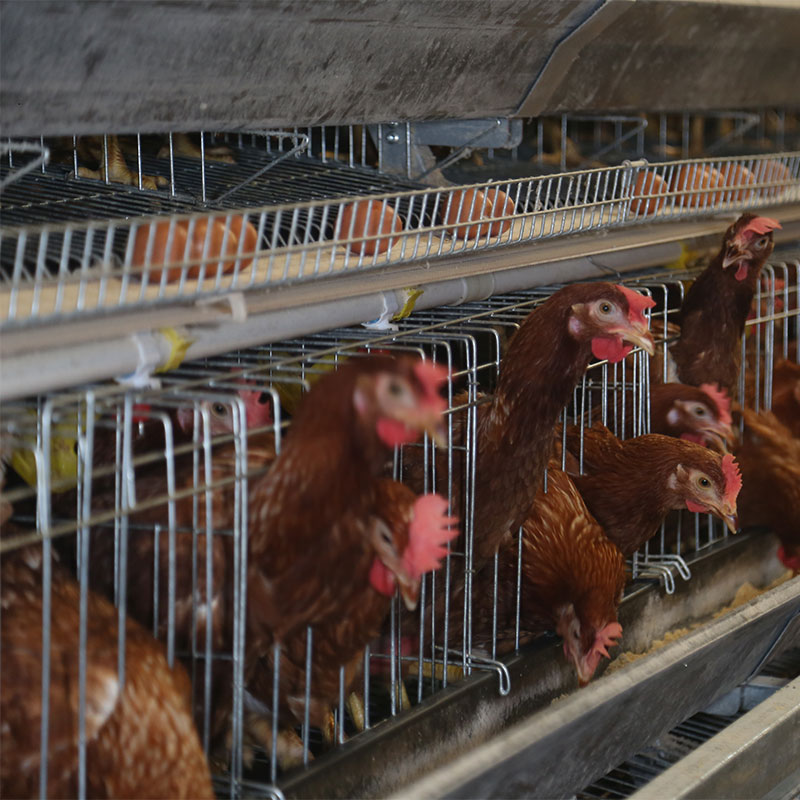
The conventional battery cage, now largely phased out or banned in many regions due to animal welfare legislation, represents the old standard. Its modern, compliant successor is often simply called a conventional cage. In this system, small groups of hens are housed in a series of interconnected cages arranged in rows and tiers. A farmer might have a unit that holds four birds per cage, with each bird having access to feed from a trough running along the front and water from a nipple line. The floor is sloped wire mesh, allowing manure to drop through onto a belt or into a pit below for regular removal. The key feature here is the high degree of environmental control. Every aspect—light, temperature, feed, and water—is meticulously managed. For a large-scale producer focused on output and disease mitigation, this system minimizes variables. The eggs roll away from the hen immediately upon laying, traveling on a gentle incline to a central collection egg belt, which keeps them clean and drastically reduces the labor needed for gathering.
A significant advancement from the conventional model is the enriched or furnished cage system. This design was developed specifically to address welfare concerns by providing resources that allow for more natural behaviors. An enriched cage doesn’t just house more birds; it incorporates specific features. A perch runs the length of the cage, giving hens a place to roost off the wire floor. In one corner, a darkened, enclosed area serves as a nesting box, providing the seclusion hens instinctively seek when ready to lay. This dramatically reduces floor eggs and stress. Perhaps most notably, a matted area for scratching and dustbathing is included. A farmer will often add a substrate like oat hulls to this area, encouraging the birds to perform this vital natural behavior, which promotes feather and skin health. While the footprint per bird is larger than in a conventional cage, the enriched system often leads to improvements in feather cover and bone strength because the birds can move more freely and engage in a wider range of activities.
For operations targeting specific markets, such as free-range or organic egg production, the aviary system serves as a bridge between cage and floor-based housing. It is a large, multi-tiered structure that provides immense freedom of movement within a protected barn environment. Hens can fly or jump between tiered platforms, accessing feed, water, and perches at various levels. The system includes litter on the barn floor for dustbathing and scratching. The critical difference from a true free-range system is that the birds are still contained within the barn, though pop-holes may allow access to an outdoor range during daylight hours. Managing an aviary requires a different skill set. Farmers must train pullets to navigate the complex vertical space before they come into lay to prevent them from staying on the floor where they can become trapped or fail to find food and water. While it demands more labor and has a higher risk of feather pecking if not managed perfectly, it allows a producer to access premium markets without sacrificing all the density benefits of vertical housing.
The Operational Advantages: A Manager's Perspective
The adoption of cage systems is driven by a compelling list of operational benefits that directly impact the bottom line.
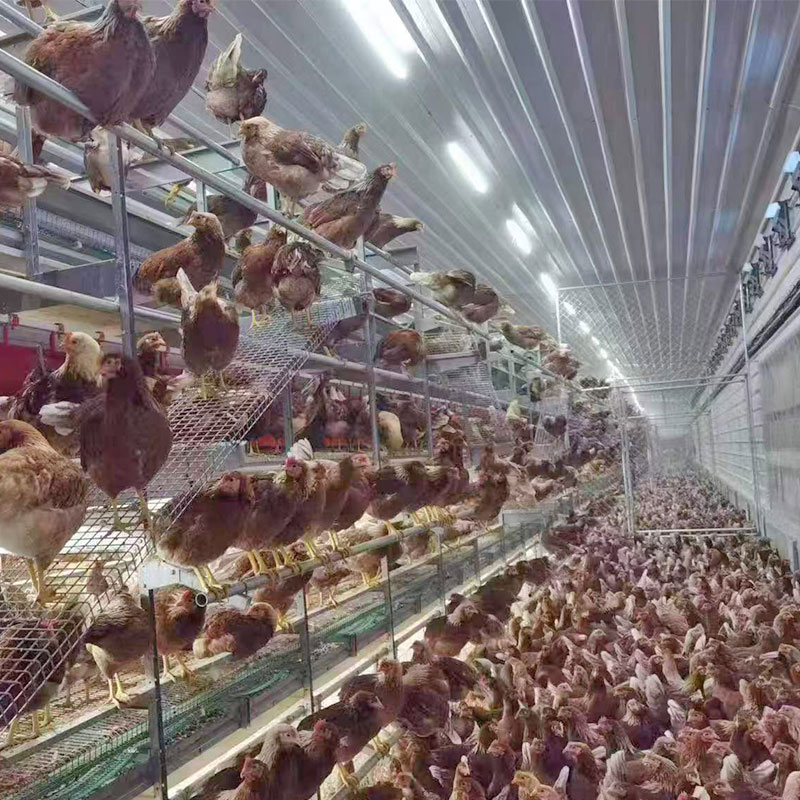
The most immediate advantage is the radical improvement in stock density. By utilizing vertical space, a cage system can house thousands of birds within a single barn footprint that might only hold hundreds in a floor system. This isn’t about overcrowding; it’s about engineering efficiency. The vertical stacking allows for a much higher return on investment in terms of building and land costs. The climate within this densely stocked environment is also far easier and more economical to control. Advanced ventilation systems can maintain precise temperature and humidity levels, removing ammonia-laden air and providing fresh air uniformly to all birds, regardless of their tier. Trying to achieve this level of environmental consistency in a litter-based barn with birds on the floor is considerably more challenging and energy-intensive.
From a bird health standpoint, the separation of the hen from her manure is arguably the single greatest benefit. In a floor system, pathogens cycle continuously between the bird and the litter. In a cage system, manure drops through the wire floor and is removed daily by a scraper or a manure belt, often being deposited directly into a trailer outside the barn. This drastic reduction in pathogen load means lower incidences of bacterial diseases like coccidiosis and necrotic enteritis. Consequently, a farmer may find she can reduce her reliance on prophylactic medications, a significant advantage as consumer and regulatory pressure moves toward reduced antibiotic use. The controlled environment also minimizes exposure to external disease vectors like wild birds and rodents.
Labor efficiency is transformed. The automation integrated into modern cage systems is extensive. Feed is delivered by augers to troughs on a pre-programmed schedule. Water is provided via closed-system nipple drinkers that reduce spillage and keep water clean. Egg collection is fully automated; eggs roll onto a soft, plastic-coated belt that transports them gently to a central collection room, often where they can be automatically sorted, graded, and packed. Manure handling is automated via belts or scrapers. This level of automation allows one or two workers to manage tens of thousands of birds, focusing their time on monitoring animal welfare and system performance rather on repetitive manual tasks.
Finally, the data collected through these systems is invaluable. Many modern setups are equipped with sensors that monitor feed consumption per row, water usage, and even individual egg weight. A manager can receive an alert if water consumption in a particular section drops, which is often the first sign of a health issue or a blocked water line. This allows for incredibly proactive flock management, catching problems before they impact productivity.
Considerations and Responsible Management
The advantages of cage systems are not realized automatically; they are contingent on flawless management and a significant upfront investment.
The capital outlay is the primary barrier to entry. A fully automated, climate-controlled barn with enriched cages is a major infrastructure project. The cost goes far beyond the cages themselves, encompassing ventilation systems, heating and cooling, feed bins and delivery systems, manure handling infrastructure, egg collection systems, and backup generators. This makes it a long-term investment that requires careful financial planning.
While cage systems mitigate many health risks, they introduce others that must be managed. The most significant is bone fragility. Without the constant impact of jumping on and off the ground, the bones of caged hens, particularly the keel bone, can be more susceptible to fractures. This is where the perches in enriched cages play a crucial role; they encourage movement and loading of the bones, helping to maintain skeletal strength. A nutritionist must also formulate diets with precise calcium and phosphorus levels to support strong bone and eggshell formation in a high-output environment.
Feather pecking and cannibalism can occur in any system if birds are stressed. In a cage, where birds live in a defined social group, a single aggressive hen can do significant damage. This makes beak treatment a common practice, though its future is uncertain due to welfare concerns. The alternative is to select genetic stock known for docility and to ensure the environment is optimal—consistent light intensity, no glaring lights, and no feed or water shortages that can trigger aggression.
Perhaps the most modern challenge is managing the system itself. A power failure can be catastrophic, halting ventilation, feed, and water delivery. Robust backup power is non-negotiable. Furthermore, the mechanical systems—belts, augers, motors—require a scheduled maintenance program. A broken egg belt can lead to thousands of eggs being laid on the floor in a single day, representing a total loss. The modern poultry farmer must be as much a mechanic and systems operator as a stockperson.
Making the Decision: Is a Cage System Right For Your Farm?
Choosing a housing system is a strategic decision that aligns with your market, your resources, and your management philosophy.
Market Access: Who are you selling to? If your target is the conventional grocery store market, a modern conventional or enriched cage system offers the efficiency needed to compete on price. If you are supplying a brand or retailer that requires cage-free eggs, then an aviary system or a full floor system becomes necessary. Your market dictates your capital investment.
Scale and Labor: What is your operational size and labor availability? A large-scale operation will benefit tremendously from the automation and labor savings of a cage system. A smaller, family-run farm might find the lower capital cost of a floor system more manageable, even if it requires more daily hands-on labor.
Financial Capacity: Can you secure the financing for a high-tech building? The return on investment is strong, but the barrier is high. Grants or subsidies for upgrading to higher-welfare enriched systems may be available in some regions.
Management Expertise: Are you and your team prepared to manage the technology? Troubleshooting a computer-controlled feed system or a malfunctioning ventilation fan requires a different skillset than managing birds on litter.
The journey into cage production begins long before the first bird arrives. It starts with pullet rearing. Pullets destined for an enriched cage or aviary system must be reared in a similar environment. They need to be trained on how to use perches and navigate tiers. Placing a floor-reared pullet into a complex cage system will result in birds that are confused, stressed, and unable to find food and water, leading to a disastrous start to the laying cycle.
The layer cage system is not a monolithic concept but a spectrum of technology. From the efficient simplicity of the conventional cage to the welfare-enhanced features of the enriched model and the market-flexibility of the aviary, these systems offer a pathway to scale, efficiency, and controlled production. Their successful implementation hinges on a commitment to capital investment, a deep understanding of the mechanics involved, and an unwavering focus on flock management. For the producer who masters this environment, the result is a predictable, efficient, and profitable enterprise where the well-being of the bird and the sustainability of the business are intrinsically linked.
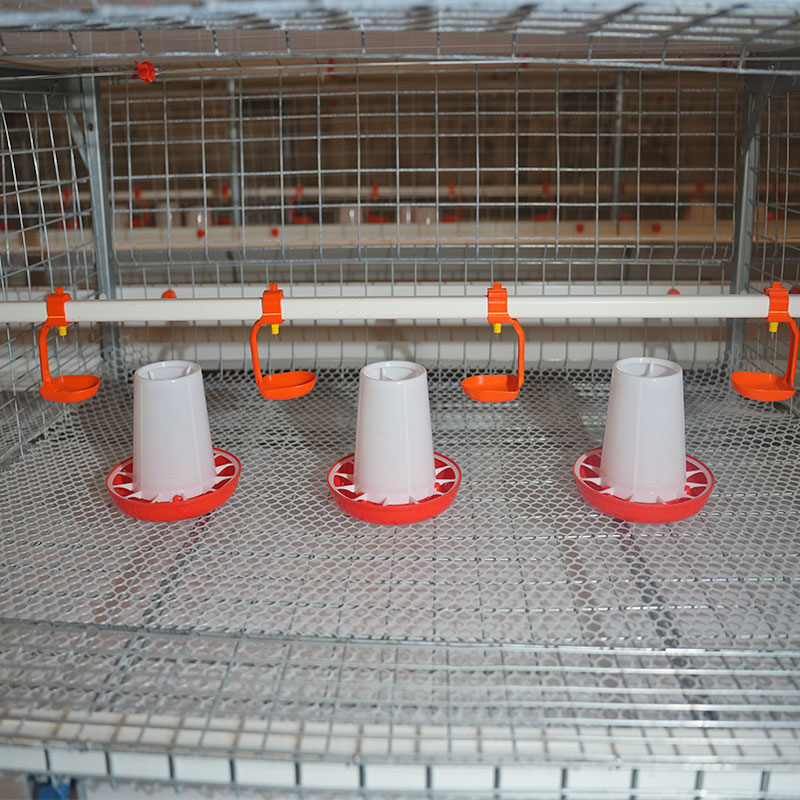
1. Drinking system include the water pipes, water pressure adjuster, drinking nipples, Waterline front-end device, dosing system etc, choose them according to customer's needs.
2. High-quality water drinking pipes, pressure regulating valves and water drinking nipples can effectively prevent the water leakage. Drinking system adopt the closed piping system, which can minimize the water pollution.
3. 360-degree drinking nipples provide adequate drinking water for poultry at all stages.
4. The automatic drinking water system mainly adopts the steel ball drinking nipple. lt uses imported high-grad stainless steel, POM resin, and APS engineering material, which is wearing resistant, and the durability can be used for long time.



1. Automatic feeding machine can be chosen between gantry and ladder feeding machine. Gantry type feeding machine is a relatively economical and practical machine with simple operation, remote control walking character, easy to manage.
2. Mechanical transmission device running smoothly, low noise, long service life.
3. With the use of automatic control, the feeding system can adjust the amount of material.
4. Feeding with arched structure, high carrying capacity, not easily deformed.
5. Saving man power, saving feed, greatly improving the efficiency of Large-scale farming.
6. The walking speed of gantry feeding machine is 9--12 m/min.




1. Manure removing system included scraper type and conveyor belt type, Which can reduce the labor intensity and labor cost, keep the chicken shed dry and clean.
2. A type chicken cage can use scraper type or conveyor belt type.


3. The scraper type is suitable for A type cages, which can clean two or three rows. For the starters, this type is a good choice. lt can not only save some labor cost, but also save some investment in the whole project. The cleaning speed is 6-10 meters per minute.
4. Conveyor belt type is more suitable for large scale farming. The manure removing belt we use is high quality PP material (polypropylene). The walking speed is 2-4 meters per minute.



High Quality Pellets Made by Mobile Pellet Machine
1. It has professional designed angle of the blade. After the dynamic balance test one by one, the blade can operate smoothly.
2. The air volume is consistent in the whole life of the fan. Bearings has advantage of high strength, low noise, durable and so on.
1. The cooling pads uses high-quality wet curtain paper and adopts space cross-linking technology, which has the advantages of high water absorption, high water resistance, anti-toxicity and long service life.
2. The cooling efficiency is over 80%, without surfactant, natural water absorption, fast diffusion speed and long-lasting effect.
3. The product does not contain phenol and other chemical substances that are easy to cause skin allergies. It is non-toxic and harmless to the human body and chicken when installed and used. It is green, safe, energy-saving, environmentally friendly, economical, and easy to install.
4. The frame aluminum alloy has high strength, good corrosion resistance, durability and beautiful appearance.
5. Use a special filter for the cooling pad at the upper water to ensure clean water quality and support efficient water circulation components.
6. Combined with a negative pressure fan, it can effectively lower the indoor temperature.
The window is made of special selected high-quality engineering plastic, with high strength and long service life, together with superior anti-aging and anti-UV performance.
Function: Ventilation of the chicken house, usually used in the winter.
This system can adjust the wind speed and direction, thus the cold air will not reach chicken directly , which can effectively prevent the phenomenon of cold stress in chicken.
Environmental control system equipment is suitable for large-scale and intensive farming. According to customer requirements, we can provide various types of smart poultry equipment.
1. Our poultry management system is a modular system that manages all aspects of the chicken house, such as climate, temperature, humidity, ammonia, feeding, feed weighing, lighting and ventilation systems, and can monitor the situation of the chicken house in real time through a computer and mobile phone.
2. The management computer is the heart of the poultry farm, allowing you to easily monitor the entire poultry farm.

 WeChat:+8617838608255