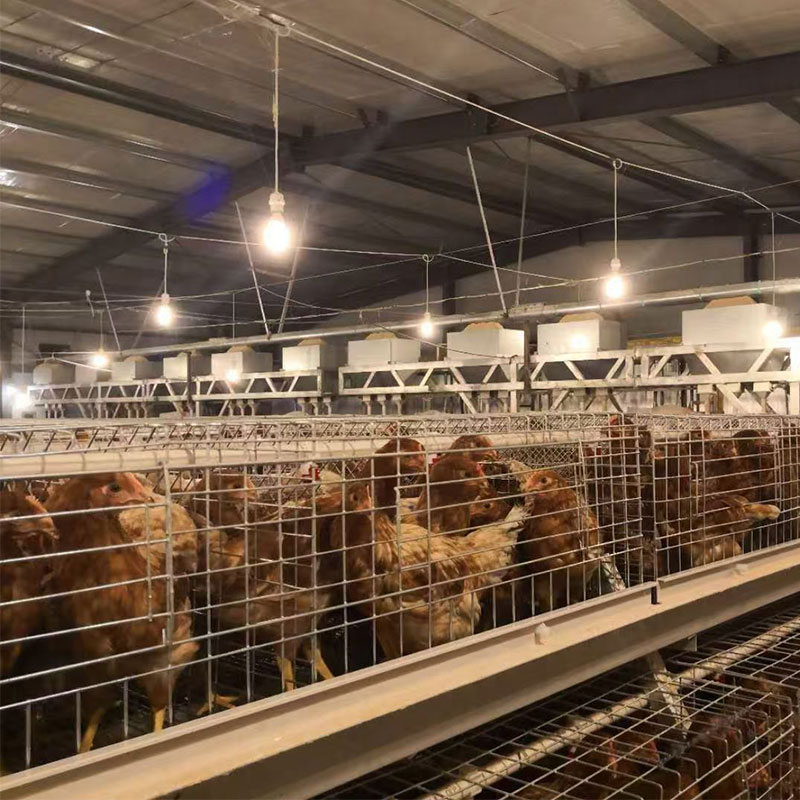
The transition from brooding to laying represents one of the most critical phases in a poultry operation. The housing and management decisions made for pullets—young female chickens not yet old enough to lay—directly dictate flock uniformity, the age at which they reach peak production, and the overall health and longevity of the birds. For decades, the industry standard was to rear pullets on the floor, only moving them to a cage system as they approached lay. This method, however, creates a significant stress event precisely when the birds should be focusing their energy on maturing their reproductive systems. A growing body of evidence and practical on-farm experience now champions a different approach: rearing pullets in the very cage systems they will inhabit as layers.
This strategy, known as pullet-reared-in-cage or same-system rearing, is not merely a housing choice; it is a comprehensive management philosophy designed to optimize bird welfare and productivity from day one.
The Foundation: Understanding Pullet Cage System Design
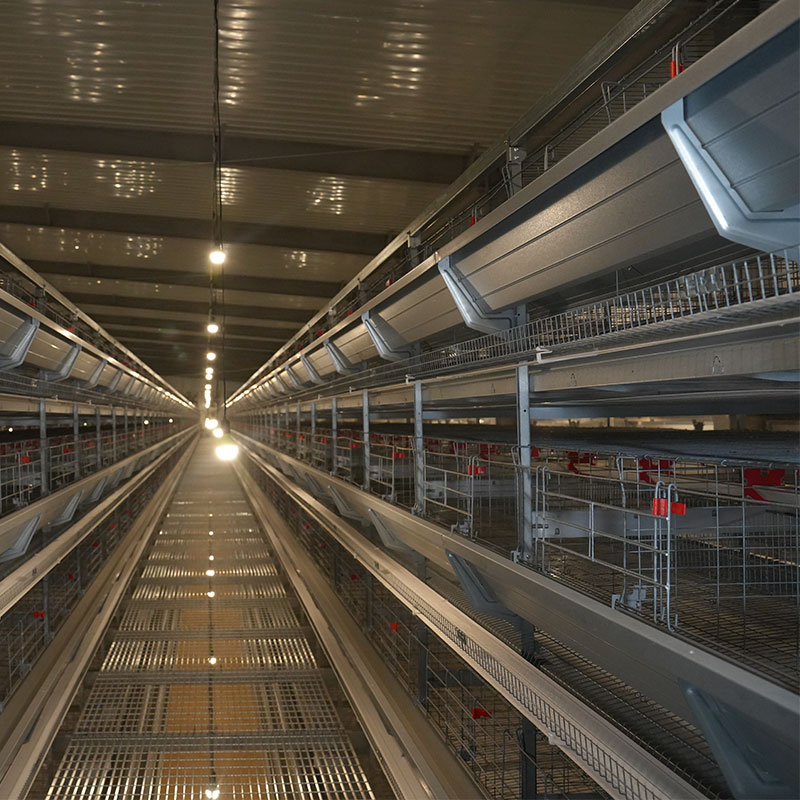
Pullet cages are not simply smaller versions of layer cages. They are engineered with the specific developmental needs of a growing bird in mind. The core design principle is to provide an environment that encourages natural behaviors while protecting the bird from itself and its flock mates during this vulnerable growth stage.
A typical pullet cage bank is a multi-tiered structure, often two or three levels high. Unlike deep, complex layer systems, pullet tiers are usually more accessible, with a shallower cage depth. This allows for easier observation and management of the entire flock. The flooring is a critical component. It starts as a solid, often plastic, surface for day-old chicks. This provides secure footing for unsteady legs and contains feed, preventing waste. As the birds grow, this solid floor is gradually replaced by a mesh floor. The mesh size is precisely calculated: large enough to allow droppings to pass through, maintaining hygiene, but small enough to prevent foot injuries and ensure comfortable perching.

Consider a farmer introducing new chicks. The first week, they are on a solid floor, with feed readily available on paper liners. By the third week, the farmer might slide out half of the solid floor panels, replacing them with the designated mesh. The birds slowly acclimate to the feel of the wire underfoot. By week six, the entire floor is mesh. This gradual transition is impossible in a floor-rearing system and prevents the foot and leg problems that can occur if a bird is abruptly placed on a wire floor for the first time.
Feed and water systems are integrated directly into the cage design. Nipple drinkers are positioned at an appropriate height for the birds’ size, encouraging them to learn the pecking motion required for water consumption—a skill that translates directly to the layer house. The feed trough runs the length of the cage, and its height is adjustable. A farmer will start with the trough rim level with the chicks’ backs, making access effortless. As the pullets grow, the trough is raised incrementally. This not only prevents feed wastage from beaking—the habit of flicking feed out of the trough—but also trains the birds to reach slightly for their food, promoting neck and skeletal strength. This meticulous attention to detail in system design sets the stage for a robust, well-developed bird.
Operational Advantages: Management, Health, and Efficiency
The shift to cage systems for pullets delivers tangible operational benefits that directly impact a farm’s bottom line and daily workflow.
Enhanced Flock Uniformity
Flock uniformity—the percentage of birds that are within 10% of the average body weight of the flock—is the single greatest predictor of laying performance. A uniform flock will come into lay at the same time, peak higher, and maintain production more consistently. Floor-rearing inherently creates competition. More aggressive birds dominate feeder and waterer space, becoming overweight, while shyer birds are pushed to the periphery, becoming underweight.
In a cage system, the population is divided into smaller, controlled social groups. Each bird has guaranteed, equal access to feed and water. There is no competition because resources are abundant and immediately available to every individual. A farmer can walk through the pullet house and see that the birds in every cage are nearly identical in size and development. This is not a happy accident; it is a direct result of the controlled environment. Managing nutrition to achieve target weights becomes a precise science rather than a best guess.
Superior Biosecurity and Disease Management
The threat of disease is a constant concern. Coccidiosis, parasitic worms, and bacterial infections like E. coli thrive in the litter of a floor-reared system. Birds constantly peck at and scratch in the litter, ingesting pathogens that can compromise gut health and immune function.
A cage system acts as a primary barrier. Birds are raised on wire mesh, completely separated from their manure, which drops through the floor onto a belt or into a pit below. This breaks the cycle of infection and re-infection. The need for in-feed coccidiostats is dramatically reduced, if not eliminated entirely, which is a significant cost savings and aligns with growing consumer demand for reduced medication use. When a health issue does arise, such as a respiratory challenge, it is far easier to medicate the entire flock effectively through the water line, and the spread is often limited to a single row of cages rather than the entire barn.
Precision Environmental Control
Modern pullet cages are installed within environmentally controlled houses. This allows for exact regulation of temperature, humidity, and ventilation. For a growing pullet, consistent temperature is non-negotiable. Chilling or overheating can permanently stunt development. In a cage system, air flow is engineered to move evenly throughout the house, ensuring every bird, whether on the top or bottom tier, experiences the same conditions.
In a floor system, temperature stratification is a real problem. It can be a perfect 75°F (24°C) at bird level, but a chilly 65°F (18°C) on the floor where the chicks are, or much hotter near the ceiling. The farmer is constantly battling to find a compromise, often wasting energy by overheating the entire space to warm the cold spots. The cage system eliminates this inefficiency, providing a uniform climate that promotes steady, uninterrupted growth.
Labor and Resource Efficiency
The automation integrated with cage systems translates into substantial labor savings. Feed is delivered automatically on a schedule, and water is continuously available. Manure removal is handled by automated scrapers or belts, a task that is manual, time-consuming, and unpleasant in a floor system. Catching birds for transfer or vaccination is also streamlined. Instead of rounding up thousands of birds in a large open space, workers can methodically empty one cage at a time, reducing bird stress and labor hours dramatically.
The Behavioral and Welfare Perspective
A common criticism of cage systems is that they inhibit natural behaviors. However, for the pullet phase, a well-designed cage system, when managed correctly, can actually foster important behaviors more effectively than a crowded floor environment.
Reduced Feather Pecking and Cannibalism
These are serious welfare and economic issues that often emerge in floor flocks. The triggers are complex but are frequently linked to overcrowding, boredom, and the establishment of a severe pecking order. In a cage, the social group is small and stable. The birds establish a hierarchy quickly and with minimal violence because resources are not scarce. The controlled environment removes many of the stressors that lead to vice behaviors. Furthermore, the cage itself provides a form of enrichment. The birds learn to navigate the vertical space, hopping between perches and different levels within their cage, which exercises their legs and reduces boredom.
Promoting Laying Behaviors
The most significant behavioral advantage is the seamless acclimatization to the laying environment. A pullet reared on the floor has never seen a nipple drinker, a raised feed trough, or a wire mesh floor until the day she is caught, transported, and dumped into a layer cage. This is a profoundly stressful event. She must learn entirely new systems for eating and drinking while simultaneously recovering from the stress of handling and establishing a new social order in an unfamiliar environment. It is not uncommon for birds to lose weight during this transition, delaying sexual maturity and the onset of lay.
A pullet reared in a cage system experiences none of this trauma. She is already an expert in using nipple drinkers. She is completely accustomed to the feel of the mesh floor beneath her feet, which means her foot pads are already toughened and she has strong bone density from constant perching. When it comes time to move her to the layer house, the transition can be far less disruptive. In ideal same-system setups, the pullet cages and layer cages are of identical design. The move might simply involve physically relocating the entire cage unit to the layer barn, or moving the birds to an identical system next door. The only change from the bird’s perspective is its geographical location. She continues eating, drinking, and behaving normally, allowing her energy to be directed toward maturation instead of stress adaptation.
Implementing a Pullet Cage System: Considerations
Adopting this model requires careful planning and a commitment to changed management practices.
Stocking Density is Paramount
The success of the system hinges on providing adequate space. Overcrowding negates every benefit, leading to poor uniformity, increased vices, and stunted growth. Space requirements evolve as the birds grow. A good rule of thumb is to provide a minimum of 100 square inches per bird by the time they are ready to transfer, but always consult the guidelines of your equipment provider and the primary breeder of your chosen strain. It is better to err on the side of too much space than too little.
Lighting Programs
Lighting is the primary tool for managing sexual maturity. In a dark-out, environmentally controlled house, you have complete mastery over the photoperiod. A typical program involves decreasing light hours after placement to slow maturation, holding at a constant period, and then increasing light to stimulate the onset of lay at the desired time. This precision ensures the pullet’s body is fully developed and ready for production, leading to larger, better-quality eggs from the start.
Training and Staff Adaptation
The technology is only as good as the people managing it. Staff must be trained to observe birds differently—not in a large mass, but in small groups. They need to understand the mechanics of adjusting feed troughs, changing water pressure, and operating the manure removal system. The management mindset shifts from reactive problem-solving in a floor flock to proactive precision management in a controlled environment.
The decision to rear pullets in a cage system is an investment in the future performance of the laying flock. It moves beyond simply housing chickens to actively engineering their development. By controlling their environment, nutrition, and social structure, farmers can produce a pullet that is uniform, healthy, and behaviorally prepared for a high-producing laying life. The result is a flock that achieves its genetic potential, translating into greater productivity, improved bird welfare, and a stronger return on investment for the forward-thinking poultry farmer.
1. Drinking system include the water pipes, water pressure adjuster, drinking nipples, Waterline front-end device, dosing system etc, choose them according to customer's needs.
2. High-quality water drinking pipes, pressure regulating valves and water drinking nipples can effectively prevent the water leakage. Drinking system adopt the closed piping system, which can minimize the water pollution.
3. 360-degree drinking nipples provide adequate drinking water for poultry at all stages.
4. The automatic drinking water system mainly adopts the steel ball drinking nipple. lt uses imported high-grad stainless steel, POM resin, and APS engineering material, which is wearing resistant, and the durability can be used for long time.



1. Automatic feeding machine can be chosen between gantry and ladder feeding machine. Gantry type feeding machine is a relatively economical and practical machine with simple operation, remote control walking character, easy to manage.
2. Mechanical transmission device running smoothly, low noise, long service life.
3. With the use of automatic control, the feeding system can adjust the amount of material.
4. Feeding with arched structure, high carrying capacity, not easily deformed.
5. Saving man power, saving feed, greatly improving the efficiency of Large-scale farming.
6. The walking speed of gantry feeding machine is 9--12 m/min.




1. Manure removing system included scraper type and conveyor belt type, Which can reduce the labor intensity and labor cost, keep the chicken shed dry and clean.
2. A type chicken cage can use scraper type or conveyor belt type.


3. The scraper type is suitable for A type cages, which can clean two or three rows. For the starters, this type is a good choice. lt can not only save some labor cost, but also save some investment in the whole project. The cleaning speed is 6-10 meters per minute.
4. Conveyor belt type is more suitable for large scale farming. The manure removing belt we use is high quality PP material (polypropylene). The walking speed is 2-4 meters per minute.



High Quality Pellets Made by Mobile Pellet Machine
1. It has professional designed angle of the blade. After the dynamic balance test one by one, the blade can operate smoothly.
2. The air volume is consistent in the whole life of the fan. Bearings has advantage of high strength, low noise, durable and so on.
1. The cooling pads uses high-quality wet curtain paper and adopts space cross-linking technology, which has the advantages of high water absorption, high water resistance, anti-toxicity and long service life.
2. The cooling efficiency is over 80%, without surfactant, natural water absorption, fast diffusion speed and long-lasting effect.
3. The product does not contain phenol and other chemical substances that are easy to cause skin allergies. It is non-toxic and harmless to the human body and chicken when installed and used. It is green, safe, energy-saving, environmentally friendly, economical, and easy to install.
4. The frame aluminum alloy has high strength, good corrosion resistance, durability and beautiful appearance.
5. Use a special filter for the cooling pad at the upper water to ensure clean water quality and support efficient water circulation components.
6. Combined with a negative pressure fan, it can effectively lower the indoor temperature.
The window is made of special selected high-quality engineering plastic, with high strength and long service life, together with superior anti-aging and anti-UV performance.
Function: Ventilation of the chicken house, usually used in the winter.
This system can adjust the wind speed and direction, thus the cold air will not reach chicken directly , which can effectively prevent the phenomenon of cold stress in chicken.
Environmental control system equipment is suitable for large-scale and intensive farming. According to customer requirements, we can provide various types of smart poultry equipment.
1. Our poultry management system is a modular system that manages all aspects of the chicken house, such as climate, temperature, humidity, ammonia, feeding, feed weighing, lighting and ventilation systems, and can monitor the situation of the chicken house in real time through a computer and mobile phone.
2. The management computer is the heart of the poultry farm, allowing you to easily monitor the entire poultry farm.

 WeChat:+8617838608255