The financial weight of cage systems sits at the core of every poultry operation’s profitability. For a farmer, the question isn't simply "how much does a cage cost?" but rather, "what is the total cost of housing a bird from pullet to last egg?" The initial price tag on a cage unit is just the visible tip of the iceberg; beneath the surface lies a complex calculation of durability, labor efficiency, bird performance, and long-term operational savings. Navigating this requires a shift in perspective from purchasing equipment to investing in a production engine.
Understanding the primary cage systems available is the first step. The industry has moved decisively toward more managed environments, each with distinct financial and operational profiles.

Battery Cages (Conventional Cages): These are the stacked, wire-mesh enclosures that defined egg production for decades. A farmer might look at a four-tier battery cage system priced at $50 per bird space. The initial outlay seems efficient, maximizing bird density within a given house footprint. The financial mechanics are straightforward: high initial stock density lowers the per-bird share of the building's cost. However, this lower upfront capital cost per bird is often offset by other factors. The close confinement can lead to higher stress levels in the flock, which might manifest as poorer feed conversion ratios—meaning it costs more in feed to produce a dozen eggs. While the cages themselves may be the least expensive option, the system's design can make manure management a challenge, often requiring frequent manual cleaning or complex drying systems to handle the concentrated waste, adding to operational labor and equipment costs.
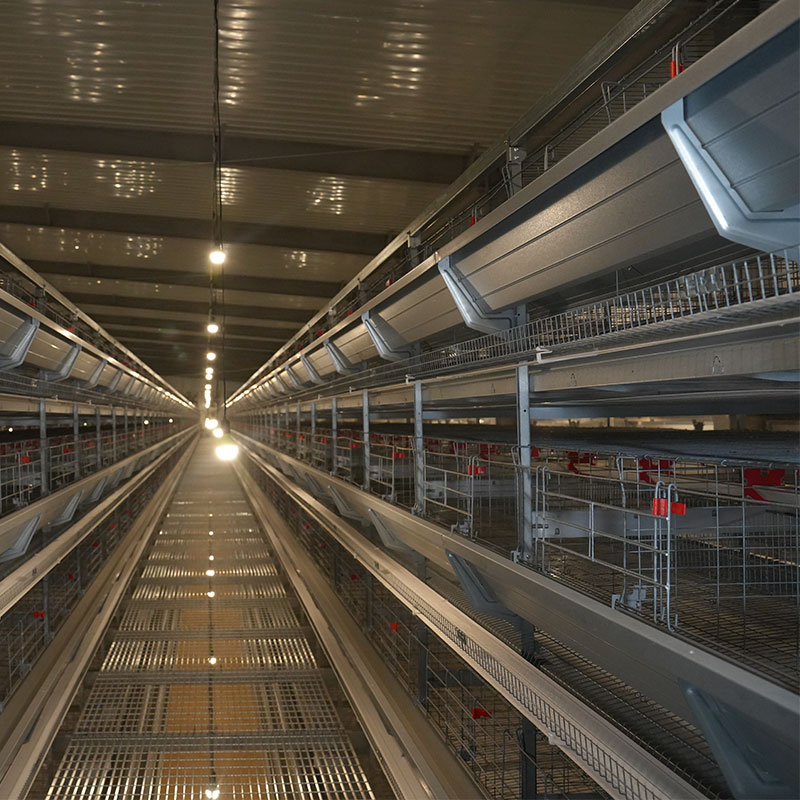
Enriched or Furnished Cages: Developed in response to welfare legislation in many markets, these systems incorporate specific features into the cage design. A unit priced at $75 per bird space will include a scratching area, perches, and a private nesting box. The immediate cost is higher than a conventional battery cage. The investment, however, is in bird behavior and product quality. Hens with access to a nest box lay a higher percentage of clean, uncracked eggs in a designated area, drastically reducing the time workers spend sorting through litter or cage floors to find saleable product. A perch allows for more natural roosting, which can improve bone strength and reduce mortality. For a farmer, this translates to a higher percentage of Grade A eggs and a reduction in seconds, directly protecting revenue. The system is a capital investment aimed at safeguarding the quality and value of the output while addressing welfare standards.
Aviary Systems (Cage-Free): This represents the most significant capital investment, often starting at $100+ per bird space. In an aviary, birds move freely within a large barn, with multiple tiers of platforms, perches, and nest boxes. The cage cost is effectively replaced by the cost of a more complex internal housing structure. The financial calculation here is radically different. The initial capital outlay is the highest, and stocking density is lower, increasing the per-bird cost of the building itself. The return on this investment is captured through a premium product price—cage-free eggs—and potentially improved bird welfare metrics. However, the operational costs are different. Litter management becomes a primary task, requiring dedicated equipment like windrow turners. Feed consumption is generally higher as birds are more active. Labor needs shift from automated egg collection to more active flock management, watching for floor eggs and ensuring even distribution of birds across the system to avoid overcrowding in certain areas. This system is less an equipment purchase and more a strategic business decision to access a specific, higher-value market segment.
Beyond the type of system, the composition of the cage itself is a major price determinant. A cage made from thin, galvanized wire with simple spot welds will have a much lower initial cost than one constructed from heavy-gauge, high-tensile steel with full seam welding. The cheaper cage might save thousands upfront on a 20,000-bird house. But consider a practical scenario: after five years of constant use and regular cleaning with high-pressure sprayers, the thinner wire begins to corrode at the weld points. Doors become difficult to latch, creating escape routes for hens. Floor wires weaken, leading to sagging and increased egg breakage. The farmer is now facing constant repairs, premature replacement of entire sections, and lost revenue from broken eggs. The heavier-gauge, better-welded cage, while 20-30% more expensive initially, will likely last for two or more full flock cycles without significant degradation, protecting the investment and ensuring consistent operation.
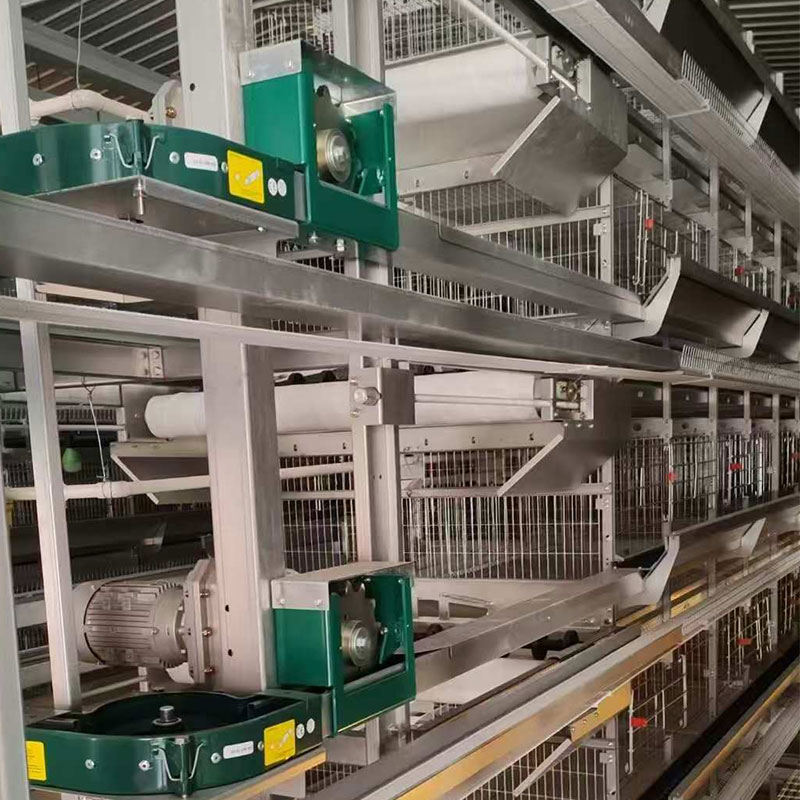
The mechanism for collecting eggs is another critical cost variable. A basic system may use a collection belt that moves eggs to one end of the row where they are hand-loaded into trays. This requires daily labor and increases handling, which raises the risk of cracks. A more advanced, and expensive, system includes integrated egg elevators that gently carry eggs from each tier to a central conveyor belt that transports them directly to the grading and packing room. The capital cost is higher, but it eliminates a significant daily labor cost and minimizes egg handling, resulting in a higher percentage of top-quality eggs reaching the packer. The payback period on this automation is a direct calculation of saved labor hours and improved product quality.
Manure management systems are integrated into the cage design and price. The simplest method is a manure belt that runs beneath each tier, which is periodically activated to scrape the waste into a cross-conveyor for removal from the house. A more sophisticated and costly option is a deep pit system where manure drops into a sealed pit beneath the cages for extended storage, drying naturally with ventilation before being removed annually. The latter requires a more robust building design but drastically reduces the frequency and labor of manure handling, a considerable operational expense. The choice isn't just about waste removal; it's about investing in a system that manages a byproduct in the most labor- and time-efficient way possible.
The scale of the operation dramatically influences the per-unit cost. A small-scale farmer purchasing a few dozen cages will pay a premium for each unit. A large integrator commissioning a turn-key house for 100,000 hens will negotiate a significantly lower price per bird space due to the volume of materials and the efficiency of a single, large installation. This economy of scale extends beyond the cages to ancillary systems like feeding, watering, ventilation, and egg handling. For a smaller farmer, this means the financial barrier to adopting the latest technology is higher on a per-bird basis.
Installation is a frequently underestimated line item. A farmer might budget for the cages but not fully account for the cost of the specialized labor to assemble them, pour concrete supports, and integrate electrical systems for motors and controls. A complex aviary system can have installation costs that rival the price of the equipment itself. Furthermore, the infrastructure of the barn must be compatible. Retrofitting an old building for a new cage system often requires reinforcing floors to hold the weight of heavy steel tiers and manure pits, upgrading electrical systems, and installing modern tunnel ventilation. These hidden costs can sometimes exceed the price of the cages and must be included in the total investment calculation.
The true cost of a cage system is ultimately measured over the lifespan of the equipment, not at the point of purchase. A well-built system should last for 15-20 years and through several flock cycles. This long-term view incorporates several financial factors:
Depreciation: The capital cost is spread over the useful life of the equipment. A more expensive, durable system may have a similar annual depreciation cost to a cheaper system that needs replacing twice as often.
Operational Efficiency: This is where the investment proves its worth. A system with automated egg collection saves daily labor costs. A robust manure management system saves weekly cleaning time. A design that promotes bird health and hygiene can reduce mortality and veterinary costs. These ongoing savings directly improve the bottom line for years.
Product Quality and Revenue: The system's design directly impacts the salable product. Fewer cracked and dirty eggs mean more eggs can be sold at the highest price point. In the case of enriched or aviary systems, access to a premium market (cage-free, organic) can fundamentally change the revenue model of the farm, justifying the higher capital investment.
Regulatory Future-Proofing: Investing in a system that already meets or exceeds anticipated animal welfare regulations protects the farmer from having to make another costly upgrade in the near future. This is a strategic financial decision that mitigates future risk.
For a poultry farmer, the process of selecting a cage system must begin with a holistic business analysis, not a equipment catalog. The questions to ask are not "what is the price?" but "what is the required ROI?" and "what market am I supplying?" The budget must account for the total project: equipment, installation, and necessary infrastructure upgrades. The operational model must be projected forward, calculating the savings in labor and the gains in product quality against the higher capital expenditure. The decision balances immediate financial constraints with long-term operational goals, making the choice of a cage system one of the most significant strategic investments a poultry farmer will ever make.
1. Drinking system include the water pipes, water pressure adjuster, drinking nipples, Waterline front-end device, dosing system etc, choose them according to customer's needs.
2. High-quality water drinking pipes, pressure regulating valves and water drinking nipples can effectively prevent the water leakage. Drinking system adopt the closed piping system, which can minimize the water pollution.
3. 360-degree drinking nipples provide adequate drinking water for poultry at all stages.
4. The automatic drinking water system mainly adopts the steel ball drinking nipple. lt uses imported high-grad stainless steel, POM resin, and APS engineering material, which is wearing resistant, and the durability can be used for long time.



1. Automatic feeding machine can be chosen between gantry and ladder feeding machine. Gantry type feeding machine is a relatively economical and practical machine with simple operation, remote control walking character, easy to manage.
2. Mechanical transmission device running smoothly, low noise, long service life.
3. With the use of automatic control, the feeding system can adjust the amount of material.
4. Feeding with arched structure, high carrying capacity, not easily deformed.
5. Saving man power, saving feed, greatly improving the efficiency of Large-scale farming.
6. The walking speed of gantry feeding machine is 9--12 m/min.




1. Manure removing system included scraper type and conveyor belt type, Which can reduce the labor intensity and labor cost, keep the chicken shed dry and clean.
2. A type chicken cage can use scraper type or conveyor belt type.


3. The scraper type is suitable for A type cages, which can clean two or three rows. For the starters, this type is a good choice. lt can not only save some labor cost, but also save some investment in the whole project. The cleaning speed is 6-10 meters per minute.
4. Conveyor belt type is more suitable for large scale farming. The manure removing belt we use is high quality PP material (polypropylene). The walking speed is 2-4 meters per minute.



High Quality Pellets Made by Mobile Pellet Machine
1. It has professional designed angle of the blade. After the dynamic balance test one by one, the blade can operate smoothly.
2. The air volume is consistent in the whole life of the fan. Bearings has advantage of high strength, low noise, durable and so on.
1. The cooling pads uses high-quality wet curtain paper and adopts space cross-linking technology, which has the advantages of high water absorption, high water resistance, anti-toxicity and long service life.
2. The cooling efficiency is over 80%, without surfactant, natural water absorption, fast diffusion speed and long-lasting effect.
3. The product does not contain phenol and other chemical substances that are easy to cause skin allergies. It is non-toxic and harmless to the human body and chicken when installed and used. It is green, safe, energy-saving, environmentally friendly, economical, and easy to install.
4. The frame aluminum alloy has high strength, good corrosion resistance, durability and beautiful appearance.
5. Use a special filter for the cooling pad at the upper water to ensure clean water quality and support efficient water circulation components.
6. Combined with a negative pressure fan, it can effectively lower the indoor temperature.
The window is made of special selected high-quality engineering plastic, with high strength and long service life, together with superior anti-aging and anti-UV performance.
Function: Ventilation of the chicken house, usually used in the winter.
This system can adjust the wind speed and direction, thus the cold air will not reach chicken directly , which can effectively prevent the phenomenon of cold stress in chicken.
Environmental control system equipment is suitable for large-scale and intensive farming. According to customer requirements, we can provide various types of smart poultry equipment.
1. Our poultry management system is a modular system that manages all aspects of the chicken house, such as climate, temperature, humidity, ammonia, feeding, feed weighing, lighting and ventilation systems, and can monitor the situation of the chicken house in real time through a computer and mobile phone.
2. The management computer is the heart of the poultry farm, allowing you to easily monitor the entire poultry farm.

 WeChat:+8617838608255