Maximizing Layer Production with A-Type 10000-Bird Battery Cage Systems
For poultry farmers, the transition from traditional floor-rearing systems to modern cage-based housing represents a significant step toward operational efficiency and improved flock management. The A-Type 10000 Layer Battery Cage System with an integrated egg collection system is engineered to address the core challenges of large-scale egg production. This equipment is not merely a housing solution; it is a comprehensive production platform that directly influences bird welfare, labor efficiency, and ultimately, the farm's profitability.
The defining feature of this system is its A-frame structure. Unlike flat-deck cages, the A-Type design stacks tiers at a slight angle, creating a pyramid-like profile. This architecture is fundamental to its functionality. The sloped floor of each cage, typically made of reinforced wire mesh, guides freshly laid eggs gently toward the collection belt the moment they are produced. This simple yet critical design element prevents eggs from being trampled or pecked by other birds in the cage, significantly reducing the percentage of cracked or dirty eggs that must be sold at a discount. For a farmer managing 10,000 birds, a reduction in egg breakage by even a few percentage points translates to a substantial preservation of revenue.
Cage Design and Bird Density: A Balance of Welfare and Efficiency
A common concern with cage systems is bird density. The modern A-Type cage is a far cry from the overcrowded units of the past. These systems are designed with specific bird welfare and productivity metrics in mind. A standard cage module in a 10,000-bird system might be designed to hold four to five birds. The space allocation per bird is calculated to allow for natural behaviors such as standing, sitting, turning around, and accessing feed and water without excessive competition.
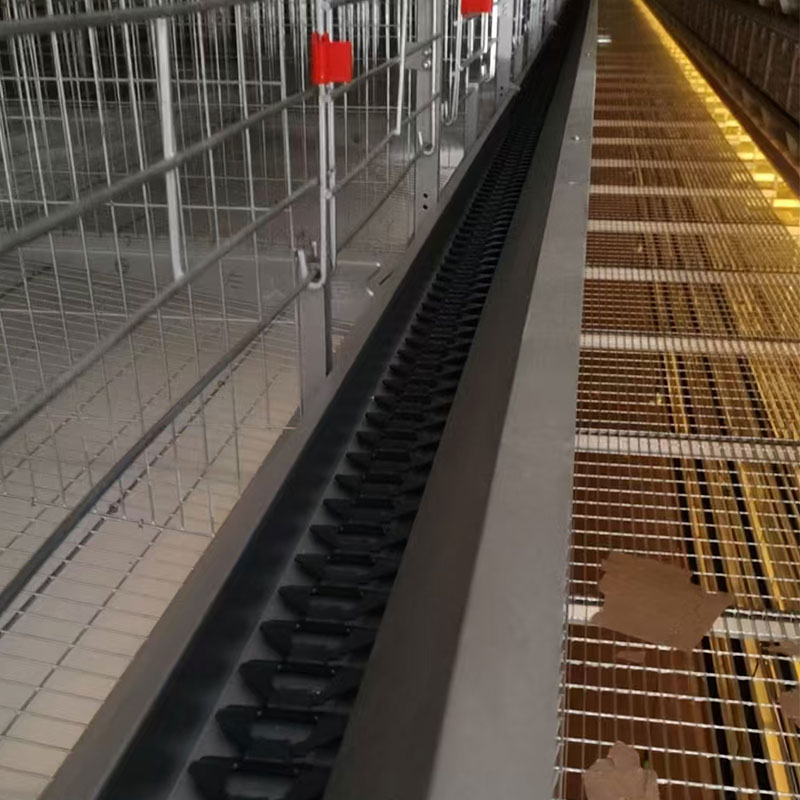
The cage flooring is a key component. It is not a solid surface but a welded mesh with a specific grid size. This size is carefully chosen to be small enough to provide secure footing for the birds, preventing foot injuries, but large enough to allow manure to pass through easily. This is where the "battery" concept comes into play. The cages are arranged in long rows, with manure collection belts or pits running beneath the entire length of the tiered structure. This continuous removal of waste from the immediate living environment of the birds is one of the most significant health advantages. It drastically reduces the birds' exposure to ammonia fumes from decomposing manure, which is a primary irritant to their respiratory systems. A hen breathing cleaner air is a healthier hen, requiring fewer medical interventions and maintaining a higher rate of lay.
The Integrated Feed and Water System: Precision Nutrition Delivery
Consistent and equitable nutrition is the engine of egg production. The A-Type system incorporates an automated feeding line that runs along the front of each tier of cages. A hopper stores the feed, and an auger or chain-drag system delivers it at predetermined times throughout the day. For the farmer, this automation means that 10,000 birds can be fed in a matter of minutes with minimal manual labor. More importantly, it ensures every bird has simultaneous access to fresh feed. In a floor system, dominant birds can monopolize feeders, leaving shyer or weaker birds undernourished. The cage system eliminates this hierarchy, promoting uniform growth and production across the entire flock.
The watering system is equally sophisticated. Nipple drinkers are the standard, replacing the open troughs that can easily become contaminated with feed and droppings. A hen learns to activate the nipple with her beak, receiving a drop of clean water directly into her mouth. This closed system prevents water spillage, keeping the litter beneath the cages drier and further inhibiting the growth of pathogens. It also provides a clear health indicator; if a nipple becomes blocked, the farmer can quickly identify and fix it, and a drop in water consumption across the house is an early warning sign of potential health issues within the flock.

The Egg Collection System: From Cage to Grading
The egg collection system is arguably the centerpiece of this entire setup, designed to minimize labor and maximize egg quality. As mentioned, the sloped cage floor guides the egg to the front of the cage, where it rolls onto a continuous soft-plastic or rubber belt. These belts run the length of each tier. At set intervals, a motor gently engages the belts, moving all the laid eggs toward one end of the house.
In a basic system, the eggs from each tier converge into a central collection point, where workers can gather them onto trays. In more advanced configurations, the system includes a vertical elevator. This elevator carefully lifts the eggs from the various tiers to a single, convenient height, often depositing them directly onto an egg grading and packing table. This "egg flow" process means that from the moment the egg is laid until it is in the packer's hands, it has minimal human contact. This reduces labor costs dramatically—instead of workers walking miles each day to collect eggs from nests, they can be stationed at a single point—and it also reduces the opportunities for accidental breakage.
The quality of the eggs arriving at the collection point is visibly superior. They are cleaner because they have not been laid on a litter floor, and they have a much higher proportion of Grade A eggs suitable for the premium market. For a farm producing 9,000 eggs a day (a 90% lay rate), ensuring that the vast majority of those eggs are saleable at the highest price is a direct contributor to the bottom line.
Manure Management: Turning Waste into Value
Beneath the tiers of cages lies the manure management system. The most common setup involves deep pits or continuous scrapers that collect the droppings. By keeping the manure dry—a result of the cage design preventing water spillage—the volume and weight are reduced, and the production of ammonia is minimized. This dry manure is far more manageable and valuable than the wet slurry produced in some floor systems.
Many farmers with these systems have developed a secondary revenue stream by composting this manure and selling it as organic fertilizer. The separation of the birds from their waste is a fundamental biosecurity advantage. It breaks the cycle of reinfection from parasites and bacteria that can thrive in moist litter, leading to a healthier flock and reducing the need for antibiotics or other medications.
Structural Considerations and Installation
Housing 10,000 birds along with heavy equipment requires a robust structure. A typical poultry house for this system is a clear-span building, often made of steel trusses, designed to support the weight of the cages, the birds, and the feed systems. Proper ventilation is non-negotiable. This is achieved through a combination of side-wall inlets and powerful exhaust fans controlled by thermostats. The fans create a negative pressure, pulling fresh air across the width of the house and ensuring stale air, heat, moisture, and dust are constantly removed. This controlled environment is crucial for bird comfort, especially in extreme weather, helping to prevent heat stress in summer and drafts in winter.
Installing a 10,000-bird system is a significant capital investment and requires careful planning. The ground must be level, and utilities like electricity and a reliable water source must be in place. Working with the equipment supplier to plan the layout is essential to ensure efficient workflow for daily operations like bird inspection, maintenance, and egg collection.
Flock Management within the Cage System
Daily management in an A-Type cage system shifts from physical labor to observational oversight. The farmer's role becomes one of monitoring. A daily walk through the house should involve listening to the birds—a healthy flock has a consistent, low hum of activity. Any sign of coughing, sneezing, or distress calls warrants immediate investigation. The farmer checks that the feeding system is distributing feed evenly, that the nipple drinkers are functioning, and that the egg collection belts are moving smoothly.
Because the birds are housed in small groups, it is easier to spot individual birds that are ill or injured. They can be removed for treatment without having to catch them in a large open space, reducing stress for both the bird and the handler. This individual attention, paradoxically, can be more effective in a cage system than in a large floor flock where a sick bird can easily go unnoticed until a problem has spread.
The system also simplifies key tasks like vaccination and debeaking. For vaccination, birds can be accessed easily cage by cage, ensuring a more thorough and less stressful procedure compared to rounding up thousands of birds on a floor.
Economic Justification and Return on Investment
The decision to invest in a 10,000-bird A-Type battery cage system is primarily an economic one. The initial capital outlay is considerable, covering the cost of the house construction, the cage equipment itself, and the environmental control systems. However, the return on investment is realized through multiple channels.
The most significant saving is in labor. A well-designed system can be managed by a single operator for a large portion of the day, with additional help needed mainly for egg packing and loading. Feed conversion ratios often improve because feed wastage is virtually eliminated—it cannot be scratched onto the ground—and each bird receives its precise share. The improved bird health leads to lower mortality rates and reduced veterinary costs. Finally, the dramatic increase in saleable, high-quality eggs ensures maximum revenue from the flock.
For a poultry farmer looking to scale up operations, increase production efficiency, and enhance biosecurity, the A-Type 10000 Layer Battery Cage System with an integrated egg collection system offers a proven, integrated solution. It transforms egg production from a labor-intensive husbandry practice into a streamlined agricultural enterprise, where control over the environment, nutrition, and animal health leads to predictable and profitable outcomes.
1. Drinking system include the water pipes, water pressure adjuster, drinking nipples, Waterline front-end device, dosing system etc, choose them according to customer's needs.
2. High-quality water drinking pipes, pressure regulating valves and water drinking nipples can effectively prevent the water leakage. Drinking system adopt the closed piping system, which can minimize the water pollution.
3. 360-degree drinking nipples provide adequate drinking water for poultry at all stages.
4. The automatic drinking water system mainly adopts the steel ball drinking nipple. lt uses imported high-grad stainless steel, POM resin, and APS engineering material, which is wearing resistant, and the durability can be used for long time.



1. Automatic feeding machine can be chosen between gantry and ladder feeding machine. Gantry type feeding machine is a relatively economical and practical machine with simple operation, remote control walking character, easy to manage.
2. Mechanical transmission device running smoothly, low noise, long service life.
3. With the use of automatic control, the feeding system can adjust the amount of material.
4. Feeding with arched structure, high carrying capacity, not easily deformed.
5. Saving man power, saving feed, greatly improving the efficiency of Large-scale farming.
6. The walking speed of gantry feeding machine is 9--12 m/min.




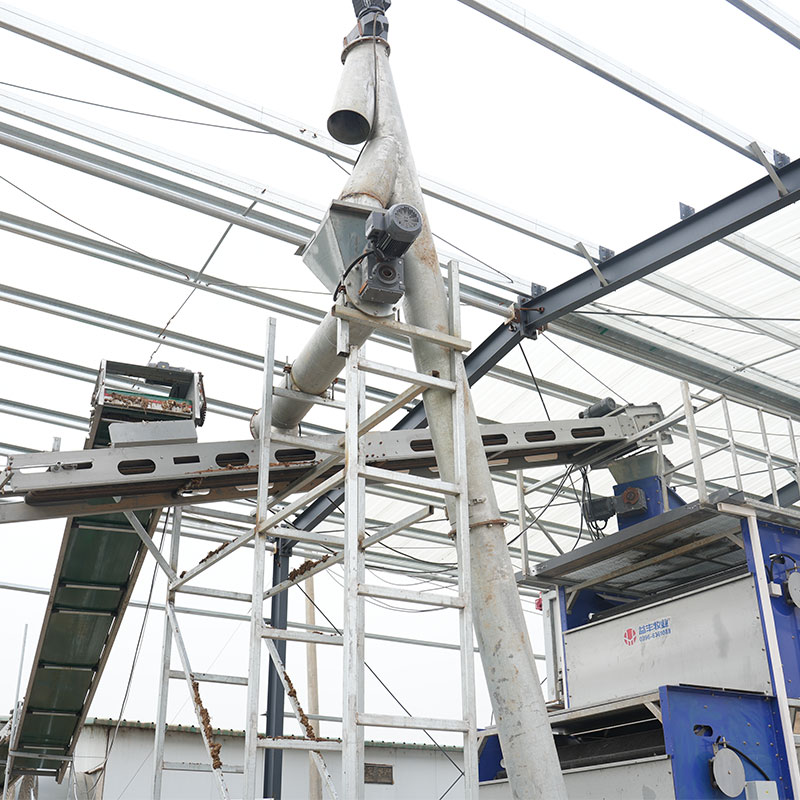
1. Manure removing system included scraper type and conveyor belt type, Which can reduce the labor intensity and labor cost, keep the chicken shed dry and clean.
2. A type chicken cage can use scraper type or conveyor belt type.


3. The scraper type is suitable for A type cages, which can clean two or three rows. For the starters, this type is a good choice. lt can not only save some labor cost, but also save some investment in the whole project. The cleaning speed is 6-10 meters per minute.
4. Conveyor belt type is more suitable for large scale farming. The manure removing belt we use is high quality PP material (polypropylene). The walking speed is 2-4 meters per minute.



High Quality Pellets Made by Mobile Pellet Machine
1. It has professional designed angle of the blade. After the dynamic balance test one by one, the blade can operate smoothly.
2. The air volume is consistent in the whole life of the fan. Bearings has advantage of high strength, low noise, durable and so on.
1. The cooling pads uses high-quality wet curtain paper and adopts space cross-linking technology, which has the advantages of high water absorption, high water resistance, anti-toxicity and long service life.
2. The cooling efficiency is over 80%, without surfactant, natural water absorption, fast diffusion speed and long-lasting effect.
3. The product does not contain phenol and other chemical substances that are easy to cause skin allergies. It is non-toxic and harmless to the human body and chicken when installed and used. It is green, safe, energy-saving, environmentally friendly, economical, and easy to install.
4. The frame aluminum alloy has high strength, good corrosion resistance, durability and beautiful appearance.
5. Use a special filter for the cooling pad at the upper water to ensure clean water quality and support efficient water circulation components.
6. Combined with a negative pressure fan, it can effectively lower the indoor temperature.
The window is made of special selected high-quality engineering plastic, with high strength and long service life, together with superior anti-aging and anti-UV performance.
Function: Ventilation of the chicken house, usually used in the winter.
This system can adjust the wind speed and direction, thus the cold air will not reach chicken directly , which can effectively prevent the phenomenon of cold stress in chicken.
Environmental control system equipment is suitable for large-scale and intensive farming. According to customer requirements, we can provide various types of smart poultry equipment.
1. Our poultry management system is a modular system that manages all aspects of the chicken house, such as climate, temperature, humidity, ammonia, feeding, feed weighing, lighting and ventilation systems, and can monitor the situation of the chicken house in real time through a computer and mobile phone.
2. The management computer is the heart of the poultry farm, allowing you to easily monitor the entire poultry farm.

 WeChat:+8617838608255