
Title: Poultry Farming Cage Systems: A Comprehensive Guide to Types, Pros, Cons & Best Practices
Introduction
The poultry cage system is one of the most prevalent and debated housing methods in modern commercial egg and pullet production. For farmers, investors, and agricultural professionals, choosing a housing system is a critical decision that impacts bird welfare, productivity, operational efficiency, and ultimately, profitability. This guide delves deep into poultry farming cage systems, moving beyond surfacelevel descriptions to provide a nuanced analysis grounded in practical expertise. We will explore the evolution of cage designs, weigh their tangible advantages against significant challenges (including animal welfare concerns), and outline best management practices for those operating within such systems. Whether you're evaluating your current setup or planning a new venture, this comprehensive resource aims to equip you with the knowledge needed to make informed decisions.
Understanding Poultry Cage Systems: Evolution and Core Principles
At its core, a poultry cage system involves housing birds in enclosures made of wire mesh. This method was developed to maximize space efficiency, improve hygiene control, and streamline management tasks in largescale operations. The system's evolution reflects changing priorities in farming.
Traditional Battery Cages: The original design featured small, barren wire cages arranged in long rows and multiple tiers. Each hen had minimal space—often less than the size of an A4 sheet of paper. While highly efficient for space and egg collection, these cages became the focal point of severe animal welfare criticism due to extreme behavioral restriction.
The Shift to Enriched/Colony Cages: Driven largely by legislation (like the EU's Directive 1999/74/EC) and market demands, enriched colony systems have become the new standard in many regions. These provide more space per hen and are required to include essential amenities:
A nesting area for laying eggs in private.
Perches for roosting.
A scratching area or litter mat for foraging/dustbathing.
Clawshortening devices.
This guide focuses primarily on modern cage systems as they are implemented today in regulated environments.
Types of Modern Poultry Cage Systems
Not all cage systems are identical. The choice depends on flock size, automation level, and budget.
H2: 1. Conventional Battery Cages (Now Largely Phased Out or Restricted)
H3: Design: Small, multibird units stacked in tiers (38 levels).
H3: Key Features: Manual or automated feeding/watering; eggs roll onto a collection belt; manure drops through the cage floor onto belts or pits.
H3: Current Status: Banned in the European Union and several other countries. Still used in some regions but facing increasing market restrictions.
H2: 2. Enriched Colony Cages
H3: Design: Larger enclosures housing small colonies of 2080 hens.
H3: Key Features: Includes legally mandated enrichments (nest, perch, scratch). Higher degree of automation possible.
H3: Best For: Commercial egg producers operating where these systems are the legal standard.
H2: 3. CombiCage Systems
H3: Design: A versatile system where birds start in a brooder section with higher temperature control and then can be given access to a larger growing section by opening partitions.
H3: Key Features: Used primarily for pullet rearing (016 weeks). Allows for controlled expansion of space as birds grow.
H3: Best For: Rearers supplying pointoflay pullets to layer farms.
H2: 4. Stacked vs. StairStep Layouts
| Feature | Stacked Layout | StairStep (California) Layout |
| : | : | : |
| Design | Cages directly on top of each other. | Cages are offset so manure falls directly into a deep pit below each tier. |
| Manure Management | Requires conveyor belts for each tier. | Eliminates need for manure belts; drier manure pile. |
| Air Quality | Can have higher ammonia if belts fail. | Generally better ventilation as manure is spread over larger area pit. |
| Cost | Higher maintenance on belt systems. | Lower mechanical complexity for manure handling. |
The Advantages of Cage Systems in Poultry Farming
From an operational management perspective, wellrun cage systems offer distinct benefits:
1. Enhanced Biosecurity & Disease Control: Birds have limited contact with their own feces due to sloped floors and manure removal systems. This reduces parasite loads (like coccidia) and bacterial exposure (like E.coli), potentially lowering medication use.
2. Improved Feed Efficiency & Production Metrics: Individual or smallgroup feeding reduces competition and allows for precise monitoring of intake. This control often translates into consistent feed conversion ratios (FCR) and predictable egg production curves.
3. Superior Egg Quality & Hygiene: Eggs roll away immediately upon laying, minimizing contact with birds and manure. This results in cleaner eggs with lower bacterial contamination rates and reduced incidence of floor eggs or cracked eggs.
4. Operational Efficiency & Labor Savings: Highly automated for feeding, watering, egg collection, and manure drying/removal. Allows one person to manage thousands of birds effectively.
5. Reduced Cannibalism & Feather Pecking: While not eliminated, separating birds can minimize severe outbreaks of these behavioral vices common in large flocks.
Critical Challenges & Welfare Considerations
It is imperative to address the significant drawbacks that define the public debate around cages:
1. Severe Behavioral Restriction: Even enriched cages severely limit natural behaviors like full wingflapping, running, foraging over large areas, dustbathing fully effectively (the small mat is often insufficient), and flying.
2.Space Limitation Per Bird: Despite improvements over battery cages,
space remains fundamentally constrained by economic models focused on density
This restriction is at heartof most welfare criticisms
3.Bone Health Issues: Lackof weightbearing exercise can leadto weaker bones particularly duringthe endoflay period increasingriskof fractures during depopulationand handling
4.Public Perception & Market Access: Major food retailers restaurant chainsand consumers globally are increasingly demanding cagefree eggs This createsa direct financial riskfor producers lockedinto cage systems withouta transition plan
For farmers usingcage systems adheringto highest standardsis crucialfor bird welfareand productivity
Environmental Control
Maintain precise temperature humidityand ventilation Ammonia levelsmustbe keptbelow25 ppm Dustshouldbe minimized Automated controllersare essential
Daily Bird Observation
Routine health checksare more challengingin cages Train staffto lookfor signs:
List item:Lethargyor abnormal posture
List item:Reduced feed/water consumptionat trough level
List item:Eyes closedor respiratory distress
List item:Mortality patterns
Feeding& Watering Management
Ensure even distributionof feedacrossall troughs Checknipple drinkersdailyfor pressureand function Preventfeed spillagethat attracts pests
Lighting Program
Implementa controlled lighting scheduletostimulate consistent laying Avoidsudden changesin intensityor duration Use dimmerswhere possible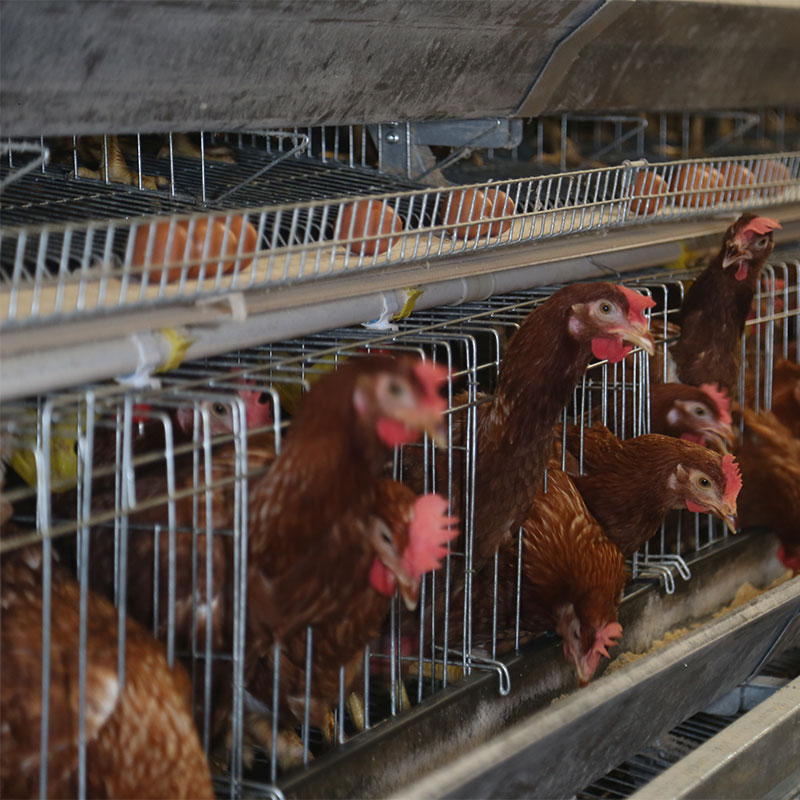
Manure Handling
Whether beltsor pits ensure regular removalor dryingto preventammonia buildup Properly compostedor treated manureis avaluable byproduct
Poultry farming cage systemsparticularly modern enriched designs offera pathwayto highefficiency controlled productionwith demonstrable benefitsin disease managementand egg hygiene However they comeatthe costof significantly restricting natural avian behavior which conflictswith evolving societal valueson animal welfare The decisionto usea cage systemis no longer purely agricultural; itis also economicand strategic Producers mustweigh operational efficienciesagainst potential market restrictions consumer trendsand their own ethical standards Futureproofinga poultry businessmay involve investingin alternative systemsor adoptingthe highest possible welfare standardswithin existing infrastructure Ultimately successlies notjustin choosinga systembutin masteringits managementwith unwavering attentionto detail bird healthand continuous improvement
Q1:Whatisa poultry battery cage?
A1:A battery cagereferstothe nowoutdated traditional designwhere small wire enclosuresare stackedin rows allowingminimal movementfor hens They lack enrichmentslike nestsor perchesand are bannedin many countriesdue towelfare concerns
Q2:Arethere any benefitsfor the birdsina cage system?
A2:Cage systemscan offerbenefitslike reduced exposureto fecalborne parasitesand pathogens lower incidenceof severe feather pecking/cannibalismand protectionfrom ground predators However these mustbe balancedagainstthe major drawbacksof behavioral restriction
Q3:Whatisthe differencebetween battery cagesandenriched colony cages?
A3:The key differenceis spaceand amenities Enriched colony cages providemore spaceper hen(usually~750 cm² vs~550 cm²)and legally requirea nesting area perch scratchingarea/litter mat allowingfor expressionof more natural behaviors than barren battery cages did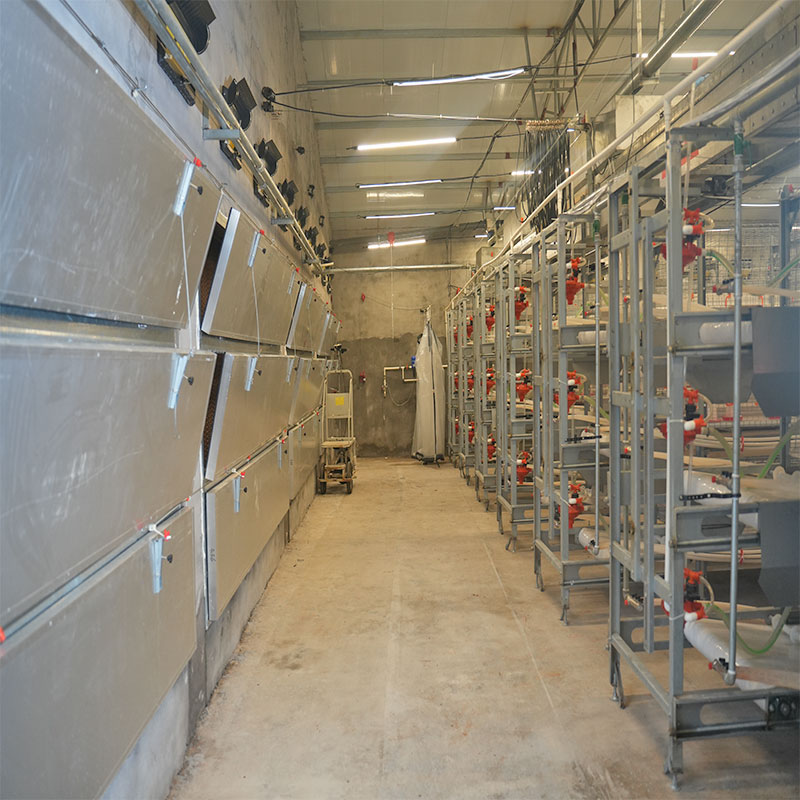
Q4:Whatare themain disadvantagesof usingcage systems?
A4:The primary disadvantagesinclude severe limitationon natural behaviors potentialfor weaker bonesdue tolackof exercise high capital costfor automation negative public perceptionandan increasinglossmarket accessas retailersmove tocagefree supply chains
Q5:Arecage systemsmore profitablethan freerange?
A5:Cage systemstypically havehigher stocking densitieslower feed wastage lower labor costsper birdandreduced mortalityfrom behavioral issuesleadingto lower productioncostsper dozen eggs However freerangeeggsoften commanda significantprice premiumwhich can offsettheir higher operating costs Profitability dependson local input costs market prices consumer demandandefficiencyof operation ineither system
1. Drinking system include the water pipes, water pressure adjuster, drinking nipples, Waterline front-end device, dosing system etc, choose them according to customer's needs.
2. High-quality water drinking pipes, pressure regulating valves and water drinking nipples can effectively prevent the water leakage. Drinking system adopt the closed piping system, which can minimize the water pollution.
3. 360-degree drinking nipples provide adequate drinking water for poultry at all stages.
4. The automatic drinking water system mainly adopts the steel ball drinking nipple. lt uses imported high-grad stainless steel, POM resin, and APS engineering material, which is wearing resistant, and the durability can be used for long time.



1. Automatic feeding machine can be chosen between gantry and ladder feeding machine. Gantry type feeding machine is a relatively economical and practical machine with simple operation, remote control walking character, easy to manage.
2. Mechanical transmission device running smoothly, low noise, long service life.
3. With the use of automatic control, the feeding system can adjust the amount of material.
4. Feeding with arched structure, high carrying capacity, not easily deformed.
5. Saving man power, saving feed, greatly improving the efficiency of Large-scale farming.
6. The walking speed of gantry feeding machine is 9--12 m/min.




1. Manure removing system included scraper type and conveyor belt type, Which can reduce the labor intensity and labor cost, keep the chicken shed dry and clean.
2. A type chicken cage can use scraper type or conveyor belt type.


3. The scraper type is suitable for A type cages, which can clean two or three rows. For the starters, this type is a good choice. lt can not only save some labor cost, but also save some investment in the whole project. The cleaning speed is 6-10 meters per minute.
4. Conveyor belt type is more suitable for large scale farming. The manure removing belt we use is high quality PP material (polypropylene). The walking speed is 2-4 meters per minute.



High Quality Pellets Made by Mobile Pellet Machine
1. It has professional designed angle of the blade. After the dynamic balance test one by one, the blade can operate smoothly.
2. The air volume is consistent in the whole life of the fan. Bearings has advantage of high strength, low noise, durable and so on.
1. The cooling pads uses high-quality wet curtain paper and adopts space cross-linking technology, which has the advantages of high water absorption, high water resistance, anti-toxicity and long service life.
2. The cooling efficiency is over 80%, without surfactant, natural water absorption, fast diffusion speed and long-lasting effect.
3. The product does not contain phenol and other chemical substances that are easy to cause skin allergies. It is non-toxic and harmless to the human body and chicken when installed and used. It is green, safe, energy-saving, environmentally friendly, economical, and easy to install.
4. The frame aluminum alloy has high strength, good corrosion resistance, durability and beautiful appearance.
5. Use a special filter for the cooling pad at the upper water to ensure clean water quality and support efficient water circulation components.
6. Combined with a negative pressure fan, it can effectively lower the indoor temperature.
The window is made of special selected high-quality engineering plastic, with high strength and long service life, together with superior anti-aging and anti-UV performance.
Function: Ventilation of the chicken house, usually used in the winter.
This system can adjust the wind speed and direction, thus the cold air will not reach chicken directly , which can effectively prevent the phenomenon of cold stress in chicken.
Environmental control system equipment is suitable for large-scale and intensive farming. According to customer requirements, we can provide various types of smart poultry equipment.
1. Our poultry management system is a modular system that manages all aspects of the chicken house, such as climate, temperature, humidity, ammonia, feeding, feed weighing, lighting and ventilation systems, and can monitor the situation of the chicken house in real time through a computer and mobile phone.
2. The management computer is the heart of the poultry farm, allowing you to easily monitor the entire poultry farm.

 WeChat:+8617838608255