The morning feed cycle begins before sunrise, the gentle hum of the auger system the only sound as precisely formulated rations travel through troughs running the entire length of the building. In tiered cages, hens turn their heads toward the arriving food, while broilers in their dedicated section rise from resting. This orchestrated movement is the heartbeat of a modern steel structure poultry facility, an environment where every element—from the galvanized steel frame to the automated manure belts—is engineered to translate shelter into a tool for production, health, and financial stability.
The Foundation: Why Steel Structure Buildings Outperform Traditional Housing
For generations, poultry farming relied on wooden trusses and pole-barn construction. These buildings served a purpose but came with inherent vulnerabilities. Fluctuations in temperature and humidity warped wood, creating drafts and compromising insulation. The porous nature of wood also provided harborage for pests like mites and beetles, creating a constant battle for biosecurity. A steel structure building addresses these weaknesses at its core.
The primary advantage is its impermeability. A building framed with galvanized steel studs and purlins does not warp, rot, or attract pests. The precision of its construction allows for a near-hermetic seal when combined with modern paneling, creating a controlled environment. This control is the prerequisite for everything that follows. Consider a farmer trying to maintain a stable temperature for day-old broiler chicks in a wooden house. A sudden cold snap causes the wood to contract, letting in a draft along the eaves. The chicks huddle, feed conversion drops, and the risk of respiratory illness rises. In a steel building, the consistent structure and tight seals allow ventilation and heating systems to work with maximum efficiency, maintaining the exact temperature gradient needed without fighting against the building itself.
Furthermore, the clear-span design of most steel buildings—free from internal support columns—is a logistical revolution. It allows for the unhindered layout of cage rows, feeding systems, and manure removal belts. There are no obstacles around which to design awkward, inefficient layouts. This open space also simplifies every task, from daily visual inspections of the flock to the crucial process of depopulation and thorough cleaning between cycles.
The Engine of Production: Integrated Cage System Design
The cage is not merely a container for birds; it is the central workstation of the laying hen or the growth chamber for the broiler. Modern cage systems are specialized based on the bird's purpose, and their integration with the building's steel structure is what unlocks their full potential.
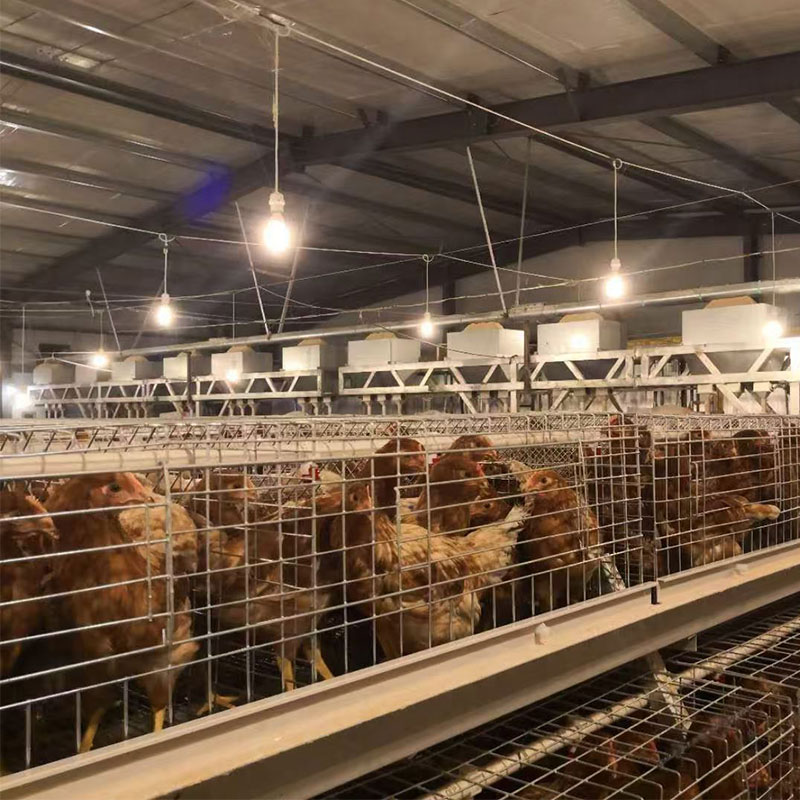
For laying hen operations, the multi-tiered aviary or enriched colony cage system is standard. These are not the cramped batteries of old. A typical enriched colony provides perches for roosting, a scratch pad for foraging behavior, and a secluded nesting area. The cages are arranged in rows, often three to six tiers high, with each level served by its own nipple drinker line and feed trough. The steel framework of the building is engineered to bear the significant weight of these systems when fully stocked. The attachment points are robust and secure, preventing any sway or instability that could stress the birds.
The true efficiency is revealed in the automation. The feed system, a network of augers and hoppers, is suspended from or integrated with the building's steel superstructure. Because the building frame does not shift or settle like wood, the feed lines remain perfectly level, ensuring an even distribution of feed to every trough. Similarly, the water lines are fixed to stable points, preventing leaks and maintaining consistent pressure so that every hen, regardless of her position in the house, has immediate access to clean water.
For broiler production, the approach can differ. While some operations use flat-deck cage systems, the principles remain. The cages are designed for easier bird movement and access to feed and water during their shorter growth cycle. The building’s environmental control is even more critical here, as broilers are highly sensitive to temperature and air quality. The steel structure facilitates the precise placement of inlet and exhaust fans, working in concert with cooling pads and circulation fans to remove moisture and ammonia and deliver fresh, temperature-controlled air uniformly across every cage level.
The Circulatory System: Manure Management and Environmental Control
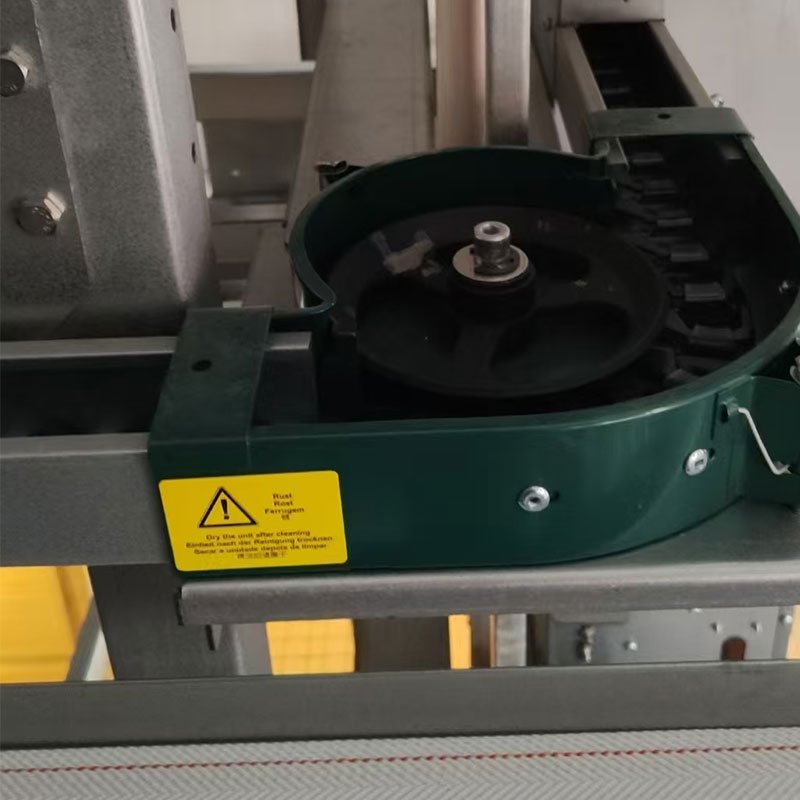
Perhaps the most significant advancement in modern cage systems is the automated manure belt. In multi-tiered layer houses, a continuous belt runs beneath each level of cages. On a set timer—often once every few days—the belts engage, transporting the accumulated droppings directly to one end of the building where they are deposited into a cross-conveyor or a collection cart. This system replaces the old practice of building up litter or manually scraping pits.
The impact of this on bird health and environmental control cannot be overstated. Manure is the primary source of ammonia and humidity within a poultry house. By removing it frequently, the system drastically cuts ammonia levels. High ammonia irritates the birds' respiratory tracts, damaging the cilia in their airways and making them vastly more susceptible to diseases like bronchitis and E. coli. A farmer walking into a house with a manure belt system should notice the absence of the characteristic ammonia "burn" in the eyes and throat—a direct indicator of superior air quality.
This dry manure management also simplifies nutrient recycling. The collected manure is relatively dry and stable, making it a valuable, stackable fertilizer product rather than a liquid waste problem. This creates a potential revenue stream or, at minimum, a much more manageable waste product for the farm.
The steel building is integral to this process. The belts require stable, level tracks to function without jamming or misalignment. The rigid steel structure provides this unwavering support. Furthermore, the building’s insulation and vapor barriers work in tandem with the manure removal to control humidity. By keeping the interior wall and roof surfaces above the dew point, condensation is prevented. This stops water from dripping back into the cages or onto the manure, which would restart the ammonia production cycle and create a wet, unsanitary environment.

The Nervous System: Automation, Monitoring, and Data
Automation in a modern poultry house extends beyond feeding and manure removal. It is the nervous system that collects data and executes commands to maintain homeostasis. Central to this is the environmental controller, a computer that acts as the brain of the operation.
This controller is connected to a network of sensors throughout the building: thermometers at bird level and near the ceiling, humidity sensors, and static pressure sensors. The static pressure sensor is a critical component. It measures the difference in air pressure between the inside and outside of the house. This single reading tells the controller how well the ventilation system is balanced. A farmer doesn't need to be an engineer to interpret it; if the pressure is too high, the inlet vents aren't opening enough, and the fans are straining to pull air out. If it's too low, too much air is coming in, creating drafts and wasting heating or cooling energy. The controller uses this data to automatically adjust the inlet openings and fan stages to maintain the ideal, slightly positive pressure for optimal air mixing.
Lighting is another automated variable. For layers, the precise duration and intensity of light triggers and maintains egg production. A programmable timer gradually increases light to simulate a natural dawn, preventing the panic and piling that a sudden bright light can cause. For broilers, specific light programs can encourage activity and feeding, improving leg health and final weight.
These automated systems are physically supported by the steel structure. Electrical conduits for sensors and lights are easily run along steel purlins. The power and data cables for the feed motors, manure belt drives, and fan controllers are all neatly organized and secured to the rigid frame, protecting them from damage and simplifying maintenance.
Economic Viability and Long-Term Investment
The initial capital outlay for a steel structure building with an integrated automated cage system is significant. However, the economic analysis must shift from viewing it as a simple expense to evaluating it as a long-term investment in operational efficiency and risk mitigation.
The return is realized through several channels. The most direct is labor efficiency. A single worker can manage a flock of tens of thousands of birds because the systems for feeding, watering, egg collection (in layer houses), and manure removal are automated. This frees up the farmer's time for higher-value tasks like monitoring bird health, analyzing performance data, and managing the business.
Feed conversion ratios (FCR) consistently improve in a controlled environment. When birds are not expending energy to stay warm or cool, and when feed is consistently and cleanly presented, more of the nutritional input is converted into body mass or eggs. A difference of just a few points in FCR, multiplied by thousands of birds over multiple cycles, represents a substantial financial gain.
Perhaps the most critical economic benefit is the mitigation of catastrophic loss. A robust steel building offers superior protection against extreme weather events like heavy snow loads or high winds. More routinely, the enhanced biosecurity and superior environment drastically reduce mortality rates and veterinary costs. Preventing a single disease outbreak through better building integrity and lower pathogen load pays for a significant portion of the system's premium.
The durability of the materials also translates to a longer asset life and lower maintenance costs. A galvanized steel frame will not need the repairs or replacements that a wooden structure will over a 20-year period. The automated systems, while complex, are built for industrial-grade reliability and are often backed by service contracts, ensuring uptime and productivity.
The modern poultry house is no longer a simple barn. It is a precision-engineered production facility where the steel structure is the skeleton, the cage systems are the organs, and the automation is the central nervous system. This integrated approach moves beyond basic animal housing to create a stable, controllable, and efficient environment that safeguards animal welfare, maximizes resource use, and provides the predictable, profitable outcomes necessary for a sustainable farming enterprise in the 21st century.
1. Drinking system include the water pipes, water pressure adjuster, drinking nipples, Waterline front-end device, dosing system etc, choose them according to customer's needs.
2. High-quality water drinking pipes, pressure regulating valves and water drinking nipples can effectively prevent the water leakage. Drinking system adopt the closed piping system, which can minimize the water pollution.
3. 360-degree drinking nipples provide adequate drinking water for poultry at all stages.
4. The automatic drinking water system mainly adopts the steel ball drinking nipple. lt uses imported high-grad stainless steel, POM resin, and APS engineering material, which is wearing resistant, and the durability can be used for long time.



1. Automatic feeding machine can be chosen between gantry and ladder feeding machine. Gantry type feeding machine is a relatively economical and practical machine with simple operation, remote control walking character, easy to manage.
2. Mechanical transmission device running smoothly, low noise, long service life.
3. With the use of automatic control, the feeding system can adjust the amount of material.
4. Feeding with arched structure, high carrying capacity, not easily deformed.
5. Saving man power, saving feed, greatly improving the efficiency of Large-scale farming.
6. The walking speed of gantry feeding machine is 9--12 m/min.




1. Manure removing system included scraper type and conveyor belt type, Which can reduce the labor intensity and labor cost, keep the chicken shed dry and clean.
2. A type chicken cage can use scraper type or conveyor belt type.


3. The scraper type is suitable for A type cages, which can clean two or three rows. For the starters, this type is a good choice. lt can not only save some labor cost, but also save some investment in the whole project. The cleaning speed is 6-10 meters per minute.
4. Conveyor belt type is more suitable for large scale farming. The manure removing belt we use is high quality PP material (polypropylene). The walking speed is 2-4 meters per minute.



High Quality Pellets Made by Mobile Pellet Machine
1. It has professional designed angle of the blade. After the dynamic balance test one by one, the blade can operate smoothly.
2. The air volume is consistent in the whole life of the fan. Bearings has advantage of high strength, low noise, durable and so on.
1. The cooling pads uses high-quality wet curtain paper and adopts space cross-linking technology, which has the advantages of high water absorption, high water resistance, anti-toxicity and long service life.
2. The cooling efficiency is over 80%, without surfactant, natural water absorption, fast diffusion speed and long-lasting effect.
3. The product does not contain phenol and other chemical substances that are easy to cause skin allergies. It is non-toxic and harmless to the human body and chicken when installed and used. It is green, safe, energy-saving, environmentally friendly, economical, and easy to install.
4. The frame aluminum alloy has high strength, good corrosion resistance, durability and beautiful appearance.
5. Use a special filter for the cooling pad at the upper water to ensure clean water quality and support efficient water circulation components.
6. Combined with a negative pressure fan, it can effectively lower the indoor temperature.
The window is made of special selected high-quality engineering plastic, with high strength and long service life, together with superior anti-aging and anti-UV performance.
Function: Ventilation of the chicken house, usually used in the winter.
This system can adjust the wind speed and direction, thus the cold air will not reach chicken directly , which can effectively prevent the phenomenon of cold stress in chicken.
Environmental control system equipment is suitable for large-scale and intensive farming. According to customer requirements, we can provide various types of smart poultry equipment.
1. Our poultry management system is a modular system that manages all aspects of the chicken house, such as climate, temperature, humidity, ammonia, feeding, feed weighing, lighting and ventilation systems, and can monitor the situation of the chicken house in real time through a computer and mobile phone.
2. The management computer is the heart of the poultry farm, allowing you to easily monitor the entire poultry farm.

 WeChat:+8617838608255