
The morning feeding run tells you everything about a layer operation. The difference between a farm that hums with quiet efficiency and one that crackles with frantic energy often comes down to the hardware. The choice of a cage system isn’t just about buying equipment; it’s about investing in the framework that will dictate daily labor, bird welfare, financial output, and ultimately, the quality of the egg that reaches the consumer. For decades, the conventional battery cage was the industry standard, but the landscape has irrevocably shifted. Today’s poultry farmer navigates a complex matrix of animal welfare mandates, consumer preferences, labor shortages, and economic pressure. The modern layer cage system is the primary tool for managing that complexity.
Understanding the evolution of this equipment is crucial. The old battery cages, a series of small, wire boxes stacked in long rows, were engineered for one thing: maximum density. A farmer could house tens of thousands of birds in a single house, with feed, water, and egg collection centralized. The problem was the bird. Confined to a space smaller than a standard sheet of paper, layers couldn’t express fundamental behaviors—spreading their wings, dustbathing, perching, or laying an egg in a secluded nest. This led to increased stress, higher incidence of bone fragility, and a public relations crisis that sparked legislative change.
The industry response wasn’t to abandon caging but to re-engineer it. The modern enriched colony system, sometimes called a furnished cage, is the new baseline. It’s not just a bigger cage; it’s a designed environment. Where a traditional cage might have held five hens, an enriched colony unit typically houses 30 to 60, providing significantly more square inches per bird. But the critical difference is in the furnishings. Each colony is equipped with a perch running its length. You’ll see hens jostling for the highest spot at night, a natural roosting instinct that was previously frustrated. A scratch pad or astroturf area allows for foraging and scratching behavior, which reduces feather pecking and aggression. Most importantly, a enclosed nesting area is built into the side of the unit. This is a game-changer for egg quality. Hens seek privacy to lay; providing a dark, secluded nest drastically reduces floor eggs and minimizes cracks and checks that occur when eggs are laid in the open on a wire floor.
The physical structure of these systems is built for durability and integration. The cages themselves are fabricated from heavy-gauge, galvanized steel wire, designed to withstand years of corrosion from ammonia and constant use. The support framework is a rigid network of trusses and braces that must hold the immense weight of the birds, the feed system, the manure belts, and the workers who service them. This isn’t equipment you buy to replace in five years; this is a twenty-year investment, and the engineering reflects that.
Feeding technology within cage systems has moved far beyond a simple trough. Modern pan-feeding systems are a study in precision. A central auger, running the length of each row, delivers feed from a bulk bin into a distribution hopper. This hopper then dispenses the feed into the circular pans located in each cage at predetermined intervals. The advantage here is consistency and waste reduction. Each bird has equal access to fresh feed, and because the pans are designed to contain the feed, spillage into the manure system is minimized. You can adjust the frequency of feeding runs—more often in hot weather to encourage intake, for example. This is a stark contrast to old chain-feeding systems that could return stale, fine-particle feed (“fines”) back to the bin, discouraging consumption and wasting nutrition.
Watering has seen similar innovation. Nipple drinker systems have completely replaced open cups or troughs. Each cage is equipped with several stainless-steel nipples. When a hen pecks at the pin, a droplet of water is released directly into her beak. This closed system is paramount for bird health. It prevents water from spilling into the manure, keeping the litter drier and dramatically reducing humidity and ammonia levels in the house. Dry manure means better air quality, which translates to healthier respiratory systems for the birds and a more comfortable working environment for you. It also means the manure under the cages has higher value as a fertilizer because it hasn’t been diluted and degraded by water.
The most significant labor-saving advancement is undoubtedly the integrated manure belt system. In old deep-pit houses, manure would accumulate for a year or more, creating challenging air quality and a massive, unpleasant clean-out operation. Now, a continuous, slow-moving rubber belt runs beneath each tier of cages. This belt operates daily, transporting fresh manure out of the house to a cross-conveyor that deposits it into a trailer or storage shed. This daily removal is transformative. It caps ammonia production at the source, improves overall ventilation efficiency, and eliminates the annual clean-out saga. For workers, it means walking into a house where the air is clear and their time can be spent on bird management, not manure management.
Egg collection is the other half of the labor equation. Hand-collecting eggs from thousands of cages is a back-breaking, time-consuming task. Automated egg collection is standard in all modern cage systems. As eggs are laid, they roll out of the cage onto a forward-gathering conveyor belt. This belt gently transports the eggs to the main cross-conveyor, which carries them directly to the egg room for washing, grading, and packaging. This system not only saves immense amounts of labor but also protects egg quality. The eggs have minimal human handling, reducing the potential for cracks. They are moved quickly to a climate-controlled egg room, stabilizing their quality and extending their shelf life.
The layout of these systems within a poultry house is a strategic decision. The primary choice is between high-rise and manure belt (or low-rise) buildings. A high-rise house is a multi-story structure where the birds are housed on the upper floors and manure drops into a deep pit below for extended storage. While some older operations still use this, the new standard is the single-level manure belt house. All cage rows are on one floor, with manure belts running underneath each tier. This design is superior for ventilation, as air moves horizontally across the birds at all levels, and for daily manure removal, creating a consistently healthier environment.
Stacker cages, where units are stacked vertically in 3 to 8 tiers, maximize bird density within a given footprint. While efficient, they require careful management of the microclimates within the house. The air at the top tier near the ceiling will be warmer and drier than the air at floor level. This is where modern tunnel ventilation proves its worth. By pulling air down the length of the house at high velocity, it creates a uniform wind-chill effect that helps equalize temperature and moisture differences between tiers, ensuring every bird, regardless of her position in the stack, has access to fresh air.

Choosing the right system is a calculation that extends far beyond the initial price per bird space. You must consider your specific market. Are you selling into a program that requires a specific animal welfare certification like American Humane or United Egg Producers? These certifications have strict requirements for space per bird, enrichments, and beak trimming alternatives. Your system must be compliant from day one. Labor availability is another critical factor. If reliable labor is scarce and expensive in your area, the automation premium of a top-tier system with flawless manure belts and egg collection will pay for itself rapidly. Conversely, if you have a ready workforce, a slightly less automated system might have a faster return on investment.
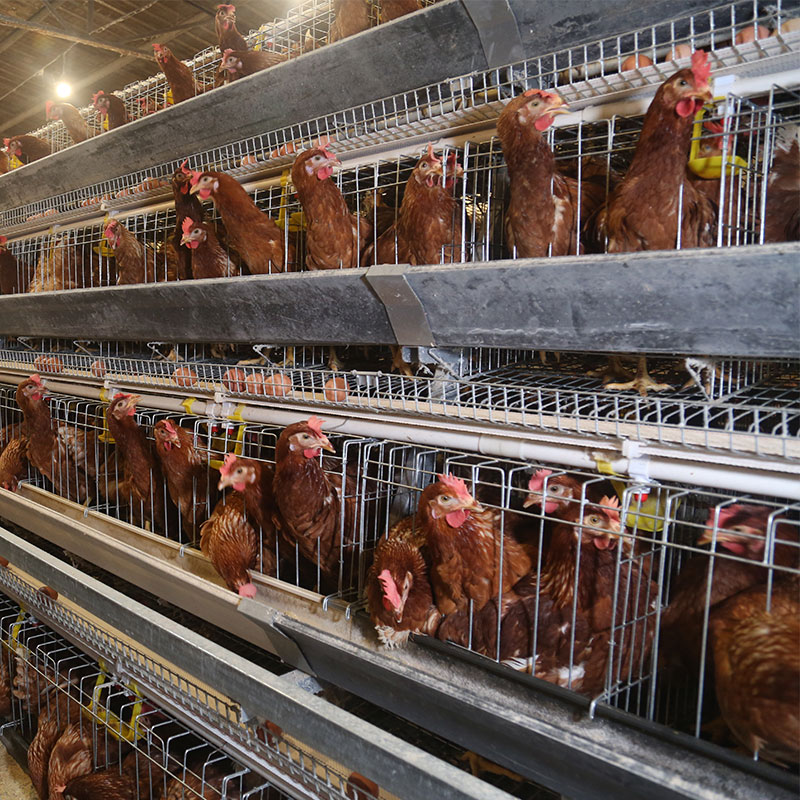
The infrastructure of your farm is a limiting factor. Does your existing house have the ceiling height and structural integrity to support a six-tier stacker system? The weight load is immense. The electrical service must be robust enough to handle the constant draw of fans, lights, feeders, and conveyors. You must also have a plan for the manure. Daily removal means you need a dedicated, covered storage area or a regular offtake agreement with a neighboring crop farmer. The value of that dry, stackable manure can become a secondary income stream, but only if you have a logistically sound way to manage it.
The conversation around cage systems is incomplete without addressing the rise of cage-free production. Consumer demand and corporate commitments have driven a massive shift towards aviary and free-range systems. For some farmers, this is the future. However, it is a fundamentally different type of farming. Cage-free systems trade the controlled efficiency of cages for a different set of challenges: higher labor costs for egg collection (as many eggs are laid on the floor), greater feed consumption due to increased bird activity, more complex disease management, and higher mortality from pecking and cannibalism. The modern enriched colony system represents a vital middle ground. It provides quantified improvements in animal welfare over traditional cages while retaining the critical benefits of biosecurity, egg quality, and operational efficiency that have made cage systems the backbone of the egg industry for generations. It is a system designed for the modern world, where the well-being of the hen, the economic reality of the farmer, and the expectations of the consumer must all be housed under one roof.
1. Drinking system include the water pipes, water pressure adjuster, drinking nipples, Waterline front-end device, dosing system etc, choose them according to customer's needs.
2. High-quality water drinking pipes, pressure regulating valves and water drinking nipples can effectively prevent the water leakage. Drinking system adopt the closed piping system, which can minimize the water pollution.
3. 360-degree drinking nipples provide adequate drinking water for poultry at all stages.
4. The automatic drinking water system mainly adopts the steel ball drinking nipple. lt uses imported high-grad stainless steel, POM resin, and APS engineering material, which is wearing resistant, and the durability can be used for long time.



1. Automatic feeding machine can be chosen between gantry and ladder feeding machine. Gantry type feeding machine is a relatively economical and practical machine with simple operation, remote control walking character, easy to manage.
2. Mechanical transmission device running smoothly, low noise, long service life.
3. With the use of automatic control, the feeding system can adjust the amount of material.
4. Feeding with arched structure, high carrying capacity, not easily deformed.
5. Saving man power, saving feed, greatly improving the efficiency of Large-scale farming.
6. The walking speed of gantry feeding machine is 9--12 m/min.




1. Manure removing system included scraper type and conveyor belt type, Which can reduce the labor intensity and labor cost, keep the chicken shed dry and clean.
2. A type chicken cage can use scraper type or conveyor belt type.


3. The scraper type is suitable for A type cages, which can clean two or three rows. For the starters, this type is a good choice. lt can not only save some labor cost, but also save some investment in the whole project. The cleaning speed is 6-10 meters per minute.
4. Conveyor belt type is more suitable for large scale farming. The manure removing belt we use is high quality PP material (polypropylene). The walking speed is 2-4 meters per minute.



High Quality Pellets Made by Mobile Pellet Machine
1. It has professional designed angle of the blade. After the dynamic balance test one by one, the blade can operate smoothly.
2. The air volume is consistent in the whole life of the fan. Bearings has advantage of high strength, low noise, durable and so on.
1. The cooling pads uses high-quality wet curtain paper and adopts space cross-linking technology, which has the advantages of high water absorption, high water resistance, anti-toxicity and long service life.
2. The cooling efficiency is over 80%, without surfactant, natural water absorption, fast diffusion speed and long-lasting effect.
3. The product does not contain phenol and other chemical substances that are easy to cause skin allergies. It is non-toxic and harmless to the human body and chicken when installed and used. It is green, safe, energy-saving, environmentally friendly, economical, and easy to install.
4. The frame aluminum alloy has high strength, good corrosion resistance, durability and beautiful appearance.
5. Use a special filter for the cooling pad at the upper water to ensure clean water quality and support efficient water circulation components.
6. Combined with a negative pressure fan, it can effectively lower the indoor temperature.
The window is made of special selected high-quality engineering plastic, with high strength and long service life, together with superior anti-aging and anti-UV performance.
Function: Ventilation of the chicken house, usually used in the winter.
This system can adjust the wind speed and direction, thus the cold air will not reach chicken directly , which can effectively prevent the phenomenon of cold stress in chicken.
Environmental control system equipment is suitable for large-scale and intensive farming. According to customer requirements, we can provide various types of smart poultry equipment.
1. Our poultry management system is a modular system that manages all aspects of the chicken house, such as climate, temperature, humidity, ammonia, feeding, feed weighing, lighting and ventilation systems, and can monitor the situation of the chicken house in real time through a computer and mobile phone.
2. The management computer is the heart of the poultry farm, allowing you to easily monitor the entire poultry farm.

 WeChat:+8617838608255