
For poultry farmers navigating the complex decision of housing infrastructure, the battery cage system represents a significant capital investment with profound implications for daily operations, bird welfare, and ultimately, profitability. This is not merely a purchase of wire and feeders; it is the installation of a highly specialized environment where your birds will live, eat, and lay the eggs that form the core of your business. Understanding the complete set—from the structural framework to the manure removal belts—is crucial to making an informed choice that aligns with your farm’s scale, management style, and economic goals.
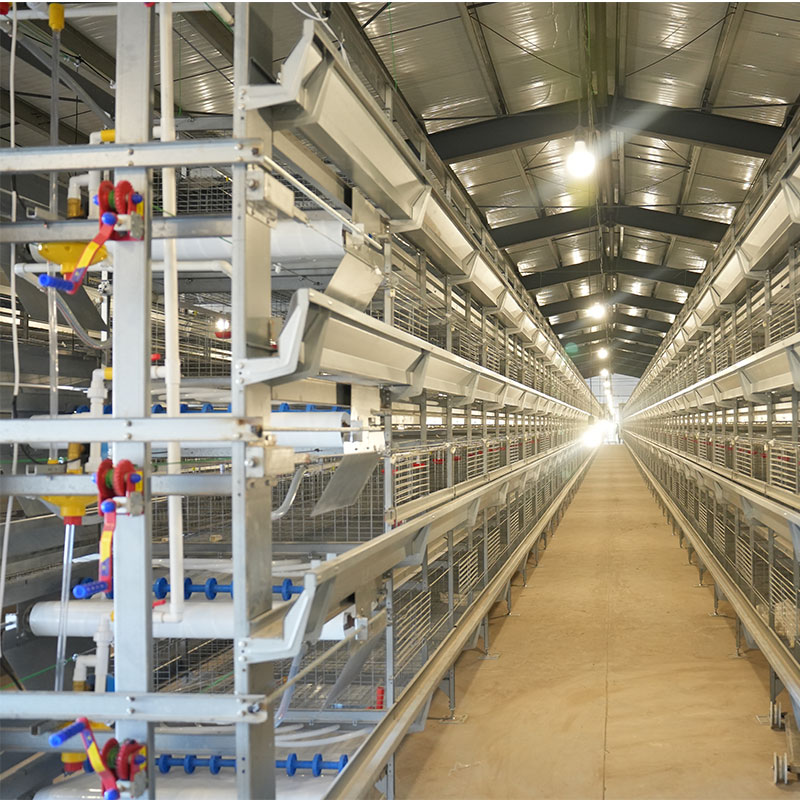
The fundamental principle of a battery cage system is vertical integration. Instead of a single, wide-span building filled with a litter floor, the system stacks multiple tiers of cages atop one another. Imagine a three- or four-story apartment building for hens, where each "apartment" is a wire enclosure housing a specific number of birds. This vertical design is the primary driver of its space efficiency. A farmer with a one-hectare plot can house significantly more birds in a tiered system than in a single-tier deep litter house, effectively multiplying the stocking density without expanding the farm's physical footprint. This is a critical advantage where land is expensive or limited.
A complete set is a fully integrated package. It is not a collection of individual components bought separately and assembled on-site. The synergy between each part is what creates the system's operational efficiency. The core components include the cage panels, the structural support system, the feeding system, the watering system, the egg collection system, and the manure removal system. Each must be engineered to work in flawless concert with the others.
The cages themselves are typically constructed from heavy-gauge, galvanized steel wire. The galvanization is a protective zinc coating that prevents rust, a vital feature given the constant exposure to moisture from drinking systems and the highly corrosive ammonia present in chicken manure. A farmer who has dealt with flaking, rusty cages knows the constant battle against deterioration and the risk of injury to birds. The mesh size of the floor is a carefully considered design element. It must be small enough to prevent a hen's foot from slipping through and causing injury, yet large enough to allow droppings to pass through cleanly. A floor that is too fine will trap manure, leading to dirty eggs and increased ammonia levels, while one that is too coarse can lead to foot and leg problems.
The floor of the cage is also sloped, typically at an angle of around 7 to 10 degrees. This gentle incline is not immediately obvious to the eye, but its effect is fundamental. When a hen lays an egg, it rolls gently away from her and out of the cage onto the egg collection tray. This prevents egg eating, reduces the number of floor eggs that are cracked or soiled, and keeps the egg in a designated, clean area for collection. The design of the "egg saver" rim—the slightly curved lip at the front of the cage floor—ensures the egg does not roll back into the cage or fall onto the manure belt below.

The structural framework is the skeleton of the entire operation. Made from robust steel, it must support not only the weight of the cages and the birds within them but also the daily load of feed in the troughs and the constant vibration of automated systems. A poorly designed frame will sag over time, leading to misaligned feeding systems and uneven egg rolls. In a four-tier A-type cage system, the frame is designed in an "A" shape to allow manure from the upper tiers to fall into the pits below, while in an H-type system, the tiers are stacked vertically, requiring a manure belt for each level.
The feeding system is the circulatory system of the poultry house. A long trough runs the entire length of each tier, connected to a central feed line. This line is filled from a bulk bin outside the house. At predetermined times, an automated motor engages, moving a chain or a auger through the trough, delivering a fresh, consistent supply of feed to every bird at once. For a manager, this eliminates the laborious and inconsistent task of manual feeding. It also allows for precise feed management. If birds in a particular section are underweight, the flow of feed can be adjusted for that specific line. The design of the trough includes anti-roosting wires and grills to prevent birds from contaminating the feed with droppings.
Water is delivered via a nipple drinking system. Small, stainless-steel nipples are spaced at regular intervals along a water pipe above each cage. Hens learn to peck at the nipple, which releases a droplet of water directly into their beak. This is a closed system. Unlike open troughs or bell drinkers, which can become breeding grounds for bacteria and algae, nipple drinkers keep the water clean. They also drastically reduce spillage, which in turn controls humidity inside the house. High humidity from spilled water combines with manure to create ammonia, a gas that damages the birds' respiratory systems and can lead to conditions like keratoconjunctivitis, an inflammation of the eyes.
Egg collection can be manual or automated. In a manual system, eggs roll onto a collection tray at the front of each cage. Workers walk the aisles, collecting eggs directly from these trays into hand carts. This is feasible for smaller operations but becomes a major labor bottleneck in houses containing tens of thousands of birds. An automated egg collection system uses a slow-moving plastic belt that runs along the collection trays. The eggs are gently conveyed to one end of the house, where they are elevated to a central collection table. Here, they can be automatically counted and packed into trays. This not only reduces labor costs but also minimizes egg handling, which translates to a lower percentage of hairline cracks and checked eggs.
Perhaps the most critical system for maintaining bird health and house environment is manure removal. In deep litter systems, manure accumulates for the entire flock cycle, fermenting and releasing heat and gases. In a battery cage system, manure is removed continuously. There are two primary methods. In an A-type system with a deep pit, manure from the upper tiers falls onto the floor, where it is allowed to dry and is removed after the flock is depopulated. This requires excellent ventilation to dry the manure and control ammonia.
The more advanced and increasingly common method is the belt manure system. A continuous, durable plastic belt is installed beneath each tier of cages. Every few days, a motor engages and the belt slowly travels the length of the house, carrying the accumulated manure to a cross-conveyor or directly outside to a waiting spreader or storage area. This frequent removal prevents the buildup of ammonia, reduces fly populations, and creates a much healthier environment for both the birds and the farm workers. The quality of this belt and its drive mechanism is paramount; a snapped belt can lead to a catastrophic manure buildup that is extremely difficult to rectify.
Ventilation cannot be an afterthought; it is the lungs of the housed environment. A static building filled with thousands of birds will quickly become a death trap due to heat buildup and toxic gases. A properly designed ventilation system uses a combination of inlet and exhaust fans to create a controlled, uniform air exchange. In cold weather, minimum ventilation runs to remove moisture and ammonia without chilling the birds. In hot weather, tunnel ventilation is engaged, with large fans at one end of the house pulling a column of air at high speed over the birds, creating a wind-chill effect that helps them dissipate body heat. The placement of cages must be calculated with this airflow in mind to prevent dead spots where stale air can accumulate.
Choosing the right system involves a careful analysis of several factors. The first is scale. A farmer with 5,000 birds may find a three-tier manual system economically viable, while an operation with 50,000 birds will find the return on investment for a fully automated, four-tier system with central egg collection and manure belts to be compelling. The second factor is labor availability and cost. Automated systems represent a high initial investment but drastically reduce recurring labor expenses for feeding, watering, and egg collection. A farm struggling to find reliable workers may find automation to be a necessity, not a luxury.
Local climate plays a significant role. In hot, humid regions, the ability of a system to manage moisture and heat stress is paramount. A belt manure system that removes wet manure daily, coupled with a powerful tunnel ventilation system, becomes almost non-negotiable. In drier, cooler climates, a deep pit system with robust minimum ventilation may be sufficient and more cost-effective.
The breed of bird is another consideration. Modern hybrid layers, such as the Hy-Line Brown or the ISA Brown, are bred specifically for high productivity in controlled environments. They are generally adaptable to cage systems. Their space requirements, feeding behaviors, and even the size and shell strength of their eggs have been factored into the design of modern cage equipment.
The financial calculation extends beyond the initial purchase price. A cheaper, poorly galvanized system will require parts replacement and constant maintenance within a few years, whereas a higher-quality system, while more expensive upfront, may last for 15-20 years with proper care. The cost of downtime—when the system is not functioning and birds are not laying optimally—must be factored in. A broken feed chain for eight hours can lead to a drop in egg production that takes days to recover from. Reliability is a tangible economic variable.
Installation is a specialized task. While some farmers may be tempted to undertake it themselves to save costs, improper installation can lead to a cascade of operational problems. A frame that is not perfectly level will cause feed to flow unevenly and eggs to roll erratically. Misaligned manure belts will rub against frames and wear out prematurely. Professional installers understand the tolerances and have the tools to ensure the entire system is square, level, and integrated correctly from the outset.
Maintenance is not a reactive task but a daily discipline. This includes listening for unusual sounds in motors, checking for wear on chain links, ensuring nipple drinkers are not clogged, and inspecting belts for tears or misalignment. A simple maintenance log, where these checks are recorded, can help predict failures before they happen. Keeping spare parts for critical components—a drive motor for the feed system, a few sections of manure belt, a box of nipple drinkers—is a form of insurance that prevents minor issues from becoming major disruptions.
The transition to a battery cage system, or the upgrade of an existing one, is a strategic decision that reshapes the entire farm operation. It moves management from a focus on direct, hands-on animal care to a focus on system oversight and data interpretation. The farmer becomes a manager of an integrated biological and mechanical process, where success is measured by the smooth, uninterrupted functioning of the equipment and the consistent, healthy productivity of the birds housed within it. The choice of a complete set is therefore a commitment to a specific model of production, one that prioritizes efficiency, biosecurity, and controlled-environment management at an industrial scale.
1. Drinking system include the water pipes, water pressure adjuster, drinking nipples, Waterline front-end device, dosing system etc, choose them according to customer's needs.
2. High-quality water drinking pipes, pressure regulating valves and water drinking nipples can effectively prevent the water leakage. Drinking system adopt the closed piping system, which can minimize the water pollution.
3. 360-degree drinking nipples provide adequate drinking water for poultry at all stages.
4. The automatic drinking water system mainly adopts the steel ball drinking nipple. lt uses imported high-grad stainless steel, POM resin, and APS engineering material, which is wearing resistant, and the durability can be used for long time.



1. Automatic feeding machine can be chosen between gantry and ladder feeding machine. Gantry type feeding machine is a relatively economical and practical machine with simple operation, remote control walking character, easy to manage.
2. Mechanical transmission device running smoothly, low noise, long service life.
3. With the use of automatic control, the feeding system can adjust the amount of material.
4. Feeding with arched structure, high carrying capacity, not easily deformed.
5. Saving man power, saving feed, greatly improving the efficiency of Large-scale farming.
6. The walking speed of gantry feeding machine is 9--12 m/min.




1. Manure removing system included scraper type and conveyor belt type, Which can reduce the labor intensity and labor cost, keep the chicken shed dry and clean.
2. A type chicken cage can use scraper type or conveyor belt type.


3. The scraper type is suitable for A type cages, which can clean two or three rows. For the starters, this type is a good choice. lt can not only save some labor cost, but also save some investment in the whole project. The cleaning speed is 6-10 meters per minute.
4. Conveyor belt type is more suitable for large scale farming. The manure removing belt we use is high quality PP material (polypropylene). The walking speed is 2-4 meters per minute.



High Quality Pellets Made by Mobile Pellet Machine
1. It has professional designed angle of the blade. After the dynamic balance test one by one, the blade can operate smoothly.
2. The air volume is consistent in the whole life of the fan. Bearings has advantage of high strength, low noise, durable and so on.
1. The cooling pads uses high-quality wet curtain paper and adopts space cross-linking technology, which has the advantages of high water absorption, high water resistance, anti-toxicity and long service life.
2. The cooling efficiency is over 80%, without surfactant, natural water absorption, fast diffusion speed and long-lasting effect.
3. The product does not contain phenol and other chemical substances that are easy to cause skin allergies. It is non-toxic and harmless to the human body and chicken when installed and used. It is green, safe, energy-saving, environmentally friendly, economical, and easy to install.
4. The frame aluminum alloy has high strength, good corrosion resistance, durability and beautiful appearance.
5. Use a special filter for the cooling pad at the upper water to ensure clean water quality and support efficient water circulation components.
6. Combined with a negative pressure fan, it can effectively lower the indoor temperature.
The window is made of special selected high-quality engineering plastic, with high strength and long service life, together with superior anti-aging and anti-UV performance.
Function: Ventilation of the chicken house, usually used in the winter.
This system can adjust the wind speed and direction, thus the cold air will not reach chicken directly , which can effectively prevent the phenomenon of cold stress in chicken.
Environmental control system equipment is suitable for large-scale and intensive farming. According to customer requirements, we can provide various types of smart poultry equipment.
1. Our poultry management system is a modular system that manages all aspects of the chicken house, such as climate, temperature, humidity, ammonia, feeding, feed weighing, lighting and ventilation systems, and can monitor the situation of the chicken house in real time through a computer and mobile phone.
2. The management computer is the heart of the poultry farm, allowing you to easily monitor the entire poultry farm.

 WeChat:+8617838608255