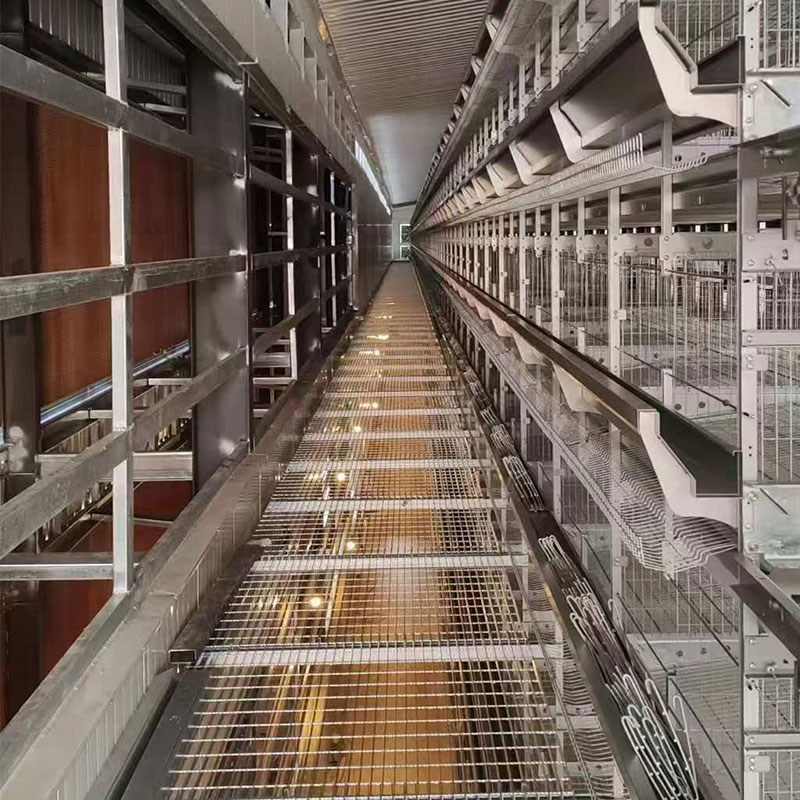
For poultry farmers navigating the complex decision of housing infrastructure, the transition to a battery cage system represents a significant capital investment with long-term operational implications. This is not merely about buying cages; it’s about integrating a complete, interdependent system where every component, from the galvanized wire mesh to the manure removal belt, directly impacts bird welfare, labor efficiency, and ultimately, the profitability of the entire operation. Understanding the nuances of this system is critical for any farmer aiming to maximize production in a controlled environment.
The core of the system is the cage unit itself. These are not simple boxes but engineered modules designed for high-density, humane confinement. The wire mesh is a prime example of this engineering. It isn't just "strong wire"; it's a specific gauge of galvanized steel, welded into a grid pattern with a sloped floor. This slope is not arbitrary. A hen lays an egg, which then gently rolls away from her onto the egg collection roll-out tray. This single design feature prevents egg eating, reduces breakage, and keeps the eggs cleaner than in a flat-floor system. The mesh spacing is also precisely calculated: wide enough for manure to drop through, but narrow enough to prevent a bird's foot from slipping through and becoming injured. Farmers see the benefit immediately in a reduced number of floor eggs and a lower incidence of foot and leg problems in the flock.

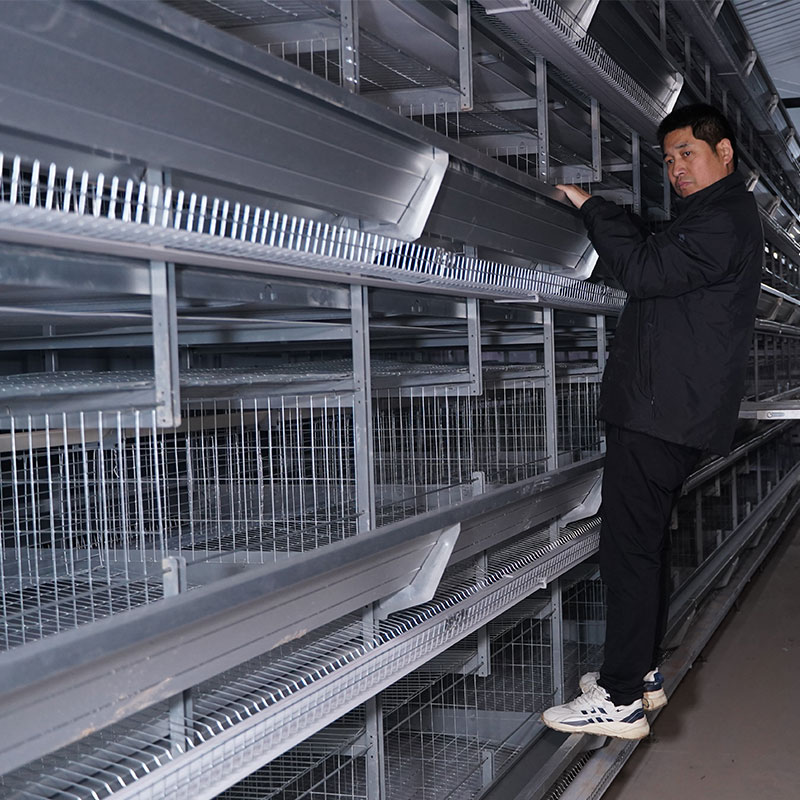
These individual cages are assembled into tiers, typically ranging from three to eight levels high, in a configuration known as an A-type or H-type battery. The choice here fundamentally alters the building's environment and labor requirements. An A-type system, where tiers are arranged in a steep "A" frame, allows manure to fall directly into a pit below. This creates a natural air space between the manure and the birds, which can help with ammonia control. However, it requires a deep pit and specialized equipment for cleaning. In contrast, an H-type system, with tiers stacked more vertically, incorporates a continuous manure removal belt running beneath each level. A farmer in a drier climate might prefer the simplicity of the A-type, while another operating in a high-humidity region would value the H-type's ability to remove manure from the building multiple times a day, drastically cutting ammonia levels and improving air quality for both birds and workers.
The manure removal system is a critical subsystem that transforms a labor-intensive chore into an automated process. In belt-based systems, a timer activates a motor that slowly advances the belts, carrying the accumulated droppings to one end of the house where a scraper deposits them into a cross-conveyor or a collection trolley. The timing of this operation is a management decision. Running the belts during the cool of the night minimizes odor release and fly attraction, while running them just before the daily inspection allows the farmer to assess manure consistency—a key indicator of flock health. A sudden change from firm droppings to watery ones is an early warning sign of a digestive issue, allowing for proactive intervention.
Above the cages, the feeding system operates as the lifeline of the operation. A long feed trough runs the length of each cage row, serviced by an automated chain or auger system. The chain feeder, a loop of metal links that drags feed from a central hopper along the entire trough, provides a visual confirmation that feed is present and moving. Farmers can adjust the speed and frequency of the chain's movement. Running it more frequently ensures feed is always available, stimulating intake, but can also lead to feed wastage as birds flick it out of the trough. Running it fewer times per day can control waste but requires careful monitoring to ensure subordinate birds at the end of the line still get adequate access. The height of the feed trough and the grill that prevents birds from escaping are adjustable, accommodating the size of the birds from the day they are placed as pullets to their peak laying phase.
Just as vital as feed is water, delivered through a nipple drinking system. Each cage has one or more nipples that release water only when a bird pecks at it. This seems simple, but its management is nuanced. The water pressure must be precisely calibrated. Too high, and the nipple releases a splash that wets the bird and the litter below, creating a damp environment ideal for pathogen growth. Too low, and birds struggle to get enough water, leading to dehydration and a rapid drop in egg production. During vaccination or a heat stress event, adding water-soluble vitamins or electrolytes through the central medicator becomes a straightforward way to administer support to the entire flock simultaneously, a task that would be monumental with manual waterers.
Egg collection is where the system's efficiency becomes most tangible. As eggs roll out onto the collection tray, they are protected from the birds and from fecal contamination. In a semi-automated system, workers walk the aisles, collecting eggs from these trays by hand into carts. In a fully automated system, a slow-moving belt integrated into the tray itself carries the eggs gently to one end of the house, where they are transferred to a central collection table. This eliminates hours of daily labor and significantly reduces the potential for shell damage from handling. The moment an egg is laid, its journey to the packing facility has already begun, untouched by human hands until it is graded and sorted.
The physical structure of the system is only half the equation; its performance is dictated by the house's environmental controls. A battery cage system creates a unique microclimate. The high density of birds generates significant heat and moisture, while their respiration releases carbon dioxide. A static ventilation system is insufficient. Tunnel ventilation, where large fans at one end of the house pull air along the length of the building past the cages, is essential. This isn't just about temperature; it's about air speed. On a hot day, creating a wind chill effect by moving air at high speed over the birds can be more effective than cooling the air itself. Conversely, during cold weather, the system operates on a minimum ventilation rate, exchanging just enough air to remove moisture and ammonia without chilling the birds. A farmer reading the ammonia sensors knows it's time to increase fan speed or run the manure belts, not based on a schedule, but on the real-time conditions the birds are experiencing.
Lighting is another environmental factor under complete control. The laying cycle of a hen is photoperiod-dependent. By using an automated lighting program that provides a consistent number of hours of light per day, farmers can optimize egg production. A sudden change in light duration or intensity can stress the flock, leading to feather pecking or a drop in lay. The lights are often dimmable, allowing for a simulated dawn and dusk to calm the birds, and are strategically placed to ensure uniform intensity across all tiers, so birds in the bottom cages receive the same light stimulus as those at the top.
The decision-making process for implementing such a system begins long before the first cage is installed. It starts with flock planning. A farmer must decide if they will operate an all-in-all-out system, where the entire house is depopulated, cleaned, and restocked at once, or a multi-age system. All-in-all-out is simpler for disease control and managing environmental settings, as all birds are at the same production stage. A multi-age system provides a more consistent cash flow but complicates vaccination schedules, environmental control (as younger and older birds have different temperature requirements), and biosecurity.
Durability and corrosion resistance are non-negotiable in the humid, ammonia-rich environment of a poultry house. The hot-dip galvanization process, where the steel cage components are dipped in molten zinc, creates a protective layer that can withstand years of exposure. A farmer inspecting a used system will look for the first signs of rust, which typically appears at weld points or where scratches have penetrated the galvanization. This tells a story of the system's age and the conditions it has endured.
The economic calculation is multifaceted. The initial capital outlay is substantial, covering not just the cages but the feeding, watering, ventilation, and manure handling systems. This cost must be weighed against the long-term savings in labor. One person can manage tens of thousands of birds in an automated cage system, a task that would require a small team in a floor-based system. The improved feed conversion ratio, a result of reduced bird activity and more precise feeding, directly lowers the cost per dozen eggs. The higher percentage of saleable, clean, unbroken eggs further boosts revenue. For a farm with a 100,000-bird capacity, a 2% increase in egg quality and a 3% reduction in feed waste can translate into a return on investment that justifies the system's cost within a few production cycles.
Animal welfare, within the context of intensive production, is a primary design and management consideration. The cages prevent cannibalism and feather pecking, common issues in floor systems that can lead to significant mortality. The separation of birds from their manure drastically reduces the incidence of parasitic and bacterial diseases. However, the confined space limits natural behaviors like stretching wings, dust bathing, and perching. This has led to the development of enriched or furnished cages, which include a small perch, a scratching area, and a nesting box. While these provide more behavioral opportunities, they also reduce stocking density and add mechanical complexity. A farmer must balance the market demand for welfare-friendly products with the economic reality of lower bird numbers per square foot.
Daily management in a cage system becomes a process of data-driven observation. The farmer's walk through the house is a diagnostic routine. The sound of the flock is a key indicator; a content flock has a low, conversational murmur, while a distressed one is louder and more high-pitched. Observing the manure on the removal belts provides a constant health check. Checking the water pressure gauges and listening for the smooth operation of the feed chain are part of the mechanical audit. It is a shift from hands-on animal husbandry to systems management, where the farmer's skill lies in interpreting the signals of the flock and the machinery to maintain a perfectly balanced production environment.
In essence, a modern battery cage system is a closed-loop ecosystem engineered for productivity. Every component, from the angle of the cage floor to the timer on the exhaust fans, is a variable that the farmer can control. Success is not guaranteed by the equipment itself, but by the depth of understanding the operator has of its interconnected functions. It transforms the farm from a collection of individual animals into a single, highly tuned production organism, where the health of the system and the health of the flock are one and the same.
1. Drinking system include the water pipes, water pressure adjuster, drinking nipples, Waterline front-end device, dosing system etc, choose them according to customer's needs.
2. High-quality water drinking pipes, pressure regulating valves and water drinking nipples can effectively prevent the water leakage. Drinking system adopt the closed piping system, which can minimize the water pollution.
3. 360-degree drinking nipples provide adequate drinking water for poultry at all stages.
4. The automatic drinking water system mainly adopts the steel ball drinking nipple. lt uses imported high-grad stainless steel, POM resin, and APS engineering material, which is wearing resistant, and the durability can be used for long time.



1. Automatic feeding machine can be chosen between gantry and ladder feeding machine. Gantry type feeding machine is a relatively economical and practical machine with simple operation, remote control walking character, easy to manage.
2. Mechanical transmission device running smoothly, low noise, long service life.
3. With the use of automatic control, the feeding system can adjust the amount of material.
4. Feeding with arched structure, high carrying capacity, not easily deformed.
5. Saving man power, saving feed, greatly improving the efficiency of Large-scale farming.
6. The walking speed of gantry feeding machine is 9--12 m/min.




1. Manure removing system included scraper type and conveyor belt type, Which can reduce the labor intensity and labor cost, keep the chicken shed dry and clean.
2. A type chicken cage can use scraper type or conveyor belt type.


3. The scraper type is suitable for A type cages, which can clean two or three rows. For the starters, this type is a good choice. lt can not only save some labor cost, but also save some investment in the whole project. The cleaning speed is 6-10 meters per minute.
4. Conveyor belt type is more suitable for large scale farming. The manure removing belt we use is high quality PP material (polypropylene). The walking speed is 2-4 meters per minute.



High Quality Pellets Made by Mobile Pellet Machine
1. It has professional designed angle of the blade. After the dynamic balance test one by one, the blade can operate smoothly.
2. The air volume is consistent in the whole life of the fan. Bearings has advantage of high strength, low noise, durable and so on.
1. The cooling pads uses high-quality wet curtain paper and adopts space cross-linking technology, which has the advantages of high water absorption, high water resistance, anti-toxicity and long service life.
2. The cooling efficiency is over 80%, without surfactant, natural water absorption, fast diffusion speed and long-lasting effect.
3. The product does not contain phenol and other chemical substances that are easy to cause skin allergies. It is non-toxic and harmless to the human body and chicken when installed and used. It is green, safe, energy-saving, environmentally friendly, economical, and easy to install.
4. The frame aluminum alloy has high strength, good corrosion resistance, durability and beautiful appearance.
5. Use a special filter for the cooling pad at the upper water to ensure clean water quality and support efficient water circulation components.
6. Combined with a negative pressure fan, it can effectively lower the indoor temperature.
The window is made of special selected high-quality engineering plastic, with high strength and long service life, together with superior anti-aging and anti-UV performance.
Function: Ventilation of the chicken house, usually used in the winter.
This system can adjust the wind speed and direction, thus the cold air will not reach chicken directly , which can effectively prevent the phenomenon of cold stress in chicken.
Environmental control system equipment is suitable for large-scale and intensive farming. According to customer requirements, we can provide various types of smart poultry equipment.
1. Our poultry management system is a modular system that manages all aspects of the chicken house, such as climate, temperature, humidity, ammonia, feeding, feed weighing, lighting and ventilation systems, and can monitor the situation of the chicken house in real time through a computer and mobile phone.
2. The management computer is the heart of the poultry farm, allowing you to easily monitor the entire poultry farm.

 WeChat:+8617838608255