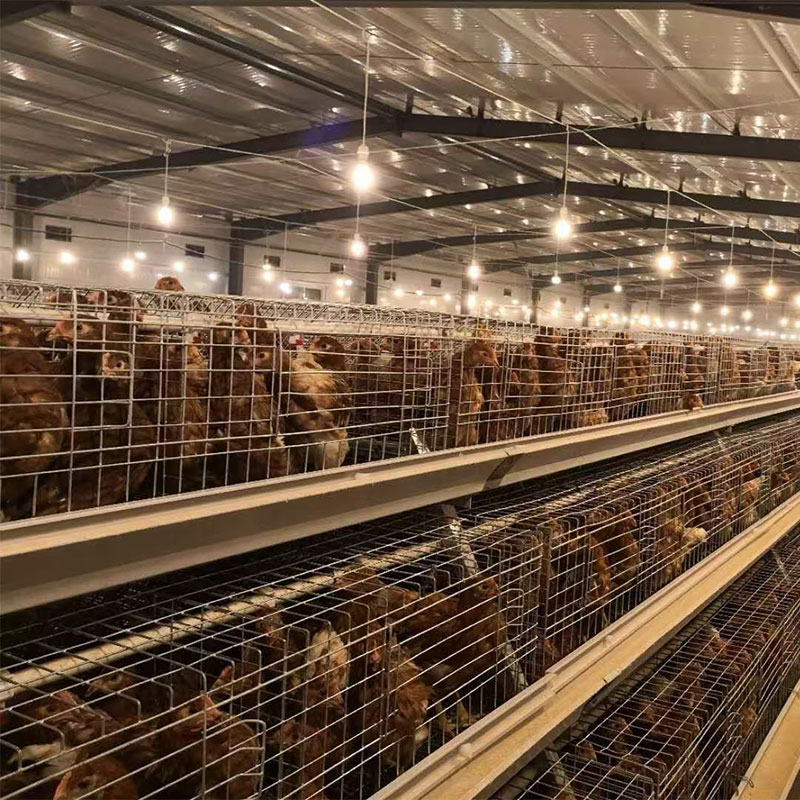
Title: The Complete Guide to Battery Cage System Prices in Ghana: Costs, Suppliers & Key Considerations for 2024
Introduction
For poultry farmers in Ghana looking to scale egg production efficiently, the battery cage system is a pivotal investment. It represents a significant step towards modernizing operations, improving bird management, and boosting profitability. However, the single most common and crucial question is: "What is the price of a battery cage system in Ghana?"
The answer isn't a simple figure. The cost varies dramatically based on capacity, quality, automation level, and supplier. This comprehensive guide goes beyond just listing prices. We will break down the complete cost structure, analyze key market suppliers, and provide the expert insights you need to make an informed, valuedriven purchase that aligns with your farm's goals and budget. Understanding these factors is essential to avoid costly mistakes and ensure a sustainable return on your investment.
Understanding User Intent: Commercial Investigation
The search for "price of battery cage system in Ghana" indicates a user in the commercial investigation phase. They are likely:
A current farmer planning to expand or upgrade from deep litter.
A new entrant conducting feasibility studies.
Someone comparing suppliers and specifications before purchase.
They need detailed, comparative cost data, trusted supplier information, and guidance on longterm value—not just the cheapest upfront price.
The total price you pay is a sum of several components. Understanding each helps you budget accurately and negotiate effectively.
System Capacity (Number of Birds): This is the primary driver. Prices are often quoted per unit (e.g., per cage tier) or for a complete set housing a specific number of birds (e.g., 500, 1200, 5000 birds).
Cage Tier Configuration: Common setups are 3tier, 4tier, and 5tier Atype cages. More tiers increase density but also require stronger construction and better ventilation.
Material Quality & Durability:
Galvanization: Hotdip galvanized steel is more expensive but far superior in resisting rust in Ghana's humid climate compared to electroplated or painted wire.
Wire Gauge: Thicker wire (lower gauge number) means stronger, more durable cages.
Level of Automation: This creates the widest price range.
Manual Systems: Birds are fed and watered by hand; eggs roll to a collection tray.
SemiAutomated: Feature automated nipple drinking lines and manual feeding.
Fully Automated: Include automatic feeding chains or pans, egg collection belts, and manure cleaning systems. These significantly reduce labor but have a much higher capital cost.
Supplier & Brand: Internationally sourced cages (from China, Europe) may have different price points versus locally fabricated ones. Local assembly can reduce shipping costs.
Disclaimer: Prices are volatile due to exchange rates (USD/GHS), steel costs, and shipping logistics. Always get fresh quotations.
| System Type & Capacity | Estimated Price Range (GHS) | Key Specifications Included |
| : | : | : |
| Manual System (120 Birds) | GHS 3,500 GHS 6,000 | Basic 3tier setup; galvanized wire; manual feeders/drinkers. |
| SemiAutomated (500 Layers) | GHS 15,000 GHS 25,000 | 3 or 4tier; nipple drinking system; manual feed troughs; egg collection tray. |
| SemiAutomated (1,200 Layers) | GHS 35,000 GHS 55,000 | Larger Atype frames; robust construction; often includes feed trolley. |
| Fully Automated (5,000+ Layers) | GHS 150,000 GHS 400,000+ | Complete system with autofeeding chains/pans, auto egg belts, manure scrapers/belts. |
Important Note: These are for the cage system itself. Total project cost must include:
Delivery & Installation
Foundation/Floor preparation
Water reservoir & plumbing
Electrical work for automation
The poultry house structure itself
Choosing a reputable supplier is as important as the price.
These companies often offer good value with an understanding of local conditions.
Advantages: Potentially lower cost; easier communication; faster delivery times; can customize designs.
Considerations: Ensure they use quality materials (hotdip galvanizing) and standardized engineering.
They bring in systems from China (common), Europe, or South Africa.
Advantages: Often more advanced technology and standardized designs; strong aftersales support for automated parts.
Considerations: Prices may be higher due to import duties; lead times can be longer; ensure they have local technical support.
Tip for Procurement: Always ask for references from existing clients in Ghana and visit their farms if possible.
A savvy investment looks at Total Cost of Ownership (TCO).
A cheaper cage that rusts in two years is more expensive than a durable one lasting ten years. Prioritize corrosion resistance.
Overcrowding to save on initial cost leads to stressinduced diseases like cannibalism, lower egg production, higher mortality,and ultimately, lower profits. Follow recommended stocking densities.
For automated systems, verify that critical spare parts (like plastic egg belts, drive motors, sensors) are available locally or can be sourced quickly. Downtime directly translates to lost income.
Investing in a battery cage system in Ghana is a strategic decision that requires balancing upfront costs with longterm operational efficiency, bird welfare,and profitability. While prices can start from around GHS 3,500 for small setups, commercialscale systems require budgets from tens to hundreds of thousands of Cedis.
The most successful farmers do not simply seek the lowest price; they seek the best value. This means investing in quality materials from reputable suppliers, ensuring proper installation,and planning for reliable aftersales support. By thoroughly understanding the complete cost breakdown presented here, you are now equipped to engage with suppliers knowledgeably, ask the right questions,and build a poultry operation that is productive,sustainable,and profitable for years to come.
Here are answers to some of the most commonly asked questions related to this topic:
Q1: What is the cheapest battery cage system I can get for layers in Ghana?
A basic manual, locally fabricated threetier cage unit for about 120 birds can start from approximately GHS 3,500 GHS 5,000. However,"cheapest" often compromises on galvanization quality and durability.
Q2: How much does it cost to set up a poultry farm with battery cages for 1000 layers?
For semiautomated cages housing ~1000 birds,the cage system alone may range between GHS30,000 GHS50,000. The total project cost including housing construction (blockwork or truss),water systems,electricity,and installation can easily range from GHS80,000toGHS150,000+ depending on finishesand automation level.
Q3: Are battery cages banned? Can I still use them legallyinGhana?
Asof2024,batterycagesarenotbannedinGhanaor most African countries.The global trendis moving towards enrichedor colonycagesystemsfor improved welfare,but conventionalbatterycagesremain prevalentin commercialeggproductioninGhana.It'sadvisabletostayinformedaboutpotentialfuture regulations.
Q4:Whatisthedifferencebetweenhotdipgalvanizedandelectrogalvanizedcages?
Hotdipgalvanizingimmersesthesteelinmoltenzinccreatingathick,bondedlayerthatofferssuperiorrustprotectionfor10+years.Electrogalvanizingisathinnercoatingthatmayrustwithin23yearsinhumidclimates.Hotdipismoreexpensivebutessentialforlongevity.
Q5:Whatarethemainadvantagesofautomatedbatterycagesystems?
Keyadvantagesinclude:drasticallyreducedlaborcosts(especiallyforeggcollection),consistentfeedingandwateringtimingwhichimprovesproduction,easermanagementoflargerflocks,andgenerallybetterbiosecuritybyreducinghumanmovementthroughoutthehouse.
Q6:Whatarethebiggestdisadvantagesorchallenges?
Highinitialcapitalinvestment,increasedrelianceonstableelectricity(forfullautomation),higherriskofsystemwideissuesifmechanismsfail,andgrowingpublicconcernsoveranimalwelfarewhichmayimpactmarketperceptionorsparkfutureregulation.
Q7:DoyourecommendbuyingcagesfromChinaorlocallyinGhana?
Bothhaveprosandcons.DirectimportfromChinacanbelowercostbutcarriesrisksinshipping,customs,andlackofdirectsupport.Localpurchasesofferbettercommunication,easierinstallationcoordination,andpotentiallyquickeraftersalesservice.Evaluatequotationsbasedontotallandedcostandsupportterms.
Q8:Hownanybirdsfitsinasinglebatterycageunit?
Itvariesbydesign,butacommonstandardforcommerciallayersisabout57birdspercageina3tiersystem.Thespaceallowanceisusuallyaround450550cm²perbird.Crowdingbeyondthisnegativelyaffectshealthandproductivity.
Q9:WhatotherhiddencostsshouldIbudgetforbesidesthecageprice?
Don’toverlookthese:Siteleveling/foundationconcrete,Deliveryandprofessionalinstallationfees,Waterstoragetanks,pipes,andfilters,Electricalwiring,inverters/backuppowerforsystems,Initialdeepcleaninganddisinfectionbeforebirdplacement.
Q10:Canyouuseabatterycagesystemforbroilersorchicks?
Batterycagesaredesignedprimarilyforlayinghens.Broilersrequiredifferentfloorspaceandfeeding/growthdynamics.Forchicks,brooderboxesorspecializedpulletcagesareuseduntiltheyarereadytotransfertolayercagesatabout1618weeksold.
1. Drinking system include the water pipes, water pressure adjuster, drinking nipples, Waterline front-end device, dosing system etc, choose them according to customer's needs.
2. High-quality water drinking pipes, pressure regulating valves and water drinking nipples can effectively prevent the water leakage. Drinking system adopt the closed piping system, which can minimize the water pollution.
3. 360-degree drinking nipples provide adequate drinking water for poultry at all stages.
4. The automatic drinking water system mainly adopts the steel ball drinking nipple. lt uses imported high-grad stainless steel, POM resin, and APS engineering material, which is wearing resistant, and the durability can be used for long time.



1. Automatic feeding machine can be chosen between gantry and ladder feeding machine. Gantry type feeding machine is a relatively economical and practical machine with simple operation, remote control walking character, easy to manage.
2. Mechanical transmission device running smoothly, low noise, long service life.
3. With the use of automatic control, the feeding system can adjust the amount of material.
4. Feeding with arched structure, high carrying capacity, not easily deformed.
5. Saving man power, saving feed, greatly improving the efficiency of Large-scale farming.
6. The walking speed of gantry feeding machine is 9--12 m/min.




1. Manure removing system included scraper type and conveyor belt type, Which can reduce the labor intensity and labor cost, keep the chicken shed dry and clean.
2. A type chicken cage can use scraper type or conveyor belt type.


3. The scraper type is suitable for A type cages, which can clean two or three rows. For the starters, this type is a good choice. lt can not only save some labor cost, but also save some investment in the whole project. The cleaning speed is 6-10 meters per minute.
4. Conveyor belt type is more suitable for large scale farming. The manure removing belt we use is high quality PP material (polypropylene). The walking speed is 2-4 meters per minute.



High Quality Pellets Made by Mobile Pellet Machine
1. It has professional designed angle of the blade. After the dynamic balance test one by one, the blade can operate smoothly.
2. The air volume is consistent in the whole life of the fan. Bearings has advantage of high strength, low noise, durable and so on.
1. The cooling pads uses high-quality wet curtain paper and adopts space cross-linking technology, which has the advantages of high water absorption, high water resistance, anti-toxicity and long service life.
2. The cooling efficiency is over 80%, without surfactant, natural water absorption, fast diffusion speed and long-lasting effect.
3. The product does not contain phenol and other chemical substances that are easy to cause skin allergies. It is non-toxic and harmless to the human body and chicken when installed and used. It is green, safe, energy-saving, environmentally friendly, economical, and easy to install.
4. The frame aluminum alloy has high strength, good corrosion resistance, durability and beautiful appearance.
5. Use a special filter for the cooling pad at the upper water to ensure clean water quality and support efficient water circulation components.
6. Combined with a negative pressure fan, it can effectively lower the indoor temperature.
The window is made of special selected high-quality engineering plastic, with high strength and long service life, together with superior anti-aging and anti-UV performance.
Function: Ventilation of the chicken house, usually used in the winter.
This system can adjust the wind speed and direction, thus the cold air will not reach chicken directly , which can effectively prevent the phenomenon of cold stress in chicken.
Environmental control system equipment is suitable for large-scale and intensive farming. According to customer requirements, we can provide various types of smart poultry equipment.
1. Our poultry management system is a modular system that manages all aspects of the chicken house, such as climate, temperature, humidity, ammonia, feeding, feed weighing, lighting and ventilation systems, and can monitor the situation of the chicken house in real time through a computer and mobile phone.
2. The management computer is the heart of the poultry farm, allowing you to easily monitor the entire poultry farm.

 WeChat:+8617838608255