1. PAINPOINT DRIVEN OPENING
Managing the endofcycle process for broilers is a critical bottleneck with significant financial implications. Manual harvesting is laborintensive, stressful on birds, and poses consistent challenges to both operational efficiency and animal welfare. Are you facing these issues?
High Labor Costs & Inconsistency: Manual catching crews are expensive, difficult to schedule, and their performance varies greatly, leading to extended downtime between flocks.
Elevated Bird Stress & Condemnation Rates: The process of manually entering cages, handling birds, and passing them through the house increases panic, injury, and deadonarrival rates, directly impacting your revenue.
Worker Fatigue & Safety Risks: Repetitive bending, lifting in a dusty environment, and handling live animals contribute to high worker turnover and potential compensation claims.
Extended Downtime for Sanitation: A prolonged harvest delays the critical cleaning and disinfection phase, reducing the number of cycles you can run per year.
Inconsistent Bird Weights: Stress during manual harvest can lead to uneven weight loss, affecting your yield uniformity and meeting processor contracts.
If these challenges are impacting your bottom line, a mechanized approach to bird removal warrants serious consideration.
2. PRODUCT OVERVIEW: Pullout Type Broiler Cage with SemiAutomatic Bird Harvesting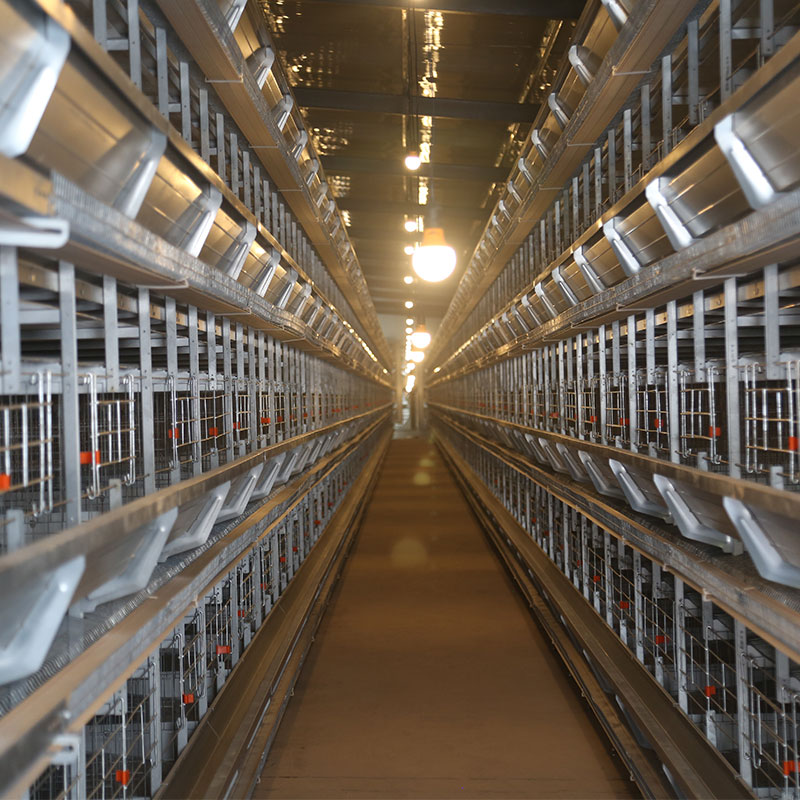
This system is a tiered cage designed specifically for broiler production that integrates a mechanized harvesting function. The core design principle allows entire cage tiers to be partially extended from the house structure, positioning birds directly adjacent to an external collection conveyor.
Operational Workflow:
1. Feed Withdrawal & Preparation: Following standard feed withdrawal protocols, the internal cage environment is prepared.
2. System Activation & Tier Extension: Operators activate the semiautomatic system from a central control point. Selected cage tiers sequentially unlock and slide outward on heavyduty rails.
3. Guided Bird Movement: As the tier extends, gentle sloping floors and strategically placed popholes guide birds toward the open side of the unit.
4. Controlled Transfer: Workers stationed at the external collection point gently guide birds from the cage edge onto a waiting conveyor belt system that transports them to the loading module.
5. System Reset: Once empty, the tier is retracted back into its housing position, locking securely for subsequent washing.
Application Scope & Limitations:
Scope: Optimized for largescale commercial broiler operations (>50,000 bird capacity) seeking to reduce labor dependency and improve harvest consistency. Ideal for new construction or comprehensive retrofit projects.
Limitations: Requires a compatible house design with adequate side access for the extending tiers and conveyor installation. The initial capital investment is higher than manual systems or static cages.
3. CORE FEATURES
4. COMPETITIVE ADVANTAGES
| Performance Metric | Industry Standard (Manual Harvest from Static Cages) | Pullout Type Broiler Cage Solution (SemiAuto) | Advantage (% Improvement) |
| : | : | : | : |
| Average Harvest Time per 10k Birds | 4 5 hours (variable crew size) | 2 2.5 hours (reduced crew) | ~4550% faster |
| Labor Required per Harvest Event| 1215 catchers + supervisors| 57 guides/supervisors at conveyor| ~60% reduction |
| Estimated Bird Stress Indicators (DOA Rate)¹| Baseline (e.g., 0.25%)| Reduction observed (e.g., ~0.10%)| ~60% improvement |
| Downtime Between Flocks (Harvest + Clearout Start)| ~8 hours| ~5 hours| ~37% reduction |
| Harvest Consistency & Predictability| Low (crewdependent)| High (processcontrolled)| Significant |
¹ Note: Actual DOA rates are multifactorial; industry testing demonstrates this system significantly reduces one major stressor.
5. TECHNICAL SPECIFICATIONS
Capacity/Rating: Standard modules designed for bird weights up to 3.2kg (7 lbs) at harvest. Configurable in multitier stacks (typically 34 tiers).
Power Requirements: Operates on standard threephase industrial power (380415V / 50Hz or regional equivalent). Average power draw during active harvesting cycle is <15 kW per control unit.
Material Specifications: Primary structure uses ASTM A653 Grade G90 hotdip galvanized steel sheet; wire mesh is galvanized before fabrication; moving parts utilize sealed ball bearings.
Physical Dimensions (Per Standard Cage Module): Varies by configuration; typical pullout extension distance is 800mm – 1000mm per tier.
Environmental Operating Range: Designed for standard poultry house environments; operating ambient temperature range of 10°C to +45°C; humidity resistant up to RH85% noncondensing.
6. APPLICATION SCENARIOS
Challenge: A major integrator faced volatile labor markets and inconsistent harvest times across its older farms using static cages combined with manual catching crews averaging over five hours per house.
Solution: Implementation of our Pullout Type Broiler Cagesemi automatic bird harvesting system across six houses as part of a scheduled renovation cycle.
Results: Postimplementation data showed average harvest time stabilized at two hours fifteen minutes per house using their own trained staff instead of contract crews—a predictable cost—and allowed sanitation crews earlier access.
Challenge: An investor building a new greenfield facility needed maximum throughput cycles per year but was concerned about local labor availability for intensive manual tasks like harvesting.
Solution: The new facility was designed around our Pullout Type Broiler Cagesemi automatic bird harvesting system as its core housing technology from inception.
Results: The facility achieved its target of seven full cycles in its first year—a goal considered unattainable with manual methods due to downtime constraints—and reported superior flock uniformity at delivery attributed partly to reduced endcycle stress.
Challenge: A plant manager struggled with variable yields due to inconsistent handling during catch days between different contract catching teams.
Solution: Adoption of this semiautomatic system brought key parts of this final stage under direct management control.
Results: They achieved more uniform bird weights delivered within processor specifications while also reducing worker compensation claims related back injuries associated traditional methods.
COMMERCIAL CONSIDERATIONS
Equipment pricing typically follows modular tiers based on capacity:
1\. Basic System Package Includes core pull out cages structural supports basic PLC controls starting price point suitable retrofitting existing structures clear side access
2\. Enhanced Integration Package Includes above plus integrated belt conveyors waste trays advanced sequencing software Recommended new builds requiring turnkey solution
3\. Enterprise Custom Configuration Tailored multi house installations custom dimensions integration specific automation lines Requires detailed consultation
Optional Features Climate monitoring sensors automated lubrication systems remote diagnostics capability
Service Packages Available Proactive maintenance plans spare parts kits onsite training programs extended warranty options
Financing Options We work partners offer equipment leasing arrangements favorable terms help spread capital expenditure time ensuring positive cash flow project outset
FAQ
Q What existing infrastructure required implement this system?
A Successful implementation requires poultry house designed accommodate side extension tiers sufficient space external conveyor belt Typically requires purpose built retrofit existing building may need structural modification Consultation necessary assess feasibility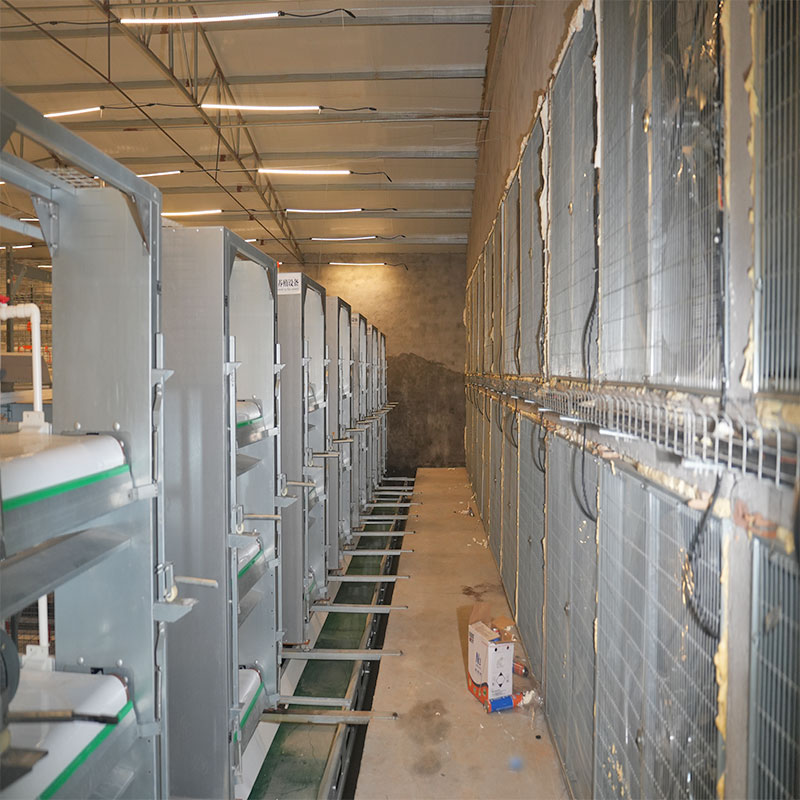
Q How does affect daily management flock during grow out period?
A None During production cycle cages function identically high density static systems All feeding watering ventilation systems operate normally The pull out mechanism engaged only end cycle harvest event
Q What typical return investment period?
A Based customer data primary savings derived labor reduction improved yield secondary benefits faster turnaround times Most operations achieve ROI within years depending scale local cost structures Detailed pro forma analysis provided upon request
Q Are birds reluctant move towards opening during harvest?
A Industry testing demonstrates proper implementation light air flow management using natural phototaxic instincts broilers encourages movement Design incorporates gradual transition prevents sudden exposure elements causing balking
Q What training required our staff operate system?
A Comprehensive onsite training provided covering routine operation basic troubleshooting safety protocols Most farm technicians become proficient within days supervised operation Manufacturer support remains available thereafter
Q Can system integrated existing climate control feeding lines?
A Yes interfaces standard automated feeding chain cup systems common ventilation controls Does not interfere these day day operations Compatibility specific models confirmed during planning phase
1. Drinking system include the water pipes, water pressure adjuster, drinking nipples, Waterline front-end device, dosing system etc, choose them according to customer's needs.
2. High-quality water drinking pipes, pressure regulating valves and water drinking nipples can effectively prevent the water leakage. Drinking system adopt the closed piping system, which can minimize the water pollution.
3. 360-degree drinking nipples provide adequate drinking water for poultry at all stages.
4. The automatic drinking water system mainly adopts the steel ball drinking nipple. lt uses imported high-grad stainless steel, POM resin, and APS engineering material, which is wearing resistant, and the durability can be used for long time.



1. Automatic feeding machine can be chosen between gantry and ladder feeding machine. Gantry type feeding machine is a relatively economical and practical machine with simple operation, remote control walking character, easy to manage.
2. Mechanical transmission device running smoothly, low noise, long service life.
3. With the use of automatic control, the feeding system can adjust the amount of material.
4. Feeding with arched structure, high carrying capacity, not easily deformed.
5. Saving man power, saving feed, greatly improving the efficiency of Large-scale farming.
6. The walking speed of gantry feeding machine is 9--12 m/min.




1. Manure removing system included scraper type and conveyor belt type, Which can reduce the labor intensity and labor cost, keep the chicken shed dry and clean.
2. A type chicken cage can use scraper type or conveyor belt type.


3. The scraper type is suitable for A type cages, which can clean two or three rows. For the starters, this type is a good choice. lt can not only save some labor cost, but also save some investment in the whole project. The cleaning speed is 6-10 meters per minute.
4. Conveyor belt type is more suitable for large scale farming. The manure removing belt we use is high quality PP material (polypropylene). The walking speed is 2-4 meters per minute.



High Quality Pellets Made by Mobile Pellet Machine
1. It has professional designed angle of the blade. After the dynamic balance test one by one, the blade can operate smoothly.
2. The air volume is consistent in the whole life of the fan. Bearings has advantage of high strength, low noise, durable and so on.
1. The cooling pads uses high-quality wet curtain paper and adopts space cross-linking technology, which has the advantages of high water absorption, high water resistance, anti-toxicity and long service life.
2. The cooling efficiency is over 80%, without surfactant, natural water absorption, fast diffusion speed and long-lasting effect.
3. The product does not contain phenol and other chemical substances that are easy to cause skin allergies. It is non-toxic and harmless to the human body and chicken when installed and used. It is green, safe, energy-saving, environmentally friendly, economical, and easy to install.
4. The frame aluminum alloy has high strength, good corrosion resistance, durability and beautiful appearance.
5. Use a special filter for the cooling pad at the upper water to ensure clean water quality and support efficient water circulation components.
6. Combined with a negative pressure fan, it can effectively lower the indoor temperature.
The window is made of special selected high-quality engineering plastic, with high strength and long service life, together with superior anti-aging and anti-UV performance.
Function: Ventilation of the chicken house, usually used in the winter.
This system can adjust the wind speed and direction, thus the cold air will not reach chicken directly , which can effectively prevent the phenomenon of cold stress in chicken.
Environmental control system equipment is suitable for large-scale and intensive farming. According to customer requirements, we can provide various types of smart poultry equipment.
1. Our poultry management system is a modular system that manages all aspects of the chicken house, such as climate, temperature, humidity, ammonia, feeding, feed weighing, lighting and ventilation systems, and can monitor the situation of the chicken house in real time through a computer and mobile phone.
2. The management computer is the heart of the poultry farm, allowing you to easily monitor the entire poultry farm.

 WeChat:+8617838608255