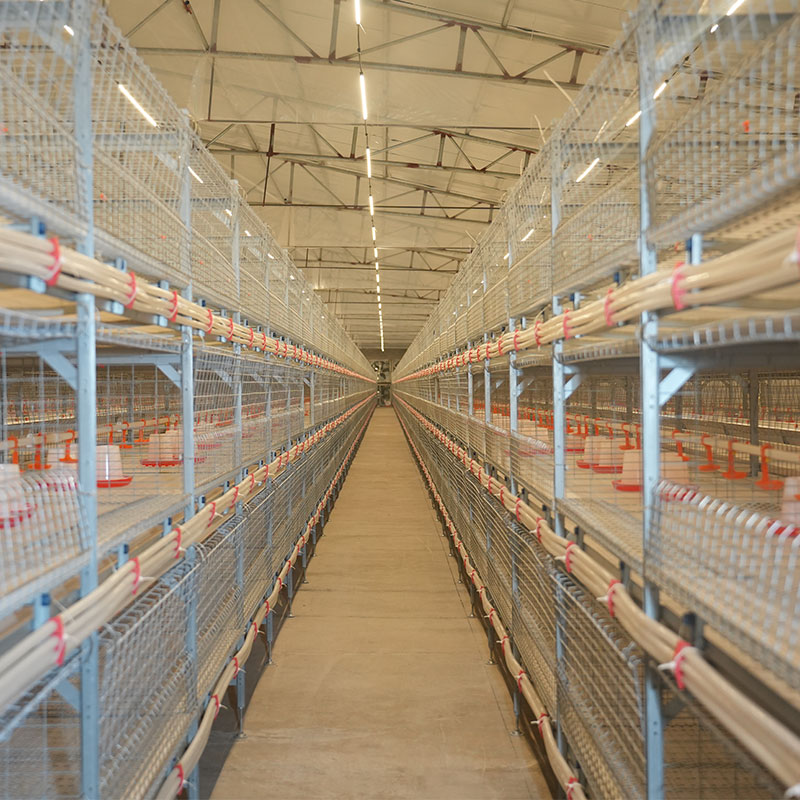
The early weeks of a pullet’s life set the trajectory for her entire laying cycle. Get it right, and you build a foundation for robust health, timely maturity, and peak productivity. Get it wrong, and you spend the rest of the flock’s life managing problems you inadvertently created. The choice of housing during these critical first weeks is not merely a matter of convenience; it is a fundamental investment in the flock’s future. The modern pullet cage system represents a significant evolution from the open brooder pens of the past, offering a controlled environment engineered to nurture birds toward their genetic potential.

Gone are the days of simply providing heat, feed, and water. Today’s systems are integrated platforms for precision rearing. They are designed to answer the specific physiological and behavioral needs of the developing pullet, from day-old chick to a point-of-lay hen ready to transition seamlessly into the laying house. This is not just about containing birds; it’s about actively preparing them.
The Architecture of Preparation: Understanding System Design
A pullet cage system is a multi-tiered structure, typically configured in either A-frame or stair-step designs. Unlike a single, open space, these tiers create distinct micro-environments. The key is understanding that a chick’s world is small, and its needs change as it grows. The system is designed to adapt alongside them.
Consider the first day a chick arrives. Her world is defined by warmth and immediate access to nourishment. Open-floor brooding can create temperature gradients—a cozy spot under the heater but a dangerously cool zone just a few feet away. In a cage system, the concept of a "brooding tier" is employed. Birds are typically started on the top tier, where heat rises and is most easily contained by panels that enclose the sides. This creates a uniform, draft-free environment. The feed and water lines are placed directly at the height of the chicks, meaning a newly hatched chick doesn’t have to wander far to find its first drink. It’s right there. This immediate access drastically reduces early dehydration, a primary cause of early mortality.
As the birds grow, their world needs to expand. This is where the stair-step configuration proves its worth. Unlike an A-frame where one tier is directly above another, the stair-step design offsets each level. This does two crucial things. First, it allows manure to drop cleanly from each tier to the manure belt or pit below without soiling the birds on lower levels, maintaining superior hygiene. Second, and more importantly for bird development, it allows for natural light penetration from side inlets to reach every tier. Birds on the bottom level are not living in perpetual shadow; they receive the same light stimulation as those on top, which is critical for uniform sexual maturity.
The flooring is another critical component. It often starts as a solid plastic surface for the first week or two. This provides a stable, comfortable footing for unsteady legs and contains the heat from the brooders. Then, a transition occurs. The solid surface is gradually rolled back or replaced by the mesh floor that will be standard for the rest of the rearing period and into the laying house. This acclimatization is vital. It teaches the pullets from a young age to navigate a wire floor, strengthening their leg bones and coordination. A pullet raised on a solid floor and then abruptly moved to a complex laying cage with mesh floors, perches, and ramps is at a severe disadvantage. She may be physically clumsy, more prone to keel bone injuries, and slower to learn where to find feed and water in her new environment. The pullet cage system, by mimicking the laying house environment, eliminates this stressor.
Engineering for Health and Uniformity

The ultimate goal of any rearing program is to deliver a flock of uniform birds to the laying house. Uniformity in weight, frame size, and immune status is the hallmark of a well-managed flock. Pullet cages provide the tools to achieve this with a high degree of control.
Environmental control is the first pillar. These systems exist within a tightly managed poultry house. Temperature, humidity, and ventilation are not left to chance. Sophisticate controllers manage inlet curtains, fans, and cooling systems to maintain the perfect climate, removing excess moisture and ammonia from the birds’ immediate environment. For a farmer, this means walking into a house that smells clean, with dry litter underneath the cages and clear air. This controlled atmosphere directly suppresses the challenge from respiratory pathogens like Infectious Bronchitis or Mycoplasma. Reduced pathogen load means less energy is diverted to fighting disease and more is available for growth.
The second pillar is biosecurity. By its very design, a cage system creates a formidable barrier. The birds are elevated away from their manure, breaking a primary cycle of parasite and pathogen transmission. It is far more difficult for a disease organism from one bird’s droppings to be ingested by another. Furthermore, it physically separates the birds from potential pests like rodents or darkling beetles, which can act as vectors for viruses such as Marek’s disease. This containment is a powerful proactive health measure.
Feed and water management is the third pillar, and perhaps where the most significant gains in uniformity are made. Every bird has equal, unimpeded access to fresh feed and water. There is no dominant bird guarding the feeder tube or water nipple, preventing shyer flock mates from accessing resources. In an open floor system, competition can create a wide variation in body weight; the aggressive birds get more, the passive ones get less. In a cage, the playing field is leveled. The feed is delivered in a consistent, measured way, often by automated chains that run multiple times a day, stimulating appetite and ensuring a steady supply of nutrition tailored to each growth phase. The result is a flock where the weight of the smallest bird is within 10% of the weight of the largest—a key predictor of a strong, synchronous start to lay.
The Behavioral Blueprint: Training for the Laying House
A modern laying hen is not housed in a barren box. She lives in an enriched colony system equipped with perches, scratch pads, and secluded nest boxes. If she has never encountered these features before, she will not know how to use them. This leads to a host of problems: floor eggs, which are dirty and uncollectable by automation; mislaid eggs in the system; and increased feather pecking from birds that are not mentally stimulated. The pullet cage is a training ground where these essential behaviors are taught and reinforced.
Perches are integrated into pullet cages from an early age. Initially, they may be low to the ground or even a simple horizontal bar. Young chicks naturally jump and roost on them, building the muscle strength in their legs and breast needed for later life. By the time they are moved, jumping onto a perch to rest or sleep is an ingrained habit. This prevents them from sleeping on the floor, which keeps them cleaner and reduces the risk of manure-borne infections. Strong perching skills also directly protect the keel bone. A hen that lands clumsily on a perch is more likely to suffer a keel bone deviation or fracture, a common welfare and productivity issue. A trained pullet lands with precision.
The transition to a mesh floor, as mentioned, is a form of training. But it goes further. The movement between tiers via integrated ramps encourages natural exploration and strengthens bones. The system itself, with its feeders, drinkers, and occasional moving chains, acclimatizes the birds to the sounds and sensations of automation. A bird that has never heard the hum of a feed chain may startle and panic. A pullet reared in the system is desensitized to these normal operational noises, resulting in calmer birds and less stress-induced immunosuppression.
Perhaps the most critical behavioral training is for the nest box. While pullet cages don’t have full nest boxes, farmers can employ training techniques using the same dark, secluded mats that will line the nests in the laying house. Placing these mats in a corner of the cage and dimming the lights encourages the pullets to seek out dark, private areas. When they are transferred to the laying house and see the dark entrance of a nest box, they are predisposed to enter it. This dramatically reduces the incidence of mislaid and floor eggs in the first crucial weeks of production.
Operational and Economic Considerations
From the farmer’s perspective, the shift to pullet cages is an operational revolution. Labor requirements are fundamentally transformed. Tasks that were once physically demanding and time-consuming become streamlined and efficient.
Catching and vaccination are prime examples. In a floor system, vaccinating a flock involves herding, catching, and handling every single bird—a process that is intensely stressful for both the birds and the crew. It can take a large team hours to complete, and the quality of vaccination can be inconsistent due to hurried administration. In a cage system, the birds are already contained in manageable groups. Vaccination crews can move methodically along the rows, quickly and calmly administering treatments without the chaos of chasing birds. This improves vaccine efficacy and reduces labor costs significantly.
Bird movement is another major efficiency. Transferring a flock from a rearing house to a laying house is one of the most logistically challenging days on a farm. Moving tens of thousands of birds from an open floor requires massive manual labor and is a peak stress event. With cage systems, the process can be automated. Many modern systems are designed to be mechanically linked. The entire module of birds can be lifted out of the rearing house and directly into the laying house, or the birds can be moved via a conveyor system from one cage to another with minimal human handling. This drastically reduces stress, injury, and the time required for the transfer.
The economic calculation extends beyond labor. While the initial capital outlay for a cage system is higher than for open-floor rearing, the Return on Investment is realized through the performance of the flock. A more uniform, healthier, and better-trained pullet becomes a more productive hen. Farmers can expect:
Higher peak production: Flocks reach a higher percentage of lay and sustain it longer.
Improved feed conversion: More of the feed energy goes into egg production rather than fighting disease or compensating for social stress.
Reduced mortality: Lower rates of disease and cannibalism mean more birds alive and producing at the end of the cycle.
Fewer seconds: A drastic reduction in floor eggs and mislaid eggs means a higher percentage of first-quality, saleable eggs.
Reduced medication costs: The enhanced biosecurity and hygiene lower the need for therapeutic treatments.
The pullet cage system is not a standalone piece of equipment; it is the first and most critical chapter in the story of a flock. It is a proactive tool that allows farmers to build resilience into their birds from the first day. By controlling the environment, enforcing biosecurity, guaranteeing nutrition, and instilling essential behaviors, these systems transform the rearing phase from a passive holding period into an active preparation program. The result is a pullet that is not simply grown, but engineered for success—a bird that enters the laying house ready to perform, capable of expressing her full genetic potential, and poised to deliver a profitable and sustainable return.
1. Drinking system include the water pipes, water pressure adjuster, drinking nipples, Waterline front-end device, dosing system etc, choose them according to customer's needs.
2. High-quality water drinking pipes, pressure regulating valves and water drinking nipples can effectively prevent the water leakage. Drinking system adopt the closed piping system, which can minimize the water pollution.
3. 360-degree drinking nipples provide adequate drinking water for poultry at all stages.
4. The automatic drinking water system mainly adopts the steel ball drinking nipple. lt uses imported high-grad stainless steel, POM resin, and APS engineering material, which is wearing resistant, and the durability can be used for long time.



1. Automatic feeding machine can be chosen between gantry and ladder feeding machine. Gantry type feeding machine is a relatively economical and practical machine with simple operation, remote control walking character, easy to manage.
2. Mechanical transmission device running smoothly, low noise, long service life.
3. With the use of automatic control, the feeding system can adjust the amount of material.
4. Feeding with arched structure, high carrying capacity, not easily deformed.
5. Saving man power, saving feed, greatly improving the efficiency of Large-scale farming.
6. The walking speed of gantry feeding machine is 9--12 m/min.




1. Manure removing system included scraper type and conveyor belt type, Which can reduce the labor intensity and labor cost, keep the chicken shed dry and clean.
2. A type chicken cage can use scraper type or conveyor belt type.


3. The scraper type is suitable for A type cages, which can clean two or three rows. For the starters, this type is a good choice. lt can not only save some labor cost, but also save some investment in the whole project. The cleaning speed is 6-10 meters per minute.
4. Conveyor belt type is more suitable for large scale farming. The manure removing belt we use is high quality PP material (polypropylene). The walking speed is 2-4 meters per minute.



High Quality Pellets Made by Mobile Pellet Machine
1. It has professional designed angle of the blade. After the dynamic balance test one by one, the blade can operate smoothly.
2. The air volume is consistent in the whole life of the fan. Bearings has advantage of high strength, low noise, durable and so on.
1. The cooling pads uses high-quality wet curtain paper and adopts space cross-linking technology, which has the advantages of high water absorption, high water resistance, anti-toxicity and long service life.
2. The cooling efficiency is over 80%, without surfactant, natural water absorption, fast diffusion speed and long-lasting effect.
3. The product does not contain phenol and other chemical substances that are easy to cause skin allergies. It is non-toxic and harmless to the human body and chicken when installed and used. It is green, safe, energy-saving, environmentally friendly, economical, and easy to install.
4. The frame aluminum alloy has high strength, good corrosion resistance, durability and beautiful appearance.
5. Use a special filter for the cooling pad at the upper water to ensure clean water quality and support efficient water circulation components.
6. Combined with a negative pressure fan, it can effectively lower the indoor temperature.
The window is made of special selected high-quality engineering plastic, with high strength and long service life, together with superior anti-aging and anti-UV performance.
Function: Ventilation of the chicken house, usually used in the winter.
This system can adjust the wind speed and direction, thus the cold air will not reach chicken directly , which can effectively prevent the phenomenon of cold stress in chicken.
Environmental control system equipment is suitable for large-scale and intensive farming. According to customer requirements, we can provide various types of smart poultry equipment.
1. Our poultry management system is a modular system that manages all aspects of the chicken house, such as climate, temperature, humidity, ammonia, feeding, feed weighing, lighting and ventilation systems, and can monitor the situation of the chicken house in real time through a computer and mobile phone.
2. The management computer is the heart of the poultry farm, allowing you to easily monitor the entire poultry farm.

 WeChat:+8617838608255