Pulp Egg Tray Making Machine: Your Ultimate Guide to Sustainable Packaging Production
In an era where sustainability and costefficiency are paramount for businesses, the pulp egg tray making machine has emerged as a gamechanger in the packaging industry. This innovative equipment transforms recycled paper waste into sturdy, ecofriendly egg trays, cartons, and other molded pulp products. For entrepreneurs, farmers, and packaging manufacturers, investing in this technology isn't just about production—it's about futureproofing a business against plastic bans, meeting consumer demand for green packaging, and creating value from waste. This comprehensive guide delves deep into the workings, benefits, types, and considerations of pulp molding machinery, providing the expert insights you need to make an informed decision.
A pulp egg tray making machine is an industrial system designed to automate the production of molded pulp packaging from recycled paper or other natural fibers. The process involves pulping raw materials, forming them into specific shapes (like egg trays), drying them, and finishing them for packing and shipment.
The core principle is both simple and ingenious: it gives a second life to waste paper (newspapers, cartons, office paper) by converting it into essential, biodegradable packaging products. This closedloop system epitomizes the circular economy.
The production follows a meticulous sequence to ensure consistency and quality.
Stage 1: Pulping
Waste paper is loaded into a hydraulic pulper, where it is mixed with large amounts of water and broken down into fibrous slurry. Consistency and mixing ratios are crucial here. Additives like colorants or strengthening agents may be introduced at this stage.
Stage 2: Molding
This is the formative stage. The slurry is pumped into the molding system. There are two primary technologies:
Vacuum Molding: The slurry is sucked onto a perforated metal mold (typically for egg trays) using a vacuum pump. This extracts water and forms the basic shape.
Pressure Molding: Used for more precise and smooth products (like electronic packaging), this method uses pressure to form the pulp against heated molds.
Stage 3: Drying
The wet molded products must be dried to achieve final strength.
Natural Drying: The most economical method, relying on sunlight and air. It requires significant space and weather dependency.
Brick Drying Line: Uses conveyor systems through multilayer drying tunnels fueled by coal or biomass.
Metal Drying Line: A fully automated conveyor system with integrated heat sources (often natural gas or electricity), offering the highest efficiency and consistency.
Single/Multilayer Rotary Drying Systems: Compact systems where molds rotate through a heated chamber.
Stage 4: Finishing & Packing
After drying, products pass through a hot press to achieve uniform thickness and smoothness. They are then counted, stacked automatically or semiautomatically, and packaged for shipment.
| Benefit Category | Specific Advantages |
| : | : |
| Environmental | • Uses 100% recycled materials.
• Produces 100% biodegradable & compostable products.
• Reduces reliance on plastic/foam.
• Lowers carbon footprint via waste repurposing. |
| Economic | • Very low raw material cost (waste paper).
• High market demand for ecopackaging.
• Potential government incentives for green businesses.
• Creates profitable output from waste streams. |
| Operational | • Can be semi or fullyautomated.
• Scalable production models available.
• Produces not just egg trays but also fruit trays, cup carriers, electronic packaging. |
| Market | • Meets CSR (Corporate Social Responsibility) goals of B2B clients.
• Aligns with global bans on singleuse plastics.
• Enhances brand image for user businesses. |
Your choice depends entirely on your production goals, budget, and labor availability.
Ideal for startups or small farms.
Production Capacity: 800 2,000 pieces per hour.
Key Feature: Requires manual transfer of wet molds for drying (typically natural sundrying).
Best For: Localized production with low initial investment.
A balanced option offering higher output with some automation.
Production Capacity: 2,000 4,000 pieces per hour.
Key Feature: Automatic molding; manual loading/unloading for drying line.
Best For: Smalltomedium businesses ready to scale.
The pinnacle of efficiency for largescale commercial production.
Production Capacity: 4,000 10,000+ pieces per hour.
Key Feature: Fully integrated process from pulping to packing with PLC control systems.
Best For: Large manufacturers supplying regional/national markets.
1. Raw Material Analysis: Source your waste paper locally? Test its fiber quality as it affects slurry consistency and final product strength.
2. Output & Automation Level: Match the machine’s capacity to your current orders and nearterm growth projections. Don’t overinvest initially unless demand is clear.
3. Drying Method Selection: This dramatically impacts footprint and operational cost. Metal drying lines are efficient but have higher upfront and fuel costs than natural drying.
4. Energy Consumption & Fuel Type: Understand the power requirements (KW) and preferred fuel for dryers (electricity, natural gas, coal). This is a major operational expense.
5. Supplier Credibility & AfterSales Service:
Look for manufacturers with proven industry experience.
Insist on seeing machine operation videos or, better yet, factory visits.
Clarify warranty terms, availability of spare parts, installation guidance,and technical support responsiveness.
Running a successful plant goes beyond buying the machine:
Slurry Recipe Optimization: The mix of water, paper fiber,and optional additives is proprietary to each product type—finetuning this is key to quality control。
Mold Customization: You can produce various products by changing molds (egg trays30/12/6 cells, fruit trays, seedling pots). Discuss mold design capabilities with your supplier。
Maintenance Schedule: Regular cleaning of pumps, pipelines,and molds prevents clogging。 Scheduled checks on vacuum pumps,hydraulic systems,and heating elements prevent costly downtime。
Quality Control Points: Monitor pulp density,drying temperature uniformity,and final product compression strength。
Investing in a pulp egg tray making machine represents a strategic move into sustainable manufacturing。 It addresses urgent environmental concerns while building a resilient business model based on lowcost inputs和高市场需求。 Success hinges on thoroughly understanding your market capacity,meticulously selecting the right level of automation,and partnering with a reputable machinery supplier who offers robust technical support。
By turning waste into valuable,practical packaging solutions,your venture contributes directly to a circular economy—a powerful proposition in today's market。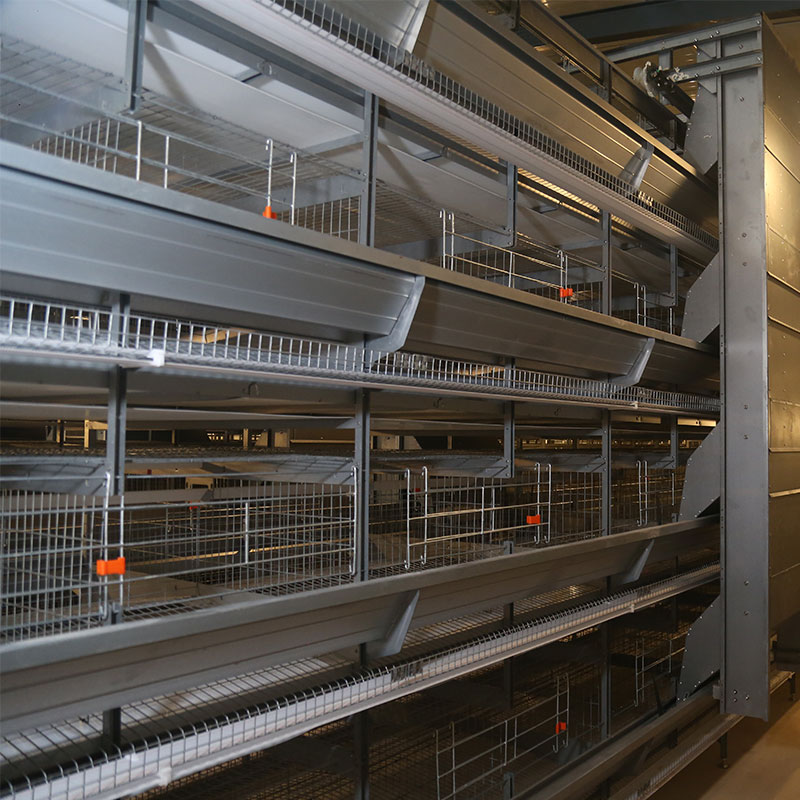
Q1: What raw materials can I use in an egg tray machine?
A1: The primary material is recycled waste paper: newspapers,magazines,carton boxes,kraft paper,and office paper。 Some systems can also use nonwood fibers like bagasse(sugarcane residue)or wheat straw。
Q2: How much does an egg tray making machine cost?
A2: Costs vary widely based on automation level,drying method,and capacity。 Small manual setups can start around $10,000$20,000 while highoutput fully automatic lines can range from $80,000 to over $300,000。 A detailed quotation from suppliers based on your specifications is essential。
Q3: What is the typical return on investment (ROI) period?
A3: ROI depends on factors like local raw material cost,labor,electricity rates,and selling price of finished trays。 With efficient operations,a wellrun plant can often see ROI within 13 years due to very low material costs。
Q4: Can one machine produce different products besides egg trays?
A4: Absolutely。 By changing the forming molds,the same machine can produce apple trays,wine bottle protectors,cup carriers,pulp plates,and industrial packaging inserts。 Discuss your product range plans with your supplier。
Q5: What are the main differences between vacuum molding和pressure molding?
A5: Vacuum molding uses suction onto mesh molds;it's standard for porous items like egg/fruit trays.Pressure molding presses pulp between two heated,smooth metal dies;it creates denser,smoother surfaces ideal for electronics或consumer goods packaging requiring high aesthetics。
Q6: How much water和electricity does these machines consume?
A6: Water consumption varies but systems often recycle up to90%of process water within closed loops.Electricity consumption depends heavily on automation和drying type.Fully automatic lines with metal dryers may use150500 KW per hour.A supplier should provide detailed energy specs based on your chosen model。
Q7: Do I need special training to operate this machinery?
A7: While complex fully automatic lines require trained operators,semiauto machines have manageable learning curves.Reputable suppliers provide comprehensive installation调试onsite training covering operation,safety,routine maintenance,troubleshooting。
Q8: Are there any pollution concerns from these plants?
A8: Properly operated plants have minimal pollution.The pulping process uses water,but modern systems treat和recycle it.Wastewater discharge must meet local regulations.Drying emissions depend on fuel type;cleaner fuels like natural gas are recommended.No toxic chemicals are typically used。
Q9: How do I source reliable waste paper consistently?
A9: Establish relationships with local recycling centers,waste management companies,municipal collection programs或large generators like printing houses和supermarkets.Consistency in paper grade helps maintain stable slurry quality。
Q10: Can these machines be exported globally?What about installation?
A10: Yes,major manufacturers export worldwide.They usually provide detailed foundation drawings提前指导客户准备安装场地.Most suppliers send engineers指导安装调试onsite until full production begins.Shipping logistics和import duties vary by destination country需单独考虑。
1. Drinking system include the water pipes, water pressure adjuster, drinking nipples, Waterline front-end device, dosing system etc, choose them according to customer's needs.
2. High-quality water drinking pipes, pressure regulating valves and water drinking nipples can effectively prevent the water leakage. Drinking system adopt the closed piping system, which can minimize the water pollution.
3. 360-degree drinking nipples provide adequate drinking water for poultry at all stages.
4. The automatic drinking water system mainly adopts the steel ball drinking nipple. lt uses imported high-grad stainless steel, POM resin, and APS engineering material, which is wearing resistant, and the durability can be used for long time.



1. Automatic feeding machine can be chosen between gantry and ladder feeding machine. Gantry type feeding machine is a relatively economical and practical machine with simple operation, remote control walking character, easy to manage.
2. Mechanical transmission device running smoothly, low noise, long service life.
3. With the use of automatic control, the feeding system can adjust the amount of material.
4. Feeding with arched structure, high carrying capacity, not easily deformed.
5. Saving man power, saving feed, greatly improving the efficiency of Large-scale farming.
6. The walking speed of gantry feeding machine is 9--12 m/min.




1. Manure removing system included scraper type and conveyor belt type, Which can reduce the labor intensity and labor cost, keep the chicken shed dry and clean.
2. A type chicken cage can use scraper type or conveyor belt type.


3. The scraper type is suitable for A type cages, which can clean two or three rows. For the starters, this type is a good choice. lt can not only save some labor cost, but also save some investment in the whole project. The cleaning speed is 6-10 meters per minute.
4. Conveyor belt type is more suitable for large scale farming. The manure removing belt we use is high quality PP material (polypropylene). The walking speed is 2-4 meters per minute.



High Quality Pellets Made by Mobile Pellet Machine
1. It has professional designed angle of the blade. After the dynamic balance test one by one, the blade can operate smoothly.
2. The air volume is consistent in the whole life of the fan. Bearings has advantage of high strength, low noise, durable and so on.
1. The cooling pads uses high-quality wet curtain paper and adopts space cross-linking technology, which has the advantages of high water absorption, high water resistance, anti-toxicity and long service life.
2. The cooling efficiency is over 80%, without surfactant, natural water absorption, fast diffusion speed and long-lasting effect.
3. The product does not contain phenol and other chemical substances that are easy to cause skin allergies. It is non-toxic and harmless to the human body and chicken when installed and used. It is green, safe, energy-saving, environmentally friendly, economical, and easy to install.
4. The frame aluminum alloy has high strength, good corrosion resistance, durability and beautiful appearance.
5. Use a special filter for the cooling pad at the upper water to ensure clean water quality and support efficient water circulation components.
6. Combined with a negative pressure fan, it can effectively lower the indoor temperature.
The window is made of special selected high-quality engineering plastic, with high strength and long service life, together with superior anti-aging and anti-UV performance.
Function: Ventilation of the chicken house, usually used in the winter.
This system can adjust the wind speed and direction, thus the cold air will not reach chicken directly , which can effectively prevent the phenomenon of cold stress in chicken.
Environmental control system equipment is suitable for large-scale and intensive farming. According to customer requirements, we can provide various types of smart poultry equipment.
1. Our poultry management system is a modular system that manages all aspects of the chicken house, such as climate, temperature, humidity, ammonia, feeding, feed weighing, lighting and ventilation systems, and can monitor the situation of the chicken house in real time through a computer and mobile phone.
2. The management computer is the heart of the poultry farm, allowing you to easily monitor the entire poultry farm.

 WeChat:+8617838608255