The morning chill still hangs in the air when you enter the brooder house. A faint chorus of cheeps greets you, but it’s the sight that confirms your investment was sound: a cluster of day-old chicks is nestled contentedly against the solid wood wall of the Rutin rearing box, their bodies relaxed. There’s no frantic piling in the corners, no desperate scramble for a heat source that keeps moving. The environment is stable, and that stability is the foundation upon which a successful flock is built.
This is the core principle behind the Rutin Chicken Rearing Box. It moves beyond the temporary, often problematic setup of heat lamps and cardboard rings to create a dedicated micro-environment. The system is designed to replicate the security and consistent warmth a mother hen provides, but with the precision and reliability of modern materials.
The Foundation: Solid Wood as a Living Material

Many modern agricultural products are crafted from plastics and metals, chosen for their durability and ease of cleaning. The Rutin box’s use of solid wood is a deliberate and significant departure. Wood is not an inert barrier; it is a breathing material. In the humid environment of a brooder, where chick droppings and spilled water contribute to moisture, a non-porous surface can lead to condensation dripping down the walls. A solid wood panel, however, absorbs excess ambient humidity and slowly releases it back, acting as a natural humidity buffer.
Imagine a brooder made of thin plastic on a cold night. The warm, moist air inside hits the cold plastic surface and immediately condenses, creating dampness that chills the chicks and promotes pathogen growth. The thick wood walls of the Rutin box have significant thermal mass. They do not rapidly change temperature. When the internal heater cycles on, the wood absorbs some of that heat. When the heater cycles off, the wood gently radiates that stored warmth back into the space, preventing the sharp temperature drops that cause chicks to huddle and stress. This is the difference between a stable, draft-free nursery and a volatile enclosure where the climate changes by the minute.
Furthermore, wood provides exceptional insulation. During a summer power outage, a metal brooder would heat up rapidly, putting chicks at risk of heat stress. The wood box provides a buffer, keeping the interior temperature more stable for a longer period. This inherent property of the material provides a crucial safety margin that synthetic materials often lack.
The Heart of the System: Precision Temperature Control
The concept of a "constant temperature pet nesting box" hinges on a sophisticated, yet farmer-friendly, thermostat. This isn't a simple on/off switch for a heat lamp; it's a proportional controller that communicates constantly with the heating element. You set a target temperature—for example, 95°F (35°C) for the first week—and the system works to maintain it within a very narrow range.
Consider a traditional heat lamp. It is either on at 100% power or completely off. This creates a "feast or famine" heat cycle. Chicks directly under the lamp become too hot and move away, only to get chilled on the periphery, leading to a constant, energy-wasting migration. The Rutin box’s heater, often a low-wattage, radiant heat plate or a pad embedded in the floor, modulates its output. It might run at 60% power to maintain the set point, providing a gentle, even warmth that emanates from below, much like the warmth from a mother’s body. Chicks learn quickly that the entire floor area is a comfortable zone. They spend less energy on thermoregulation and more energy on growth and development.
This precision has a direct impact on feed conversion and health. A chick that is not shivering to keep warm or panting to cool down has a calmer metabolism. It will eat more consistently, utilize its feed more efficiently for weight gain, and have a stronger immune system. The reduction in temperature-related stress is one of the most significant contributors to lowering early mortality rates.
Design for Welfare and Efficiency: The Brooding Cage Concept
The term "brooding cage" can be misleading if one pictures restrictive battery cages. In this context, it refers to a secure, contained environment designed specifically for the vulnerable brooding phase. Every design element serves a dual purpose: enhancing chick welfare and simplifying management for the farmer.
The solid walls, for instance, are not just for temperature stability. They eliminate drafts completely. Drafts are a primary cause of chilling, which leads to piling and suffocation. By creating a draft-free zone, the box removes this major risk factor. The walls also provide a visual barrier that reduces startling from outside movements, keeping the chicks calm.
The interior space is carefully considered. There are no corners in the traditional sense where chicks can be trapped and piled. The design often incorporates rounded internal corners or a circular layout, encouraging even distribution of the flock. The floor is typically a wire mesh, suspended over a droppings tray. This is a critical feature for hygiene. As droppings fall through the mesh, they are separated from the living area. Chicks are no longer walking through or sleeping on soiled bedding. This dramatically reduces the incidence of pasty vents—a common and fatal condition where droppings stick to a chick’s vent and block it—and minimizes exposure to coccidia and other pathogens that thrive in damp litter.
For the farmer, this design translates to labor savings. Instead of daily changes of soiled shavings or straw, the droppings tray can be slid out, emptied, and replaced in minutes. The solid wood surfaces are easy to wipe down and disinfect between flocks. This efficient waste management system also improves air quality within the broader poultry house by concentrating and containing ammonia-producing waste.
Practical Integration into Farm Operations
Adopting the Rutin box system requires a shift in mindset from area brooding to unit brooding. Rather than heating an entire section of a barn, you are creating multiple, independent micro-climates. This offers remarkable flexibility.
For a small-scale pastured poultry operation, a few Rutin boxes can serve as the central nursery. Chicks spend their first critical 3-4 weeks in the controlled environment, building robust immune systems and achieving a good size. They are then transitioned as a group to pasture pens, strong enough to handle the environmental variables of the field.
For a larger farm with continuous production, the boxes enable an efficient all-in-all-out system. One box can be dedicated to a single batch of chicks. Once those chicks are moved to a grow-out pen, the entire box can be thoroughly cleaned and disinfected, breaking the disease cycle before the next batch arrives. This compartmentalization is a powerful biosecurity tool.
The initial setup involves placing the box on a stable, level surface in a draft-free location within your poultry building. After connecting to a power source, you simply set the thermostat to the required temperature for the chicks' age. A reliable thermometer placed at chick level is recommended for the first few days to verify the thermostat's calibration. The only daily tasks are checking the temperature readout, ensuring feed and water are full and clean, and removing the droppings tray.
Feeders and waterers are typically placed on the periphery of the living space. The design encourages chicks to move away from the direct heat source to eat and drink, promoting activity and ensuring all chicks have access. Observing chick behavior remains the ultimate test. If they are spread evenly throughout the box, quietly cheeping, the temperature is correct. If they are huddled directly under the heat source, they are too cold. If they are pressed against the cooler outer walls and panting, they are too hot. The system’s precision makes these behavioral cues rare, but they are a vital backup.
Long-Term Value and Return on Investment
The upfront cost of a solid wood Rutin box is higher than a heat lamp and a circle of cardboard. The evaluation, therefore, must be based on its long-term performance and the value of the chicks it produces.
The first return is seen in reduced energy costs. A 250-watt heat lamp runs at full power whenever it is on, consuming significant electricity. The modulated heating system in a well-insulated Rutin box uses far less energy to maintain a more stable temperature. Over a single brooding cycle, the savings can be substantial; over years of use, the box can pay for itself in energy savings alone.
The most significant financial return, however, comes from improved livability and performance. A reduction in early mortality by even a few percentage points saves the cost of every lost chick and the feed invested in it. Stronger, healthier chicks with better feed conversion ratios reach target weights faster and on less feed. For a meat bird operation, this means a quicker turnaround and lower feed bills. For a layer operation, it means a cohort of pullets that will come into lay with a stronger constitution and higher production potential.
Finally, the durability of the solid wood construction means this is not a disposable item. With proper care and cleaning between batches, a Rutin box can serve for a decade or more, brooding countless flocks. The investment is amortized over thousands of birds, making the per-bird cost negligible compared to the benefits gained. It is a tool that shifts the brooding process from a constant, labor-intensive worry to a managed, predictable, and highly successful foundation for the entire production cycle.
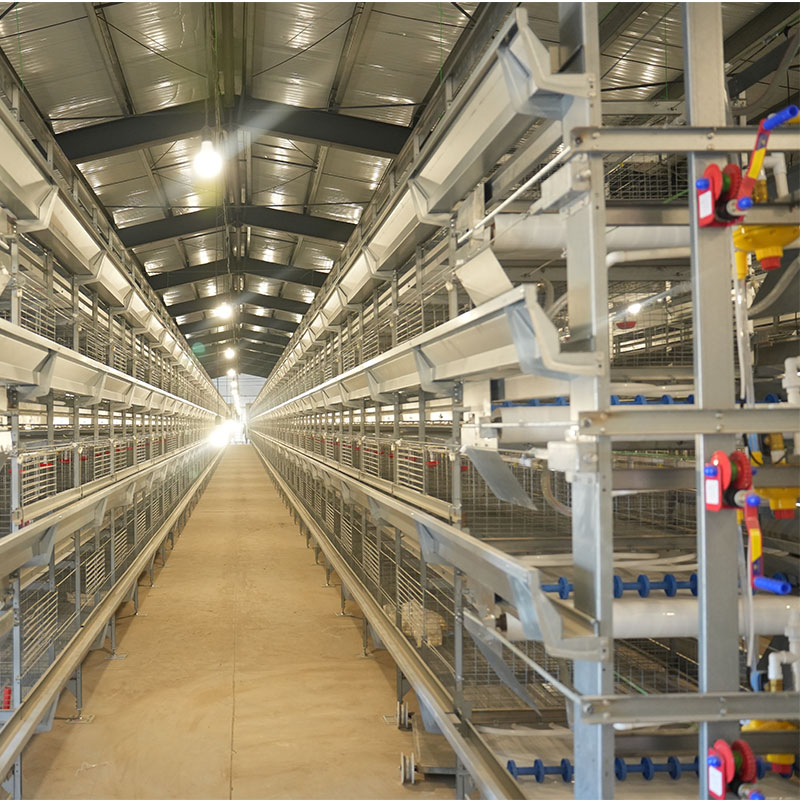
1. Drinking system include the water pipes, water pressure adjuster, drinking nipples, Waterline front-end device, dosing system etc, choose them according to customer's needs.
2. High-quality water drinking pipes, pressure regulating valves and water drinking nipples can effectively prevent the water leakage. Drinking system adopt the closed piping system, which can minimize the water pollution.
3. 360-degree drinking nipples provide adequate drinking water for poultry at all stages.
4. The automatic drinking water system mainly adopts the steel ball drinking nipple. lt uses imported high-grad stainless steel, POM resin, and APS engineering material, which is wearing resistant, and the durability can be used for long time.



1. Automatic feeding machine can be chosen between gantry and ladder feeding machine. Gantry type feeding machine is a relatively economical and practical machine with simple operation, remote control walking character, easy to manage.
2. Mechanical transmission device running smoothly, low noise, long service life.
3. With the use of automatic control, the feeding system can adjust the amount of material.
4. Feeding with arched structure, high carrying capacity, not easily deformed.
5. Saving man power, saving feed, greatly improving the efficiency of Large-scale farming.
6. The walking speed of gantry feeding machine is 9--12 m/min.




1. Manure removing system included scraper type and conveyor belt type, Which can reduce the labor intensity and labor cost, keep the chicken shed dry and clean.
2. A type chicken cage can use scraper type or conveyor belt type.


3. The scraper type is suitable for A type cages, which can clean two or three rows. For the starters, this type is a good choice. lt can not only save some labor cost, but also save some investment in the whole project. The cleaning speed is 6-10 meters per minute.
4. Conveyor belt type is more suitable for large scale farming. The manure removing belt we use is high quality PP material (polypropylene). The walking speed is 2-4 meters per minute.



High Quality Pellets Made by Mobile Pellet Machine
1. It has professional designed angle of the blade. After the dynamic balance test one by one, the blade can operate smoothly.
2. The air volume is consistent in the whole life of the fan. Bearings has advantage of high strength, low noise, durable and so on.
1. The cooling pads uses high-quality wet curtain paper and adopts space cross-linking technology, which has the advantages of high water absorption, high water resistance, anti-toxicity and long service life.
2. The cooling efficiency is over 80%, without surfactant, natural water absorption, fast diffusion speed and long-lasting effect.
3. The product does not contain phenol and other chemical substances that are easy to cause skin allergies. It is non-toxic and harmless to the human body and chicken when installed and used. It is green, safe, energy-saving, environmentally friendly, economical, and easy to install.
4. The frame aluminum alloy has high strength, good corrosion resistance, durability and beautiful appearance.
5. Use a special filter for the cooling pad at the upper water to ensure clean water quality and support efficient water circulation components.
6. Combined with a negative pressure fan, it can effectively lower the indoor temperature.
The window is made of special selected high-quality engineering plastic, with high strength and long service life, together with superior anti-aging and anti-UV performance.
Function: Ventilation of the chicken house, usually used in the winter.
This system can adjust the wind speed and direction, thus the cold air will not reach chicken directly , which can effectively prevent the phenomenon of cold stress in chicken.
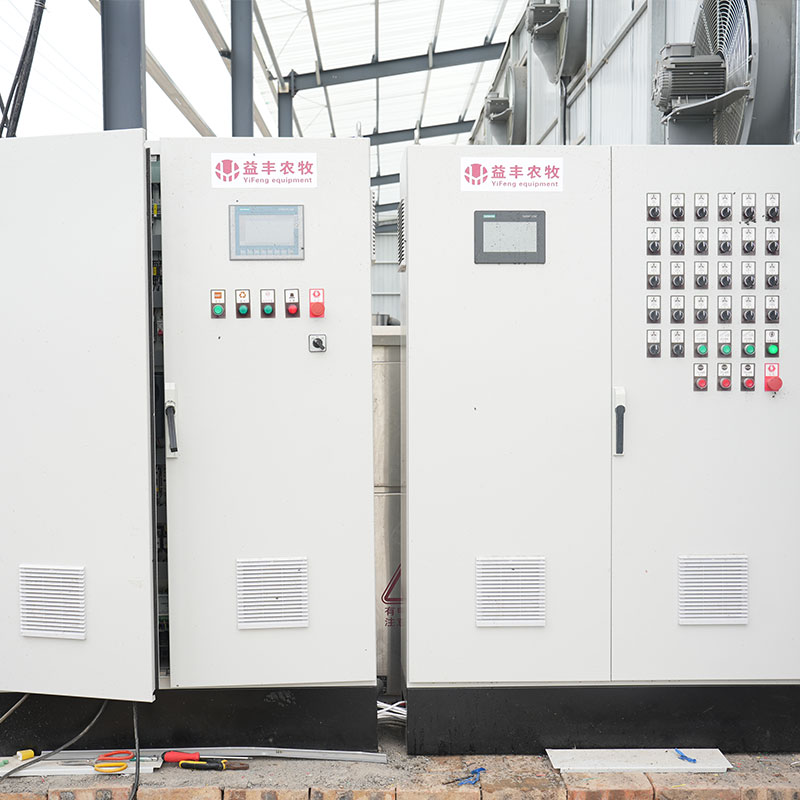
Environmental control system equipment is suitable for large-scale and intensive farming. According to customer requirements, we can provide various types of smart poultry equipment.
1. Our poultry management system is a modular system that manages all aspects of the chicken house, such as climate, temperature, humidity, ammonia, feeding, feed weighing, lighting and ventilation systems, and can monitor the situation of the chicken house in real time through a computer and mobile phone.
2. The management computer is the heart of the poultry farm, allowing you to easily monitor the entire poultry farm.

 WeChat:+8617838608255