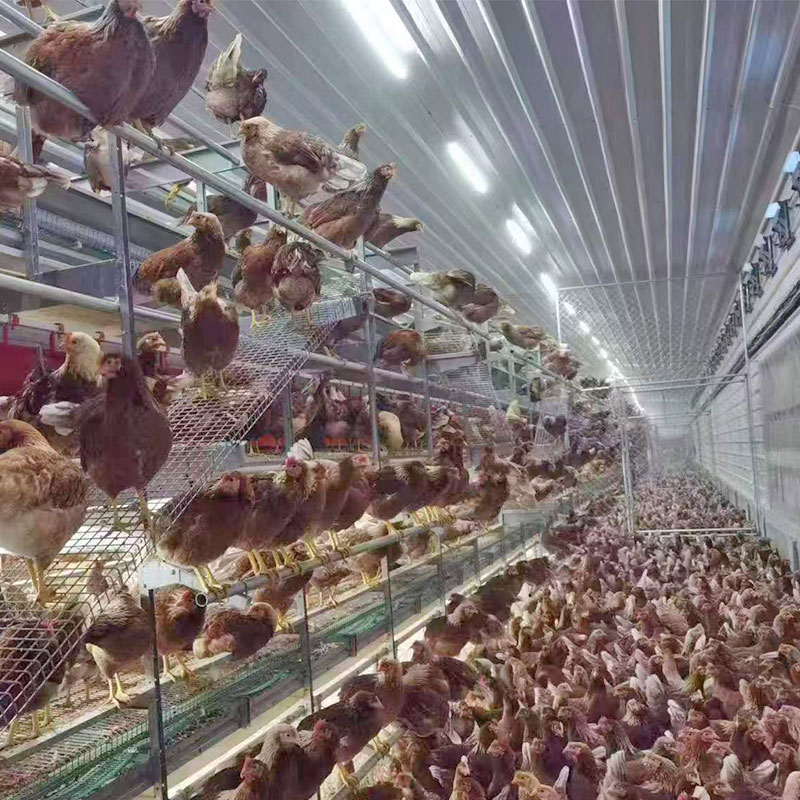
For poultry farmers considering housing upgrades, the Spot Goods wooden chicken coop system represents more than just shelter—it’s a functional environment where animal behavior, farmer workflow, and outdoor conditions intersect. These units, often combining poultry and rabbit housing, are designed to merge the durability of treated wood with practical cage layouts that influence daily flock management.
The structural integrity begins with the wood itself. Pressure-treated lumber, resistant to rot and pests, forms the primary frame. Unlike untreated pine that might warp or splinter after a single season of rain and sun, this timber maintains its shape. A farmer moving a coop across a muddy pasture in early spring will notice the doors still swing smoothly on their hinges and the roof panels remain securely fastened. The wood is typically coated with a non-toxic, weather-resistant sealant. When hosing down the interior after a batch of layers, water beads up and rolls off the surface instead of soaking in, which prevents the wood from becoming a damp breeding ground for mold or bacteria.
Ventilation in these coops is not merely a set of holes cut into the walls. It is a calculated system of airflow that works in concert with the outdoor environment. Mesh wire panels, usually galvanized steel with small apertures, are positioned along the upper sections of the side and rear walls. This placement allows ammonia and moisture-laden air to escape while preventing direct drafts from blowing across birds at perch level. On a cold morning, you’ll see condensation form on the outer wire, not the interior wood, because the warm, moist air is being channeled out. The mesh also serves as a passive cooling system during summer; as heat rises from the birds’ bodies, it draws in cooler air from the lower front of the coop, creating a continual exchange without mechanical fans.
The flooring system is a critical interface between the bird and the farmer. Many models feature a slatted wooden floor with precisely spaced gaps. These gaps are wide enough for droppings to fall through but narrow enough to prevent a hen’s foot from getting caught. Below this floor sits a removable droppings tray, often made of durable plastic or coated metal. Instead of mucking out the entire coop daily, a farmer can simply slide this tray out, scrape it clean, and replace it. This design directly addresses the most labor-intensive part of poultry care. The elevated design also means that when a rain shower passes through, the coop floor stays dry and the manure in the tray beneath doesn’t turn into a saturated slurry.
Nesting boxes are integrated into the design not as an afterthought, but as a dedicated, darkened space. When a hen feels the urge to lay, she seeks seclusion and security. A poorly designed open nest can lead to eggs laid in the run or on the floor, increasing the risk of breakage or soiling. These wooden coops provide individual, partitioned boxes with a soft bedding layer, like pine shavings or straw. The interior is dark and quiet, encouraging the hen to enter, lay her egg, and depart. The gentle slope of the floor inside the box often causes the egg to roll forward slightly upon being laid, protecting it from being pecked or trampled. The farmer collecting eggs in the afternoon will find them clean and gathered in one easy-to-access location, rather than having to search the entire enclosure.

For operations incorporating rabbits, the multi-level hutch design utilizes vertical space efficiently. Rabbits naturally seek higher ground for resting and lower areas for feeding and elimination. A two-tier hutch places a sleeping quarters on the upper level, accessible via a ramp. The lower level is dedicated to feeding, drinking, and waste. This separation mimics their natural burrow behavior and keeps their primary living area clean. The wire mesh on the rabbit section is typically a heavier gauge to withstand chewing, and the floor may be solid in the sleeping area for comfort and wire in the lower section for waste to fall into a collection pan.
The integration of an outdoor run is a core feature. This isn't just a fenced-in area; it’s a protected space for natural behaviors like scratching, pecking, and dust bathing. The run is fully enclosed with wire mesh, including a roof, to deter aerial predators like hawks and climbing predators like raccoons. The mesh is buried several inches into the ground around the perimeter or features an outward-facing apron to prevent diggers like foxes from tunneling in. When birds are let out into this run, they can express natural behaviors without the constant stress of predation, which directly impacts their feed conversion rates and overall health. A flock that can forage for insects and greens in a secure run will have richer yolk color and may require less commercial feed supplementation.
Mobility is a key advantage for pasture-based systems. Many of these coops are equipped with robust wheels on one end and handles on the other. This allows a single person to lift the handle and move the entire structure, much like moving a wheelbarrow. A farmer practicing rotational grazing will move the coop to a fresh patch of grass every few days. The birds then fertilize that area with their manure, while simultaneously foraging on new insects and plants, breaking parasite cycles and promoting a more uniform pasture. The wheels are typically large enough to navigate over rough, uneven ground without getting bogged down, and they often include a locking mechanism to keep the coop stationary during high winds.
Protection from the elements extends beyond the wood treatment. The roof is usually sloped and overhangs the walls by several inches. This design does two things: it sheds rainwater away from the coop’s sides and foundation, and it provides a shaded area in the run during the hottest part of the day. In a heavy downpour, you’ll observe water cascading off the roof onto the ground well away from the coop walls, keeping the immediate perimeter drier. In winter, some models offer the option to attach clear, heavy-duty plastic sheeting to the wired sections of the run. This creates a windbreak and a mini-greenhouse effect, raising the ambient temperature in the run by a few critical degrees on a sunny day and protecting the birds from chilling winds.

The hardware and fastenings are selected for security and longevity. Door latches are not simple hooks; they are often spring-loaded or of a locking design that a clever raccoon cannot manipulate. A raccoon’s dexterity is remarkable, and a standard hook-and-eye latch is an invitation for a raid. These coops use latches that require a two-step process to open, something beyond the problem-solving ability of even the most persistent pest. Similarly, the screws and hinges are made of coated or stainless steel that will not rust and seize up after repeated exposure to moisture and ammonia fumes.
From a management perspective, the layout is designed to streamline daily tasks. Feeders and waterers are hung at the birds’ chest height inside the coop and run. This positioning minimizes feed waste from scratching and spoilage from droppings. A hanging waterer with a narrow drinking rim stays cleaner than a dish on the ground. The placement of the main access door allows the farmer to reach inside to refill these without having to enter the coop, saving time during morning and evening rounds. The droppings tray, nesting box access, and run doors are all positioned for ergonomic access, reducing the bending and stretching that leads to physical strain over hundreds of repetitions.
Durability is tested through seasonal cycles. In the humid heat of summer, the wood does not swell and stick. In the freezing rain of winter, the seals do not crack. The wire mesh withstands the impact of a panicked bird flying into it without deforming. After several years of use, the structure should remain square, the doors should still close flush, and the roof should not sag. This long-term resilience is a calculation of total cost of ownership; a cheaper, less robust coop that needs replacing in three years is far more expensive than a well-built one that lasts a decade.
The choice of a wooden system over all-wire or plastic models comes down to environmental buffering. Wood provides superior insulation compared to metal. On a cold night, a wooden coop will retain the flock’s collective body heat more effectively than a thin metal cage, reducing cold stress and its associated energy drain on the birds. Conversely, in direct summer sun, a wooden roof and walls provide more shade and heat deflection than metal, which can become hot to the touch and radiate that heat inward. This passive climate control contributes to stable production levels.
For the small-scale or diversified farmer, the combination of chicken and rabbit housing in a single, well-considered structure makes efficient use of space and materials. It allows for the management of two different livestock species in a coordinated manner, potentially on the same pasture rotation schedule. The design principles of security, cleanliness, animal welfare, and farmer convenience are consistently applied across both sections, creating a unified husbandry system. The result is a functional asset that supports the biological needs of the animals and the economic and practical objectives of the farm.
1. Drinking system include the water pipes, water pressure adjuster, drinking nipples, Waterline front-end device, dosing system etc, choose them according to customer's needs.
2. High-quality water drinking pipes, pressure regulating valves and water drinking nipples can effectively prevent the water leakage. Drinking system adopt the closed piping system, which can minimize the water pollution.
3. 360-degree drinking nipples provide adequate drinking water for poultry at all stages.
4. The automatic drinking water system mainly adopts the steel ball drinking nipple. lt uses imported high-grad stainless steel, POM resin, and APS engineering material, which is wearing resistant, and the durability can be used for long time.



1. Automatic feeding machine can be chosen between gantry and ladder feeding machine. Gantry type feeding machine is a relatively economical and practical machine with simple operation, remote control walking character, easy to manage.
2. Mechanical transmission device running smoothly, low noise, long service life.
3. With the use of automatic control, the feeding system can adjust the amount of material.
4. Feeding with arched structure, high carrying capacity, not easily deformed.
5. Saving man power, saving feed, greatly improving the efficiency of Large-scale farming.
6. The walking speed of gantry feeding machine is 9--12 m/min.




1. Manure removing system included scraper type and conveyor belt type, Which can reduce the labor intensity and labor cost, keep the chicken shed dry and clean.
2. A type chicken cage can use scraper type or conveyor belt type.


3. The scraper type is suitable for A type cages, which can clean two or three rows. For the starters, this type is a good choice. lt can not only save some labor cost, but also save some investment in the whole project. The cleaning speed is 6-10 meters per minute.
4. Conveyor belt type is more suitable for large scale farming. The manure removing belt we use is high quality PP material (polypropylene). The walking speed is 2-4 meters per minute.



High Quality Pellets Made by Mobile Pellet Machine
1. It has professional designed angle of the blade. After the dynamic balance test one by one, the blade can operate smoothly.
2. The air volume is consistent in the whole life of the fan. Bearings has advantage of high strength, low noise, durable and so on.
1. The cooling pads uses high-quality wet curtain paper and adopts space cross-linking technology, which has the advantages of high water absorption, high water resistance, anti-toxicity and long service life.
2. The cooling efficiency is over 80%, without surfactant, natural water absorption, fast diffusion speed and long-lasting effect.
3. The product does not contain phenol and other chemical substances that are easy to cause skin allergies. It is non-toxic and harmless to the human body and chicken when installed and used. It is green, safe, energy-saving, environmentally friendly, economical, and easy to install.
4. The frame aluminum alloy has high strength, good corrosion resistance, durability and beautiful appearance.
5. Use a special filter for the cooling pad at the upper water to ensure clean water quality and support efficient water circulation components.
6. Combined with a negative pressure fan, it can effectively lower the indoor temperature.
The window is made of special selected high-quality engineering plastic, with high strength and long service life, together with superior anti-aging and anti-UV performance.
Function: Ventilation of the chicken house, usually used in the winter.
This system can adjust the wind speed and direction, thus the cold air will not reach chicken directly , which can effectively prevent the phenomenon of cold stress in chicken.
Environmental control system equipment is suitable for large-scale and intensive farming. According to customer requirements, we can provide various types of smart poultry equipment.
1. Our poultry management system is a modular system that manages all aspects of the chicken house, such as climate, temperature, humidity, ammonia, feeding, feed weighing, lighting and ventilation systems, and can monitor the situation of the chicken house in real time through a computer and mobile phone.
2. The management computer is the heart of the poultry farm, allowing you to easily monitor the entire poultry farm.

 WeChat:+8617838608255