Title: The Steel Cage for Loultry: A Comprehensive Guide to Welfare, Productivity, and Modern Farming Realities
Introduction
The term "steel cage for layers chickens" evokes strong imagery and equally strong opinions. For decades, the battery cage—a small, wire, often steelframed enclosure—was the global standard for egg production. Today, the conversation is vastly more complex, driven by animal welfare concerns, regulatory shifts, and consumer demand. Whether you're a farmer evaluating housing systems, a student researching poultry science, or a conscientious consumer seeking clarity, understanding the evolution, alternatives, and implications of steel cages is crucial. This guide delves deep into the technical specifications, welfare debates, economic factors, and the future of layer hen housing. We move beyond simplistic labels to provide a balanced, expert analysis grounded in practical farming experience and current agricultural science.
Understanding the Traditional Steel Cage System
The conventional battery cage is precisely what the keyword describes: a modular unit constructed from galvanized steel wire mesh, housing multiple hens in a confined space.
H2: Design and Specifications
Construction: Made from welded steel wire, forming a cage floor (often sloped for egg rollout), sides, and a partition from neighboring cages.
Dimensions: Historically extremely small. A typical space allowance was often below 550 cm² per hen (less than a standard sheet of printer paper). This has been the core of welfare criticism.
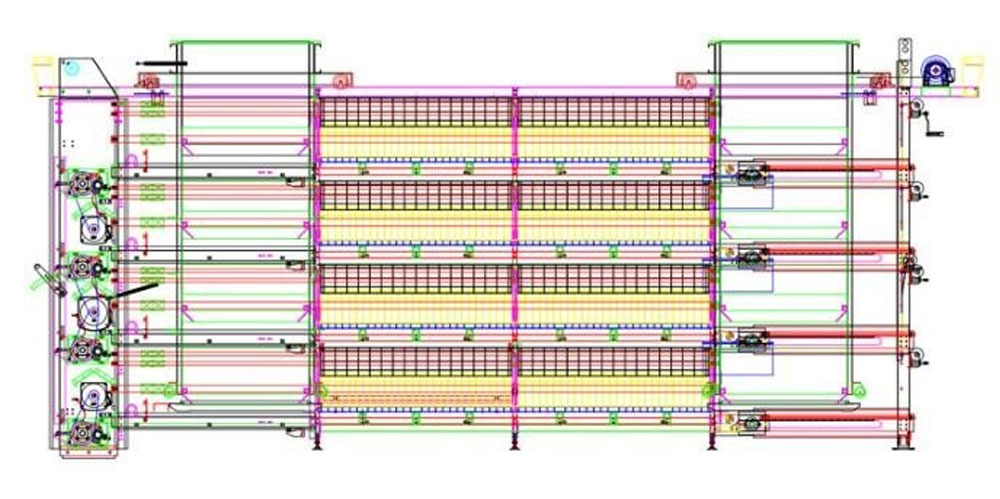
Functionality: Designed for efficiency. Eggs roll onto a collection conveyor belt, manure drops through the wire floor onto a belt or into a pit below, and feed and water are provided via automated troughs.
H2: The Historical Rationale: Why Were They Used?
From a mid20thcentury production standpoint, cages offered undeniable advantages:
Disease Control: Separating hens from their manure reduced contact with parasites and pathogens like E. coli and coccidia.
Feed Efficiency: Restricted movement led to lower energy requirements for maintenance.
Egg Quality & Collection: Automated collection minimized breakage and kept eggs clean.
Labor & Cost Efficiency: High stocking density and automation lowered perunit costs significantly.
H3: The Critical Welfare Concerns
This efficiency came at a profound cost to animal behavior. Hens are hardwired to perform essential natural behaviors:
1. Nesting: Seeking a secluded spot to lay eggs.
2. Perching: Roosting off the ground at night.
3. Dustbathing: Maintaining feather condition.
4. Foraging & Scratching: Exploring their environment.
5. Fully Spanning Their Wings.
The barren steel cage prohibits all these behaviors. This leads to documented welfare issues like bone fragility (due to lack of exercise), feather pecking (from frustration/boredom), and foot problems.
The Shift Away From Conventional Cages: Regulations & Alternatives
Driven by welfare science (e.g., Brambell Report) and public pressure, the conventional steel battery cage is now banned or being phased out across many regions.
H2: Key Legislation Driving Change
European Union: A full ban on "unenriched" battery cages took effect in 2012.
United States: Several states (CA, MA, WA, CO etc.) have passed laws requiring cagefree systems by specific dates through ballot initiatives.
Global Corporations: Major food retailers (McDonald's, Walmart), restaurants,and grocery chains have committed to 100% cagefree supply chains globally.
H2: Modern Housing Systems for Layer Hens
Today's farmer must navigate several alternative systems:
H3: Enriched / Furnished Cages
A modified version of the cage system that provides slightly more space (minimum 750 cm² per hen in EU) and legally mandated "furnishings":
A nesting area
Perches
A scratching area (often astroturf)
Clawshortening devices
Pros: Still offers good disease/manure separation; allows expression of some natural behaviors; better bone strength than conventional cages.
Cons: Space remains limited; flying/wingflapping is still restricted; viewed as insufficient by many animal advocacy groups.
H3: CageFree Systems (Aviaries & Barn Systems)
These are indoor systems without cages. Hens have freedom to move on littered floors with multiple levels (multitier aviaries) providing perches,nesting boxes,and platforms.
Pros: Allows full expression of natural behaviors like dustbathing,socializing,and wingflapping.
Cons: Higher risk of feather pecking/cannibalism requiring beak treatment; greater exposure to manureborne pathogens; requires more skilled management; higher mortality rates in some studies; higher capital/operational costs.
H3: FreeRange & PastureBased Systems
Cagefree systems with mandatory access to outdoor areas (with specific stocking density requirements for "freerange" certification).
Pros. Highest level of behavioral freedom; strongly preferred by consumers concerned with welfare.
Cons. Highest risk from predators/weather/disease exposure; most landintensive; highly variable egg production/quality; most laborintensive.
| Feature | Conventional Cage | Enriched/Furnished Cage | CageFree Aviary | FreeRange |
| : | : | : | : | : |
| Space/Hen | Very Low (<550 cm²) | Moderate (~750800 cm²) | High (Indoor space + vertical) | Highest (+ Outdoor access) |
| Natural Behaviors | Severely Restricted | Partially Allowed (Nest/Perch/Scratch) | Mostly Allowed | Fully Allowed |
| Key Welfare Benefit(s)| N/A Phased Out | Improved over conventional | Freedom of movement/behavioral expression| Fullest behavioral repertoire |
| Key Welfare Risk(s)| Bone weakness,frustration,inabilityto perform behaviors| Space still limited,cannot fly/flap wings| Feather pecking,disease transmission,poorer air quality if managed badly| Predators,diseases from wildlife,variable conditions|
| Disease Control/Egg Safety(Managed System)| Excellent separationfrom manure/bacteria.| Very Good separationfrom manure/bacteria.| ModerateHigh risk(requires excellent management)| High risk(exposure elements/wildlife)|
| Production Cost/Egg Price(Generalization)| Lowest Cost/Low Price.| Moderate Cost/Moderate Price.| Higher Cost/Higher Price.| Highest Cost/Highest Price|
| Management Skill Required(for equal success)| Lower Technical Skill.| Moderate Skill.| High Skill Level Critical.| Very High Skill Level Critical|
For farmers,the choice isn't just about ethics—it's about viability.It requires analyzing:
1.Capital investment for retrofitting/building
2.Ongoing operational costs(labor,fee,veterinary)
3.Market access(meeting buyer contracts)
4.Local regulations/compliance timelines
5.Management expertise/training availability
For consumers,the label on the carton tells part of the story.Ultimately,the shift away from traditional steel cages reflects society's evolving view on farm animal welfare.It has resulted in highercost,but potentially higherwelfare,systems.The tradeoffs between health,safety,welfare,and affordability are real,and there is no perfect system.Engaged consumers should understand these tradeoffs when they vote with their dollars.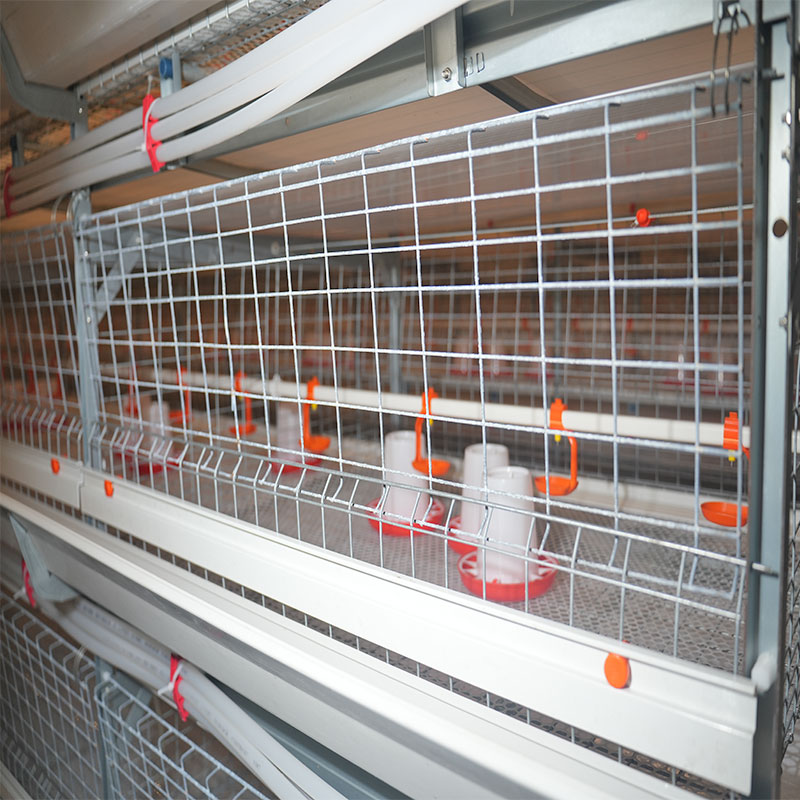
The era of the traditional barren steel cage for laying hens is largely over in progressive markets.The industry is transitioning towards systems that allow for greater expression of natural behaviors—from enriched cages to vast aviaries.This transition balances genuine animal welfare improvements against significant economic,practical,and food safety challenges.The optimal system depends heavily on context:available capital,farm size,labor skill,and target market.The future lies not in one single solution,but in continuous improvement within any chosen system through advanced technology,better genetics,and exceptional stockmanship.Ultimately,informed decisions—by both farmers building these environmentsand consumers buyingthe end product—will continue shapingthe landscapeof egg productionfor years to come.
A:A"steel cage"typically refers tothe traditional batterycage:a small enclosure madeof welded galvanizedsteel wire mesh housingmultiple hens.It was designedfor maximum space efficiencyand automated egg/manurecollection but severely restrictsnatural hen behavior.
A.Enriched cagesare an upgraded versionof conventionalcages.They provide slightlymore space perhen(legally mandatedin regionslikeEU)and includeessential furnishings:a nestingbox,a perch,a scratchingarea,and clawshorteners.They aimto allow keynaturalbehaviorswhile maintaining somebenefitsof cagedsystemslike manure separation.
A:The primary criticismis severe animalwelfare compromise.Hens cannot perform innatebehaviorslike nesting,dustbathingperching fullyor even spreadingtheir wings.This leads topoor bonehealth,frustrationand behavioralproblems.Sciencehas shownthis compromises their overallwelfare whichis whytheyare beingphasedoutgloballybasedon legislationor marketdemands .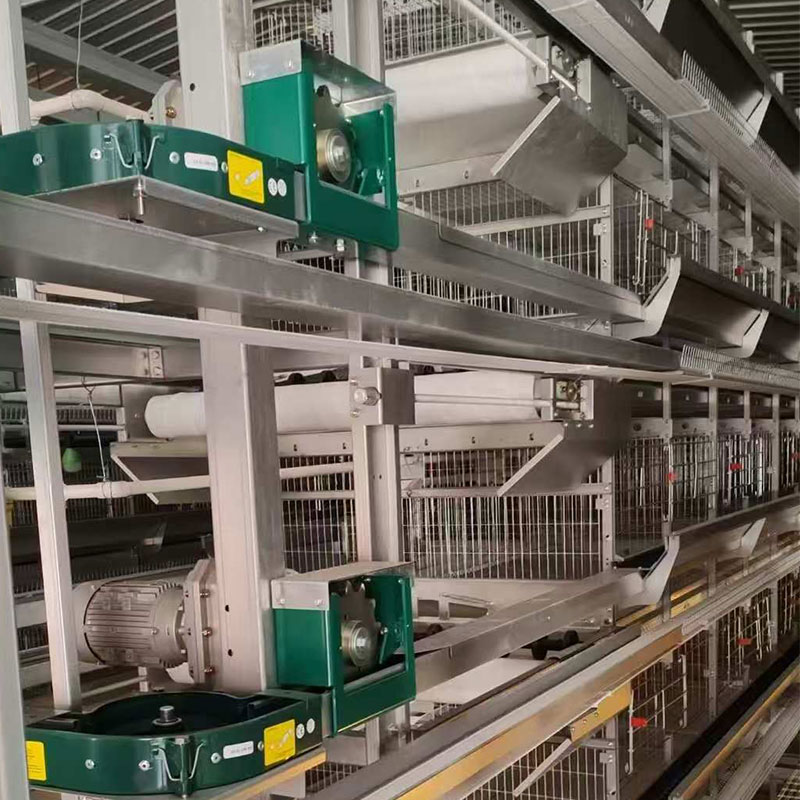
A.Not necessarily.Cagefreesystems offergreaterbehavioralfreedombut introduceother riskslike increasedfeatherpecking/cannibalismhigherpotentialfordiseasetransmission(via litter/manure contact)and oftenhighermortalityratesif not expertlymanaged.Theyrequire significantlyhigherskill levelsto run successfullycomparedtocagedsystems .
A.Freerangecertificationrequireshens have accessto outdoorareasfor at leastpartofthedaywith specificstockingdensitylimits(e.g.,no morethan X hensper hectare).It goes beyondcagefreeby providingopportunitiesto forageexplore outdoorsunlightwhich further enhancesbehavioral opportunitiesbut also exposeshens topredatorsweather fluctuationsand potentialwildlifeborne diseases .
A.The landscapeismixed.Conventionalbattery cagesare still usedin some statesbut major shiftsare underwaydrivenby state laws(e.g.,CaliforniaProposition12)and corporatecommitments.Most largescale producersare transitioningtowardsenrichedcagesor variousforms(cagefreeaviary barns)futureproof their operationsagainstregulatoryconsumerpressure .
A.Nutritionallyegg content(protein fat vitamins)is primarilydeterminedby hen’sdietnot housing.There maybe slightdifferences(e.g.,higherVitaminD infreerangeeggsdueto sunexposure).The main driverfor choosingnoncageeggsis ethicalconcernaboutanimalwelfarenothumanhealthbenefitsper se .
A.From food safetyperspectivewellmanagedcagedsystems(enrichedconventionalhistoricallyofferbestmanureseparationreducingriskof bacterialcontamination(e.g.,Salmonella)onshells.Cagefreefreerangesystemscanyield verysafeeggswith outstandingmanagementbut inherentlycarrygreaterpathogenexposure riskrequiringvigilantbiosecuritymonitoring .
A.Barren cagesthat preventnaturalbehaviorcause chronicstressfrustration.Enrichedcagesreduce thisby allowingnestingperchingetc.Cagefreesystemscan havelowerchronicstressbut mayexperienceacute stressfrom socialconflicts/predationrisksdependingon designmanagement .Stresslevelsare highlydependenton specificsystemdesignqualitymanagementnot simplypresenceabsenceof cagingitself .
A.Check cartonlabelscarefully:
“Caged”/No Label:Likelyfrom conventionalorenrichedcages(dependingregion).
“CageFree”:Indooraviary/barnhousing nocages .
“FreeRange”:CageFree+ outdooraccess .
“PastureRaised”(voluntarystandard):Oftenimplieshighestoutdooraccessdensity .
For moredetailslookup producerwebsites thirdpartycertificationslikeCertifiedHumane® AnimalWelfareApprovedwhich havespecifichousingrequirements audits .
1. Drinking system include the water pipes, water pressure adjuster, drinking nipples, Waterline front-end device, dosing system etc, choose them according to customer's needs.
2. High-quality water drinking pipes, pressure regulating valves and water drinking nipples can effectively prevent the water leakage. Drinking system adopt the closed piping system, which can minimize the water pollution.
3. 360-degree drinking nipples provide adequate drinking water for poultry at all stages.
4. The automatic drinking water system mainly adopts the steel ball drinking nipple. lt uses imported high-grad stainless steel, POM resin, and APS engineering material, which is wearing resistant, and the durability can be used for long time.



1. Automatic feeding machine can be chosen between gantry and ladder feeding machine. Gantry type feeding machine is a relatively economical and practical machine with simple operation, remote control walking character, easy to manage.
2. Mechanical transmission device running smoothly, low noise, long service life.
3. With the use of automatic control, the feeding system can adjust the amount of material.
4. Feeding with arched structure, high carrying capacity, not easily deformed.
5. Saving man power, saving feed, greatly improving the efficiency of Large-scale farming.
6. The walking speed of gantry feeding machine is 9--12 m/min.




1. Manure removing system included scraper type and conveyor belt type, Which can reduce the labor intensity and labor cost, keep the chicken shed dry and clean.
2. A type chicken cage can use scraper type or conveyor belt type.


3. The scraper type is suitable for A type cages, which can clean two or three rows. For the starters, this type is a good choice. lt can not only save some labor cost, but also save some investment in the whole project. The cleaning speed is 6-10 meters per minute.
4. Conveyor belt type is more suitable for large scale farming. The manure removing belt we use is high quality PP material (polypropylene). The walking speed is 2-4 meters per minute.



High Quality Pellets Made by Mobile Pellet Machine
1. It has professional designed angle of the blade. After the dynamic balance test one by one, the blade can operate smoothly.
2. The air volume is consistent in the whole life of the fan. Bearings has advantage of high strength, low noise, durable and so on.
1. The cooling pads uses high-quality wet curtain paper and adopts space cross-linking technology, which has the advantages of high water absorption, high water resistance, anti-toxicity and long service life.
2. The cooling efficiency is over 80%, without surfactant, natural water absorption, fast diffusion speed and long-lasting effect.
3. The product does not contain phenol and other chemical substances that are easy to cause skin allergies. It is non-toxic and harmless to the human body and chicken when installed and used. It is green, safe, energy-saving, environmentally friendly, economical, and easy to install.
4. The frame aluminum alloy has high strength, good corrosion resistance, durability and beautiful appearance.
5. Use a special filter for the cooling pad at the upper water to ensure clean water quality and support efficient water circulation components.
6. Combined with a negative pressure fan, it can effectively lower the indoor temperature.
The window is made of special selected high-quality engineering plastic, with high strength and long service life, together with superior anti-aging and anti-UV performance.
Function: Ventilation of the chicken house, usually used in the winter.
This system can adjust the wind speed and direction, thus the cold air will not reach chicken directly , which can effectively prevent the phenomenon of cold stress in chicken.
Environmental control system equipment is suitable for large-scale and intensive farming. According to customer requirements, we can provide various types of smart poultry equipment.
1. Our poultry management system is a modular system that manages all aspects of the chicken house, such as climate, temperature, humidity, ammonia, feeding, feed weighing, lighting and ventilation systems, and can monitor the situation of the chicken house in real time through a computer and mobile phone.
2. The management computer is the heart of the poultry farm, allowing you to easily monitor the entire poultry farm.

 WeChat:+8617838608255