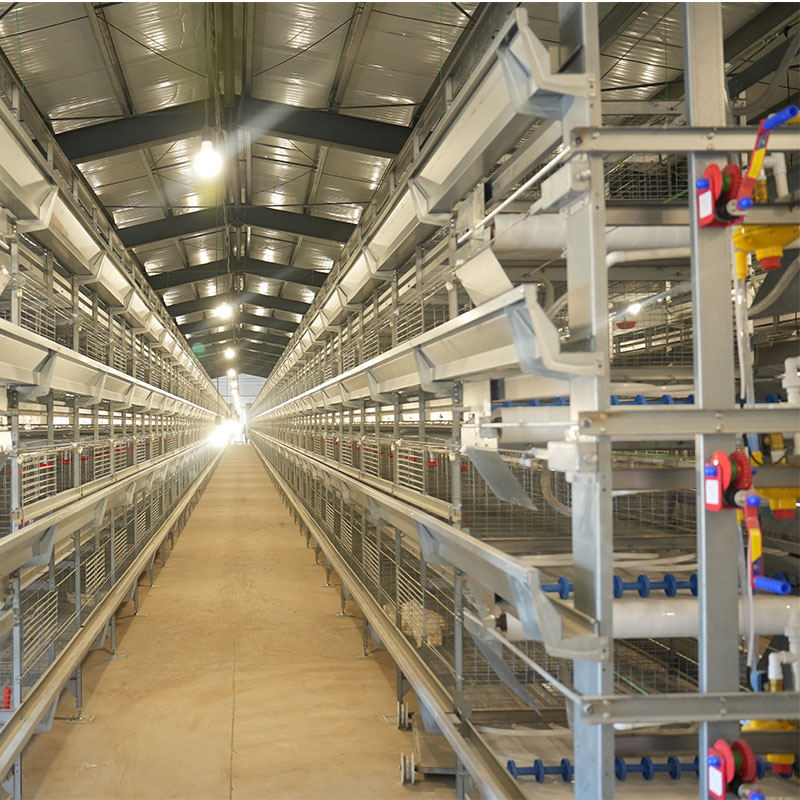
For poultry farmers, the moment a new piece of equipment becomes a genuine asset is not when it’s unboxed, but when it quietly solves a problem that was costing time, money, or peace of mind. The transition from traditional wooden coops or flimsy wire enclosures to a structured steel large storage cage system represents one of those fundamental shifts. These visible security wire mesh lockers are not merely containers; they are integrated management tools that address core challenges in bird housing, feed security, and operational workflow.
The primary advantage of a welded steel frame and heavy-gauge wire mesh construction is its dialogue with the farmer through sheer visibility. Unlike solid-walled sheds or containers, these cages offer a continuous, panoramic view of the entire flock without opening a single door. A farmer walking past can instantly assess bird condition, spot early signs of illness like lethargy or unusual feather patterns, and monitor feeding and watering activity levels. This is not about occasional checks; it is about constant, passive surveillance. For instance, noticing that a particular group of birds in the lower tier is less active at feeding time could indicate a ventilation issue or the early stages of a respiratory problem, allowing for intervention long before it spreads. The mesh design eliminates dark, damp corners where pests like mites or rodents can establish a foothold, and where sick birds can hide and deteriorate unnoticed.
This visibility extends directly into security, a term that encompasses both theft prevention and predator deterrence. The steel framework acts as a significant physical barrier. A determined thief facing a padlocked steel cage is confronted with a noisy, time-consuming task that greatly increases their risk of detection. For predators, the story is similar. A raccoon’s clever paws are useless against the small aperture of a correctly sized wire mesh. A farmer who has lost valuable breeding stock or show birds to a fox digging under a wooden wall understands that the cost of a steel cage is not an expense, but an insurance premium paid in advance. The "visible security" aspect serves as a deterrent in itself; the robust structure communicates that the contents are protected and valued.
The internal organization facilitated by these cage systems revolutionizes daily routines, particularly during critical periods like chick brooding or managing separate flocks. Instead of a single, large pen where birds are difficult to sort, multiple large storage cages can be arranged to create distinct compartments. A practical example is managing a batch of chicks that are a week apart in age. They have different temperature and feed requirements. Placing them in adjacent lockers allows the farmer to maintain two different brooder lamp heights and temperatures effortlessly, preventing the older, stronger chicks from out-competing the younger ones for food and warmth. This compartmentalization is equally vital for breeding programs, where keeping bloodlines separate is paramount. Birds can be grouped by sire or dam line within a secure, unified structure, eliminating the risk of accidental mixing that can set a breeding program back by a generation.
Durability in a farm environment is measured in resistance to moisture, waste, and constant use. Galvanized steel, whether hot-dipped or electroplated, is the key here. The zinc coating is not a simple layer of paint; it undergoes a molecular change, creating a sacrificial barrier that prevents rust from forming even if the surface is scratched. A farmer hosing down a cage after moving a group of birds to pasture will see the water bead and run off, rather than soak into porous wood where it can lead to rot and bacterial growth. The smooth, hard surfaces of the steel and wire offer no purchase for parasites. A quick pass with a propane torch or a disinfectant spray is all that’s needed to sanitize between uses, a process that is impossible with absorbent wooden structures. This longevity translates directly into cost savings over years of service, avoiding the cyclical replacement costs of inferior materials.

The design of these lockers directly impacts bird welfare, which in turn influences productivity. Ample ventilation through the wire mesh prevents the buildup of ammonia from droppings, a major irritant that can lead to respiratory issues and eye infections in densely housed birds. Proper airflow ensures a drier environment, which is crucial for foot pad health and overall feather condition. The rigid construction also allows for the secure and ergonomic placement of equipment. Nipple drinkers can be mounted directly to the mesh, providing a constant supply of clean water and eliminating the spillage and contamination common with trough systems. Feeders can be fixed in place to prevent tipping and waste. This stability reduces stress on the birds, as their resources are predictable and easily accessible. A calm bird is a productive bird; layers experience less stress-induced pauses in egg production, and meat birds convert feed more efficiently.
When integrating these cage systems into a farm’s infrastructure, considering scale and modularity is crucial. A small-scale producer might use a single, large locker for storing feed bags securely while also employing smaller units for isolating broody hens or injured birds. A larger commercial operation will benefit from banks of identical lockers arranged in rows, creating a centralized housing unit that simplifies feeding, watering, and monitoring. The modular nature of these systems means they can be reconfigured as needs change. A cage used for pullets one season can be part of a breeding array the next. This flexibility protects the farmer’s investment, ensuring the equipment remains useful through different phases of the operation. Placement within a barn should prioritize accessibility for cleaning and loading, with adequate space between units for easy movement and observation.
The initial investment in a steel storage cage system must be evaluated against the long-term reduction in operational costs. The savings are not always dramatic but are cumulative and significant. Feed wastage drops dramatically because the secure design prevents birds from scratching it out and the stable feeder placement minimizes spillage. The time saved during daily checks is substantial; a five-minute visual scan of multiple cages replaces a thirty-minute walk-through of a large pen, opening and closing gates. Labor efficiency is further increased during cleaning and disinfection cycles. The reduced incidence of disease, thanks to superior ventilation and hygiene, lowers veterinary bills and mortality rates. The durability of the steel means the system will likely outlast the wooden alternatives several times over, making the annualized cost of ownership remarkably low. For a farmer calculating return on investment, these cages work 24 hours a day, securing assets, promoting health, and saving labor.

Ultimately, the value of steel large storage cage systems lies in their transformation of poultry management from a reactive to a proactive endeavor. They provide a controlled, secure, and observable environment where potential problems are identified early and bird potential is fully supported. They are a physical framework that embodies a management philosophy centered on security, efficiency, and animal welfare. For the modern poultry farmer, these lockers are less about storing birds and more about safeguarding the productivity and viability of the entire operation.
1. Drinking system include the water pipes, water pressure adjuster, drinking nipples, Waterline front-end device, dosing system etc, choose them according to customer's needs.
2. High-quality water drinking pipes, pressure regulating valves and water drinking nipples can effectively prevent the water leakage. Drinking system adopt the closed piping system, which can minimize the water pollution.
3. 360-degree drinking nipples provide adequate drinking water for poultry at all stages.
4. The automatic drinking water system mainly adopts the steel ball drinking nipple. lt uses imported high-grad stainless steel, POM resin, and APS engineering material, which is wearing resistant, and the durability can be used for long time.



1. Automatic feeding machine can be chosen between gantry and ladder feeding machine. Gantry type feeding machine is a relatively economical and practical machine with simple operation, remote control walking character, easy to manage.
2. Mechanical transmission device running smoothly, low noise, long service life.
3. With the use of automatic control, the feeding system can adjust the amount of material.
4. Feeding with arched structure, high carrying capacity, not easily deformed.
5. Saving man power, saving feed, greatly improving the efficiency of Large-scale farming.
6. The walking speed of gantry feeding machine is 9--12 m/min.




1. Manure removing system included scraper type and conveyor belt type, Which can reduce the labor intensity and labor cost, keep the chicken shed dry and clean.
2. A type chicken cage can use scraper type or conveyor belt type.


3. The scraper type is suitable for A type cages, which can clean two or three rows. For the starters, this type is a good choice. lt can not only save some labor cost, but also save some investment in the whole project. The cleaning speed is 6-10 meters per minute.
4. Conveyor belt type is more suitable for large scale farming. The manure removing belt we use is high quality PP material (polypropylene). The walking speed is 2-4 meters per minute.



High Quality Pellets Made by Mobile Pellet Machine
1. It has professional designed angle of the blade. After the dynamic balance test one by one, the blade can operate smoothly.
2. The air volume is consistent in the whole life of the fan. Bearings has advantage of high strength, low noise, durable and so on.
1. The cooling pads uses high-quality wet curtain paper and adopts space cross-linking technology, which has the advantages of high water absorption, high water resistance, anti-toxicity and long service life.
2. The cooling efficiency is over 80%, without surfactant, natural water absorption, fast diffusion speed and long-lasting effect.
3. The product does not contain phenol and other chemical substances that are easy to cause skin allergies. It is non-toxic and harmless to the human body and chicken when installed and used. It is green, safe, energy-saving, environmentally friendly, economical, and easy to install.
4. The frame aluminum alloy has high strength, good corrosion resistance, durability and beautiful appearance.
5. Use a special filter for the cooling pad at the upper water to ensure clean water quality and support efficient water circulation components.
6. Combined with a negative pressure fan, it can effectively lower the indoor temperature.
The window is made of special selected high-quality engineering plastic, with high strength and long service life, together with superior anti-aging and anti-UV performance.
Function: Ventilation of the chicken house, usually used in the winter.
This system can adjust the wind speed and direction, thus the cold air will not reach chicken directly , which can effectively prevent the phenomenon of cold stress in chicken.
Environmental control system equipment is suitable for large-scale and intensive farming. According to customer requirements, we can provide various types of smart poultry equipment.
1. Our poultry management system is a modular system that manages all aspects of the chicken house, such as climate, temperature, humidity, ammonia, feeding, feed weighing, lighting and ventilation systems, and can monitor the situation of the chicken house in real time through a computer and mobile phone.
2. The management computer is the heart of the poultry farm, allowing you to easily monitor the entire poultry farm.

 WeChat:+8617838608255