For the poultry farmer, the perimeter fence is the first line of defense. It’s the silent guardian that keeps predators out, flocks contained, and valuable assets secure. But not all fencing is created equal. The choice between a basic wire mesh and a professionally engineered system like a hot-dipped galvanized or PVC-coated chain link fence can mean the difference between a minor maintenance task and a catastrophic loss. This isn't just about marking a boundary; it's about investing in the long-term security and operational efficiency of your entire operation.
The core of a superior fencing system lies in its construction, starting with the wire itself. High-tensile, low-carbon steel wire is the starting point. Think of it not as mere metal, but as the skeleton of your fence. A weaker, high-carbon wire is brittle; when a tree branch falls on it or an animal impacts it, it’s more likely to snap like a dry twig. The high-tensile, low-carbon variety, however, has a built-in flexibility. It can absorb a significant blow from a stray piece of equipment or a charging animal, bending rather than breaking, and often springing back into place. This inherent strength prevents the small, unforeseen incidents from becoming gaping holes in your security.
This robust wire is then woven into the familiar diamond pattern of chain link mesh. The quality of this weave is critical. A poorly manufactured mesh will have inconsistent gaps and weak knots at the wire intersections. Over time, with the constant pressure of wind and the occasional push from livestock, these knots can work themselves loose, creating a failure point. A high-quality weave features tightly twisted, uniform knots that lock the wires together, distributing stress evenly across the entire fabric of the fence. When a raccoon attempts to climb, the force is dissipated across a wide area, not concentrated on a single weak spot that could give way.
The Unmatched Protection of Hot-Dipped Galvanization
The single most important factor determining the lifespan of your poultry fence is its corrosion resistance. A simple, thin coat of paint or a cheap electroplated zinc coating might look acceptable initially, but it offers little more than cosmetic protection. The true benchmark for durability is the hot-dipped galvanization process.
Imagine taking the entire chain link fabric, after it has been woven, and immersing it in a molten vat of zinc at temperatures around 450°C (850°F). The steel doesn't just get a surface coating; the zinc undergoes a metallurgical reaction with the iron, forming a series of zinc-iron alloy layers that are permanently bonded to the base metal. The final outer layer is pure zinc. This process is akin to giving the steel a completely new, sacrificial skin.
On a farm, this translates to tangible benefits. When this fence is exposed to constant moisture from rain, dew, and irrigation, or the corrosive ammonia from poultry waste that can become airborne, the zinc coating is what corrodes first. It sacrifices itself millimeter by millimeter over decades to protect the underlying steel. You will see a gradual, chalky whitening on the surface of the fence—this is the zinc doing its job. An electroplated fence, in contrast, has a thin, shiny coating that can be scratched off easily with a stray tool or a sharp rock. Once that microscopic layer is breached, moisture attacks the bare steel directly, leading to rapid rust that weakens the wires and causes them to snap. A hot-dipped galvanized fence can easily last 20 to 30 years in a farm environment, while a substandard alternative may begin to fail in just 3 to 5 years.
This longevity is not just about avoiding replacement costs. It’s about operational continuity. A rusted fence fails unpredictably. A wire breaks, creating a small opening a fox can exploit. Repairing a corroded fence is a frustrating and often futile task, as the surrounding wire is also weakened. The hot-dipped galvanized system provides predictable, long-term performance, eliminating constant patching and the anxiety that comes with a compromised perimeter.
The Added Defense of PVC Coating
For environments that demand even more from a fence, or for producers who require a different set of properties, the PVC-coated chain link fence is the next evolution. This system takes the hot-dipped galvanized steel core and extrudes a thick jacket of PVC (polyvinyl chloride) plastic over it.
This creates a dual-defense system. Inside, you still have the robust, hot-dipped galvanized steel for ultimate strength and a rust-proof core. On the outside, the PVC sheath provides an additional, physical barrier against the elements and mechanical damage. If a farmer is using a tractor with a front-end loader to clear snow or move feed bags along the fence line, it’s inevitable that the equipment will occasionally bump the fence. A bare galvanized fence might get a scratch in its zinc coating. A PVC-coated fence, however, will simply get a scuff mark on its plastic skin, with the vital galvanized layer beneath remaining completely untouched.

The PVC coating also offers significant benefits for bird safety and welfare. The smooth, plastic surface eliminates any sharp edges. For flighty birds like guinea fowl or young pullets that might panic and fly into the fence, the plastic coating prevents lacerations and injuries that could occur with a bare wire. Furthermore, the coating is available in various colors, with green and black being the most common. A green PVC-coated fence has a lower visual profile, blending into the landscape. This can be less stressful for the flock and also more aesthetically pleasing for operations that have a public-facing element, such as farm stores or agritourism.
From a handling perspective, the PVC coating makes installation and repair more comfortable. The plastic sheath makes the wire easier to grip and pull taut without gloves, and it remains relatively cool in the sun and warm in the cold, unlike bare metal.
Building a Complete Perimeter System
A roll of high-quality mesh is only as strong as the components that hold it up. The posts and hardware form the skeleton of the fence, and their quality must match the fabric.
Terminal posts, set in concrete at corners and ends, bear the entire tension of the fence. These must be heavy-duty steel posts, preferably also hot-dipped galvanized. Using a lightweight, thin-walled post for a 100-foot run of taut fence is a recipe for failure; the constant strain will eventually bend or pull the post inward. Line posts, which provide intermediate support, must be spaced correctly. Placing them too far apart allows the fence to billow in the wind, putting excessive stress on the fabric and the end posts.

The tension wire and barbed wire outriggers are critical, often-overlooked components. A tension wire run along the bottom of the fence, pulled tight and securely fastened to each post, is one of the most effective ways to stop digging predators. A raccoon or fox will find it nearly impossible to lift the securely anchored bottom edge to crawl underneath. For the top, barbed wire or taut wire outriggers angled outward present a formidable psychological and physical barrier to climbers like coyotes and feral dogs.
Finally, the choice of fasteners matters. Using high-quality, galvanized tension bars and hog rings to secure the mesh to the posts ensures that the connection points do not become the weak link. Rusty, broken fasteners are a common cause of fence failure.
Practical Applications on the Poultry Farm
The value of this robust fencing system extends across different poultry production models.
For large-scale broiler or layer operations, the fence defines the biosecurity boundary. It prevents unauthorized entry of people and vehicles, a key vector for disease. It stops wild birds, which can carry Avian Influenza, from mingling with the commercial flock. A strong fence also contains litter and dust within the farm perimeter, helping to manage environmental compliance and neighbor relations.
For free-range and pastured poultry operations, the fence is the very enabler of the system. It allows birds access to fresh pasture while keeping them safe from a wide range of predators. The flexibility of a well-installed chain link system can withstand the constant movement of birds along its length without sagging or deforming. For farmers practicing rotational grazing, where flocks are moved frequently, the durability of a hot-dipped galvanized system means the fence can be taken down, moved, and re-tensioned repeatedly over many years without the hardware corroding or the mesh becoming brittle.
For breeders and specialty bird operations housing high-value stock, the fence is an insurance policy. The loss of a single bird to a predator can mean the loss of significant genetic potential or revenue. The physical and psychological barrier created by a tall, imposing chain link fence with outriggers is a powerful deterrent, providing peace of mind that valuable genetics are protected.
The initial investment in a high-grade, hot-dipped galvanized or PVC-coated chain link fence system is undeniably higher than that of a cheap, imported wire mesh. However, this perspective must shift from a simple purchase price to a total cost of ownership calculation. A cheap fence incurs continuous costs: time spent on frequent repairs, materials for patches, and the labor to install them. Then comes the ultimate cost: the loss of an entire flock to a predator that found the one weak spot.
A professionally manufactured and installed system is a capital investment that depreciates slowly over 20 years or more. It requires minimal maintenance—perhaps an annual walk-along to check for tension and ensure gate latches are secure. It operates silently and reliably, season after season, through blizzards, summer storms, and the daily wear and tear of farm life. It protects the capital invested in the birds, the feed, and the infrastructure inside it. For the modern poultry farmer, a strength-manufacturer fence is not an expense; it is a foundational component of a secure, efficient, and profitable operation.
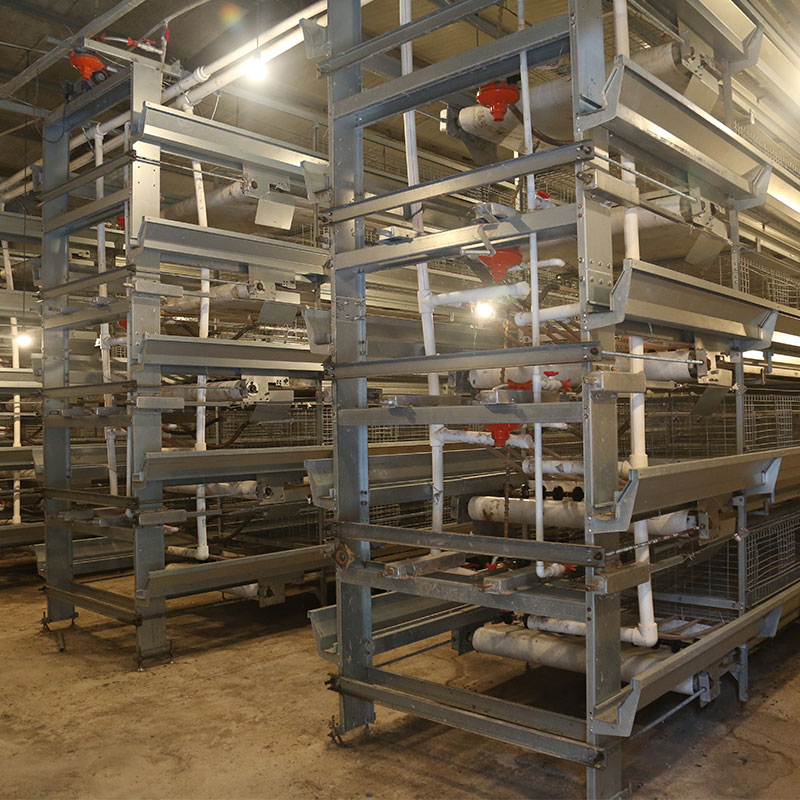
1. Drinking system include the water pipes, water pressure adjuster, drinking nipples, Waterline front-end device, dosing system etc, choose them according to customer's needs.
2. High-quality water drinking pipes, pressure regulating valves and water drinking nipples can effectively prevent the water leakage. Drinking system adopt the closed piping system, which can minimize the water pollution.
3. 360-degree drinking nipples provide adequate drinking water for poultry at all stages.
4. The automatic drinking water system mainly adopts the steel ball drinking nipple. lt uses imported high-grad stainless steel, POM resin, and APS engineering material, which is wearing resistant, and the durability can be used for long time.



1. Automatic feeding machine can be chosen between gantry and ladder feeding machine. Gantry type feeding machine is a relatively economical and practical machine with simple operation, remote control walking character, easy to manage.
2. Mechanical transmission device running smoothly, low noise, long service life.
3. With the use of automatic control, the feeding system can adjust the amount of material.
4. Feeding with arched structure, high carrying capacity, not easily deformed.
5. Saving man power, saving feed, greatly improving the efficiency of Large-scale farming.
6. The walking speed of gantry feeding machine is 9--12 m/min.




1. Manure removing system included scraper type and conveyor belt type, Which can reduce the labor intensity and labor cost, keep the chicken shed dry and clean.
2. A type chicken cage can use scraper type or conveyor belt type.


3. The scraper type is suitable for A type cages, which can clean two or three rows. For the starters, this type is a good choice. lt can not only save some labor cost, but also save some investment in the whole project. The cleaning speed is 6-10 meters per minute.
4. Conveyor belt type is more suitable for large scale farming. The manure removing belt we use is high quality PP material (polypropylene). The walking speed is 2-4 meters per minute.



High Quality Pellets Made by Mobile Pellet Machine
1. It has professional designed angle of the blade. After the dynamic balance test one by one, the blade can operate smoothly.
2. The air volume is consistent in the whole life of the fan. Bearings has advantage of high strength, low noise, durable and so on.
1. The cooling pads uses high-quality wet curtain paper and adopts space cross-linking technology, which has the advantages of high water absorption, high water resistance, anti-toxicity and long service life.
2. The cooling efficiency is over 80%, without surfactant, natural water absorption, fast diffusion speed and long-lasting effect.
3. The product does not contain phenol and other chemical substances that are easy to cause skin allergies. It is non-toxic and harmless to the human body and chicken when installed and used. It is green, safe, energy-saving, environmentally friendly, economical, and easy to install.
4. The frame aluminum alloy has high strength, good corrosion resistance, durability and beautiful appearance.
5. Use a special filter for the cooling pad at the upper water to ensure clean water quality and support efficient water circulation components.
6. Combined with a negative pressure fan, it can effectively lower the indoor temperature.
The window is made of special selected high-quality engineering plastic, with high strength and long service life, together with superior anti-aging and anti-UV performance.
Function: Ventilation of the chicken house, usually used in the winter.
This system can adjust the wind speed and direction, thus the cold air will not reach chicken directly , which can effectively prevent the phenomenon of cold stress in chicken.
Environmental control system equipment is suitable for large-scale and intensive farming. According to customer requirements, we can provide various types of smart poultry equipment.
1. Our poultry management system is a modular system that manages all aspects of the chicken house, such as climate, temperature, humidity, ammonia, feeding, feed weighing, lighting and ventilation systems, and can monitor the situation of the chicken house in real time through a computer and mobile phone.
2. The management computer is the heart of the poultry farm, allowing you to easily monitor the entire poultry farm.

 WeChat:+8617838608255