For poultry farmers, the decision of which layer cage system to install is one of the most significant financial and operational choices they will make. It’s a long-term investment that impacts daily labor, bird welfare, feed conversion, and ultimately, the bottom line for years to come. Amidst the various options, one model consistently emerges as the industry’s best-seller for a compelling reason: it represents the pinnacle of cost-effectiveness. This is the automatic H-type hot-dip galvanised layer cage system. Its popularity isn't driven by marketing hype, but by a tangible return on investment that unfolds across the entire production cycle.
The Anatomy of an H-Type System: Vertical Efficiency

To understand its value, one must first visualize the system. Picture a series of vertical tiers, or levels, arranged in a tall "H" frame. This is a radical departure from the older A-frame or stair-step designs. In those systems, manure from upper tiers falls onto the birds and equipment in the lower tiers, creating a constant hygiene challenge and a stressful environment.
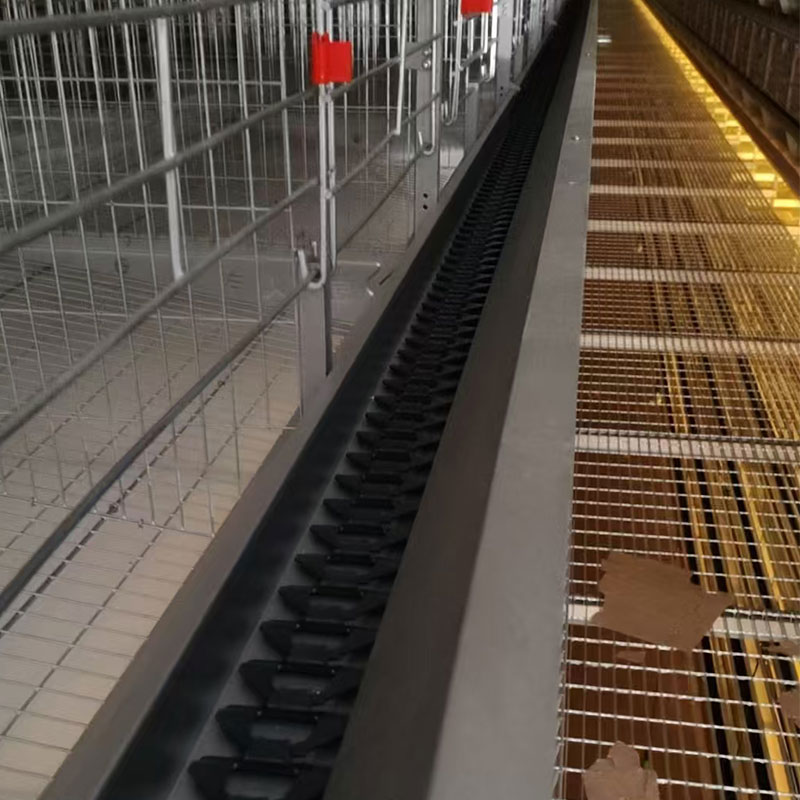
The H-type design eliminates this fundamental flaw. Each tier is directly above the other, with a dedicated manure removal belt running beneath each level. When a hen on the top tier defecates, the waste lands on its own dedicated belt, not on the hens below. This simple but profound architectural shift is the foundation for its advantages. It’s the difference between having a separate waste pipe for each floor of an apartment building versus having all the waste from the upper floors fall through a chute that runs through the middle of the lower apartments.
The True Meaning of Hot-Dip Galvanisation: A Battle Against Rust
The term "hot-dip galvanised" is often seen on spec sheets, but its practical implication is what matters. This is not a simple paint coating or a thin electroplated layer. It is a metallurgical bond. The steel components of the cage—the wires, the frames, the supports—are immersed in a bath of molten zinc at around 450°C (840°F).
Consider the environment inside a poultry house. It is constantly humid, laden with ammonia from manure, and subject to frequent cleaning with water. An untreated steel cage in this environment would begin to show rust stains within months. Within a few years, structural integrity would be compromised, wires would become brittle, and the entire system would be a liability. A farmer would be faced with the catastrophic cost of a full system replacement long before the investment was fully amortized.
A hot-dip galvanised cage presents a different reality. The zinc does not just coat the steel; it forms a series of alloy layers that are sacrificially protective. If the surface is scratched, the surrounding zinc continues to protect the exposed steel by corroding itself first. In practice, this means a cage system that can reliably last for 15 to 20 years without significant corrosion. The initial cost is higher than a painted or lower-quality system, but the avoidance of a premature, multi-tens-of-thousands-dollar replacement makes it the most financially sound decision. It is the classic case of "buy once, cry once."
The Automation Advantage: Redefining Labor Costs
The core of this system's cost-effectiveness lies in its integrated automation. This isn't an add-on; it's a seamlessly engineered part of the whole. The automation typically covers four critical areas: feeding, egg collection, manure removal, and climate control.
1. The Feeding System: Precision and Consistency
Imagine a feed trolley that runs on a monorail along the entire length of the cage rows. At programmed intervals, this trolley dispenses a perfectly even layer of feed into the trough running the length of each tier. Every bird has simultaneous access to fresh feed. This eliminates the "boss hen" syndrome where dominant birds monopolize feed points, leading to uneven flock growth and production.
For the farmer, this means the end of manual feed distribution—a back-breaking, time-consuming task. More importantly, it means near-zero feed wastage. Studies have shown that automated, closed feeding systems can reduce feed spillage by over 5%. On a farm with 50,000 hens consuming 100 grams of feed per day, that 5% saving amounts to 2,500 kg of feed saved every single day. Over a year, this translates to hundreds of thousands of dollars staying in the farmer's pocket instead of being wasted on the floor.
2. The Egg Collection System: Unbroken Profits
After an egg is laid, it rolls gently out of the cage onto a soft, conveyor belt that runs the length of the tier. This belt then transports the eggs smoothly to a central collection point, often directly to the grading and packing room. The eggs are never handled by farm staff until they are on the packing line.
The financial impact is twofold. First, it drastically reduces labor. There is no need for workers to walk the aisles multiple times a day collecting eggs manually. Second, and more critically, it dramatically improves egg quality. Manual collection inevitably leads to more cracked and dirty eggs. A cracked egg is a total loss; a dirty egg requires costly and often manual cleaning, reducing its grade and value. The automatic system ensures that eggs travel the shortest, gentlest possible path from the hen to the packer, preserving the integrity of the product and maximizing the number of eggs that can be sold at the highest grade.
3. The Manure Removal System: The Foundation of Biosecurity
Beneath each tier of the H-type structure runs a durable PVC manure belt. This belt operates on a timer, periodically moving and transporting the accumulated manure to a discharge point at the end of the house, where it can be collected for composting or disposal.
This continuous removal is a game-changer for bird health. It breaks the cycle of parasite and pathogen transmission. In a system where manure piles up, flies and beetles proliferate, acting as vectors for diseases. Ammonia levels rise, irritating the birds' respiratory systems, suppressing their immune function, and reducing their egg-laying capacity. By keeping the environment dry and clean, the automatic manure system directly contributes to lower mortality rates, reduced veterinary costs, and consistently higher production. A healthy bird doesn't just survive; it produces.
4. Integrated Climate Control: Fine-Tuning the Environment
Modern automatic cage systems are often integrated with the poultry house's environmental controllers. Ventilation fans, evaporative cooling pads, and heaters are all synchronized. The controller, monitoring temperature and humidity, can adjust these systems to maintain the perfect environment for layers, which is typically between 20-24°C (68-75°F).
When birds are thermally stressed—either too hot or too cold—they divert energy from egg production to maintaining their body temperature. A hen panting in the heat is a hen that is not laying efficiently. The automated climate system, by maintaining that optimal temperature band, ensures that the feed consumed is converted into eggs, not used for cooling or warming. This optimized feed conversion ratio is a silent profit driver that operates 24 hours a day.
Calculating the Real Cost: Beyond the Price Tag
A farmer comparing a basic, manual battery cage to this automatic H-type system might initially balk at the price difference. This is a superficial analysis. The true cost must be calculated over the system's entire lifespan, factoring in all operational expenses.
Labor Cost: A manual system for 50,000 birds might require 4-6 workers per shift for feeding, egg collection, and manure management. An automatic system might reduce that to 1-2 workers for monitoring and maintenance. The savings in salaries, benefits, and management overhead are enormous and recurring.
Feed Cost: As noted, the 5% or more reduction in feed wastage is a perpetual saving that directly counters volatile feed prices.
Egg Revenue: The higher percentage of Grade A, unbroken eggs commands a better price. A 2% increase in saleable eggs is a direct boost to revenue.
Bird Performance: Lower stress from a cleaner environment and better climate control leads to a higher peak lay percentage and a more persistent lay cycle. A flock that averages 2% more eggs per hen-housed is a significantly more profitable flock.
Longevity: The 20-year lifespan of a hot-dip galvanised system versus the potential 8-10 year lifespan of an inferior system means the capital cost is amortized over a much longer period, effectively making the annual "cost" of the cage much lower.
When these factors are modeled on a spreadsheet, the initial premium for the automatic H-type system is often recouped within the first 2-4 years of operation. Every year after that, the farmer operates with a significantly lower cost-per-dozen than a competitor using a less advanced system.
A System Designed for the Modern Farmer

The best-selling automatic H-type hot-dip galvanised cage is not a luxury. It is a precision tool for modern, commercial-scale egg production. It directly addresses the biggest pressures facing poultry farmers today: rising input costs, labor shortages, and increasing scrutiny regarding animal welfare and biosecurity.
Its design philosophy is one of integration and prevention. It prevents waste, prevents disease, prevents labor inefficiency, and prevents premature equipment failure. By investing in a system that optimizes every step of the production process—from the health of the bird to the quality of the final product—farmers are not just buying a cage. They are investing in a predictable, efficient, and profitable operation for the long term. Its status as the best-seller is simply the market recognizing a superior return on investment.
1. Drinking system include the water pipes, water pressure adjuster, drinking nipples, Waterline front-end device, dosing system etc, choose them according to customer's needs.
2. High-quality water drinking pipes, pressure regulating valves and water drinking nipples can effectively prevent the water leakage. Drinking system adopt the closed piping system, which can minimize the water pollution.
3. 360-degree drinking nipples provide adequate drinking water for poultry at all stages.
4. The automatic drinking water system mainly adopts the steel ball drinking nipple. lt uses imported high-grad stainless steel, POM resin, and APS engineering material, which is wearing resistant, and the durability can be used for long time.



1. Automatic feeding machine can be chosen between gantry and ladder feeding machine. Gantry type feeding machine is a relatively economical and practical machine with simple operation, remote control walking character, easy to manage.
2. Mechanical transmission device running smoothly, low noise, long service life.
3. With the use of automatic control, the feeding system can adjust the amount of material.
4. Feeding with arched structure, high carrying capacity, not easily deformed.
5. Saving man power, saving feed, greatly improving the efficiency of Large-scale farming.
6. The walking speed of gantry feeding machine is 9--12 m/min.




1. Manure removing system included scraper type and conveyor belt type, Which can reduce the labor intensity and labor cost, keep the chicken shed dry and clean.
2. A type chicken cage can use scraper type or conveyor belt type.


3. The scraper type is suitable for A type cages, which can clean two or three rows. For the starters, this type is a good choice. lt can not only save some labor cost, but also save some investment in the whole project. The cleaning speed is 6-10 meters per minute.
4. Conveyor belt type is more suitable for large scale farming. The manure removing belt we use is high quality PP material (polypropylene). The walking speed is 2-4 meters per minute.



High Quality Pellets Made by Mobile Pellet Machine
1. It has professional designed angle of the blade. After the dynamic balance test one by one, the blade can operate smoothly.
2. The air volume is consistent in the whole life of the fan. Bearings has advantage of high strength, low noise, durable and so on.
1. The cooling pads uses high-quality wet curtain paper and adopts space cross-linking technology, which has the advantages of high water absorption, high water resistance, anti-toxicity and long service life.
2. The cooling efficiency is over 80%, without surfactant, natural water absorption, fast diffusion speed and long-lasting effect.
3. The product does not contain phenol and other chemical substances that are easy to cause skin allergies. It is non-toxic and harmless to the human body and chicken when installed and used. It is green, safe, energy-saving, environmentally friendly, economical, and easy to install.
4. The frame aluminum alloy has high strength, good corrosion resistance, durability and beautiful appearance.
5. Use a special filter for the cooling pad at the upper water to ensure clean water quality and support efficient water circulation components.
6. Combined with a negative pressure fan, it can effectively lower the indoor temperature.
The window is made of special selected high-quality engineering plastic, with high strength and long service life, together with superior anti-aging and anti-UV performance.
Function: Ventilation of the chicken house, usually used in the winter.
This system can adjust the wind speed and direction, thus the cold air will not reach chicken directly , which can effectively prevent the phenomenon of cold stress in chicken.
Environmental control system equipment is suitable for large-scale and intensive farming. According to customer requirements, we can provide various types of smart poultry equipment.
1. Our poultry management system is a modular system that manages all aspects of the chicken house, such as climate, temperature, humidity, ammonia, feeding, feed weighing, lighting and ventilation systems, and can monitor the situation of the chicken house in real time through a computer and mobile phone.
2. The management computer is the heart of the poultry farm, allowing you to easily monitor the entire poultry farm.

 WeChat:+8617838608255