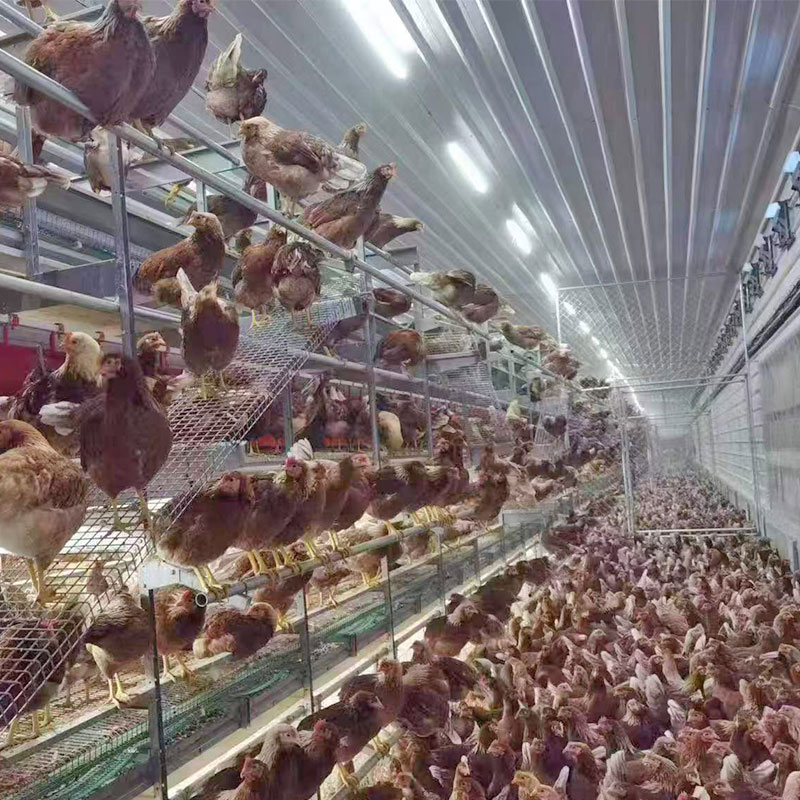
For poultry farmers navigating the complex decision of upgrading their layer operations, the H Frame automatic cage system represents a significant technological leap. This isn't merely a new set of wire enclosures; it is an integrated housing solution engineered to address the core challenges of modern egg production: labor efficiency, bird welfare, and consistent profitability. The "H Frame" design, named for its distinctive vertical stacking that resembles the letter 'H' from the end, consolidates multiple tiers of cages into a single, robust structure, creating a high-density, highly manageable environment.
The fundamental advantage of this system lies in its integrated automation. Imagine starting your day not with the cacophony and labor of manually gathering eggs from countless individual cages, but by simply activating a central system. A gentle, moving belt glides silently beneath each tier of cages. As hens lay their eggs, they roll out of the cage onto this conveyor. Instead of employees walking aisles with collection carts, the eggs are transported smoothly to a central collection point, often at the end of the house. This centralization means one person can manage the egg collection for thousands of birds in a fraction of the time, drastically reducing physical labor and the risk of shell damage from excessive handling.
This egg collection system is complemented by an equally critical automated manure removal system. In traditional setups, manure piles up beneath cages, requiring frequent, strenuous clean-outs that release ammonia and create disease pressure. In the H Frame system, a series of scrapers or belts are positioned beneath each level. These are programmed to activate at set intervals, sweeping the droppings into a cross-conveyor that transports them directly out of the poultry house and into a waiting manure cart or storage facility. A farmer who previously dedicated entire days to mucking out a single shed can now have manure managed continuously and automatically. This not only saves immense labor but also dramatically improves the indoor air quality. Lower ammonia levels mean less respiratory stress for the birds, which translates directly to better flock health and more stable egg production.
The design of the cages themselves is a product of decades of refinement in poultry science. The flooring is not a simple wire mesh but a sloped, welded grid designed for two primary functions: comfort and egg roll-out. The slope is precise—too steep and it causes stress on the hens' feet, too shallow and the eggs won't roll away. The wire gauge and spacing are calculated to provide secure footing while allowing manure to pass through easily. The front of the cage includes the feed trough and a specially designed roll-away lip. When a hen lays an egg, it gently rolls onto the collection belt, keeping it clean and separate from the bird's standing area, which significantly reduces the incidence of dirty or cracked eggs.
Feed and water delivery are also fully automated, turning one of the most repetitive daily tasks into a hands-off process. A central feed bin located outside the house supplies an overhead chain or trolley system that runs the length of the cage rows. At programmed times, this system delivers a fresh, measured amount of feed to the trough in front of every cage. Birds have constant access to fresh feed, which eliminates competition and ensures a consistent nutritional intake across the entire flock. Similarly, nipple drinking systems are installed at the front of each cage. Hens quickly learn to activate these nipples with their beaks, receiving a fresh drink of water without the spillage and contamination common with open troughs. This closed water system is a major defense against the spread of waterborne diseases.
The "H Frame" configuration is particularly noteworthy for its space optimization. By stacking multiple tiers—typically three to five—within a single A-frame structure, the system maximizes bird capacity per square meter of floor space. For a farmer with a fixed building size, this vertical integration can double or even triple the number of birds housed compared to a single-level setup. This doesn't mean the birds are overcrowded; each cage is sized to provide the recommended space per hen, ensuring animal welfare standards are met. The gain is in the efficient use of the building's airspace, making the operation far more capital-efficient. The structure is engineered for strength, capable of supporting the significant weight of the birds, cages, and all the automated equipment.
Durability is a non-negotiable feature. These systems are constructed from heavy-gauge, galvanized steel. The galvanization process involves coating the steel in a layer of zinc, making it highly resistant to the corrosive effects of ammonia and the constant moisture present in a poultry environment. A farmer investing in this system can expect it to last for 15 to 20 years with proper maintenance, a crucial factor in the return on investment calculation. The components are designed to withstand the daily wear and tear of thousands of birds and the constant movement of automated systems.
From a bird welfare and management perspective, the controlled environment of an H Frame system offers distinct benefits. The reduction of floor-level drafts and the separation from manure create a more stable and hygienic living space. This controlled setting makes it easier to implement biosecurity protocols, as staff and equipment movement can be more easily managed and limited to specific access points. Monitoring the flock's health becomes more streamlined. With birds housed in organized rows and tiers, it is far easier for a manager to walk the aisles and conduct visual checks for signs of illness, injury, or stress. Feed and water consumption can be monitored at a house-wide level, serving as an early warning system—a sudden drop in consumption is an immediate red flag that something is wrong.
The economic implications of adopting this technology are profound. The initial capital outlay is substantial, there is no denying that. However, the return must be calculated over the system's entire lifespan and measured against the ongoing costs of a manual operation. The most significant saving is in labor. Tasks that once required multiple full-time employees—feeding, watering, egg collection, manure cleaning—are now automated. This allows the existing workforce to be redeployed to more skilled tasks like flock monitoring, maintenance, and data management. Furthermore, the system leads to tangible product quality improvements. The automated egg collection results in a higher percentage of Grade A eggs due to reduced cracks and dirt. The efficient manure management produces a drier, more valuable by-product that can be sold as fertilizer. The improved feed conversion ratio, a result of reduced waste and consistent access to feed, lowers the overall cost of production per dozen eggs.
Installation and ongoing maintenance are critical considerations. Installing an H Frame system is not a simple weekend project. It requires professional planning and assembly. The building must be prepared with a level concrete floor, proper insulation, and a powerful ventilation system to handle the high bird density. Electrical systems must be robust to power the motors for the conveyors and feeding systems. Once operational, a proactive maintenance schedule is essential. This includes daily visual inspections of belts and chains, weekly checks of the nipple drinkers for clogs, and regular lubrication of moving parts. A small issue, like a misaligned egg belt, can quickly escalate into a major problem if not addressed promptly.

When selecting a supplier, farmers must look beyond the initial price tag. The quality of the galvanization, the design of the cage floor, the reliability of the motor systems, and the availability of spare parts and technical support are all paramount. It is an investment in the backbone of the operation for the next two decades. Partnering with a reputable company that offers comprehensive after-sales service and training can mean the difference between a system that runs smoothly for years and one that becomes a source of constant frustration and downtime.
In essence, the transition to a top-quality H Frame automatic cage system is a strategic decision to build a more resilient, efficient, and profitable layer enterprise. It moves the farm from a model reliant on intensive manual labor to one driven by smart technology and data-informed management. The system directly addresses the key pressure points of labor scarcity, operational cost, and product quality, positioning a farm for long-term sustainability in a competitive market. For the forward-thinking poultry farmer, it represents not just a new piece of equipment, but the foundation for the next generation of their business.
1. Drinking system include the water pipes, water pressure adjuster, drinking nipples, Waterline front-end device, dosing system etc, choose them according to customer's needs.
2. High-quality water drinking pipes, pressure regulating valves and water drinking nipples can effectively prevent the water leakage. Drinking system adopt the closed piping system, which can minimize the water pollution.
3. 360-degree drinking nipples provide adequate drinking water for poultry at all stages.
4. The automatic drinking water system mainly adopts the steel ball drinking nipple. lt uses imported high-grad stainless steel, POM resin, and APS engineering material, which is wearing resistant, and the durability can be used for long time.



1. Automatic feeding machine can be chosen between gantry and ladder feeding machine. Gantry type feeding machine is a relatively economical and practical machine with simple operation, remote control walking character, easy to manage.
2. Mechanical transmission device running smoothly, low noise, long service life.
3. With the use of automatic control, the feeding system can adjust the amount of material.
4. Feeding with arched structure, high carrying capacity, not easily deformed.
5. Saving man power, saving feed, greatly improving the efficiency of Large-scale farming.
6. The walking speed of gantry feeding machine is 9--12 m/min.




1. Manure removing system included scraper type and conveyor belt type, Which can reduce the labor intensity and labor cost, keep the chicken shed dry and clean.
2. A type chicken cage can use scraper type or conveyor belt type.


3. The scraper type is suitable for A type cages, which can clean two or three rows. For the starters, this type is a good choice. lt can not only save some labor cost, but also save some investment in the whole project. The cleaning speed is 6-10 meters per minute.
4. Conveyor belt type is more suitable for large scale farming. The manure removing belt we use is high quality PP material (polypropylene). The walking speed is 2-4 meters per minute.



High Quality Pellets Made by Mobile Pellet Machine
1. It has professional designed angle of the blade. After the dynamic balance test one by one, the blade can operate smoothly.
2. The air volume is consistent in the whole life of the fan. Bearings has advantage of high strength, low noise, durable and so on.
1. The cooling pads uses high-quality wet curtain paper and adopts space cross-linking technology, which has the advantages of high water absorption, high water resistance, anti-toxicity and long service life.
2. The cooling efficiency is over 80%, without surfactant, natural water absorption, fast diffusion speed and long-lasting effect.
3. The product does not contain phenol and other chemical substances that are easy to cause skin allergies. It is non-toxic and harmless to the human body and chicken when installed and used. It is green, safe, energy-saving, environmentally friendly, economical, and easy to install.
4. The frame aluminum alloy has high strength, good corrosion resistance, durability and beautiful appearance.
5. Use a special filter for the cooling pad at the upper water to ensure clean water quality and support efficient water circulation components.
6. Combined with a negative pressure fan, it can effectively lower the indoor temperature.
The window is made of special selected high-quality engineering plastic, with high strength and long service life, together with superior anti-aging and anti-UV performance.
Function: Ventilation of the chicken house, usually used in the winter.
This system can adjust the wind speed and direction, thus the cold air will not reach chicken directly , which can effectively prevent the phenomenon of cold stress in chicken.
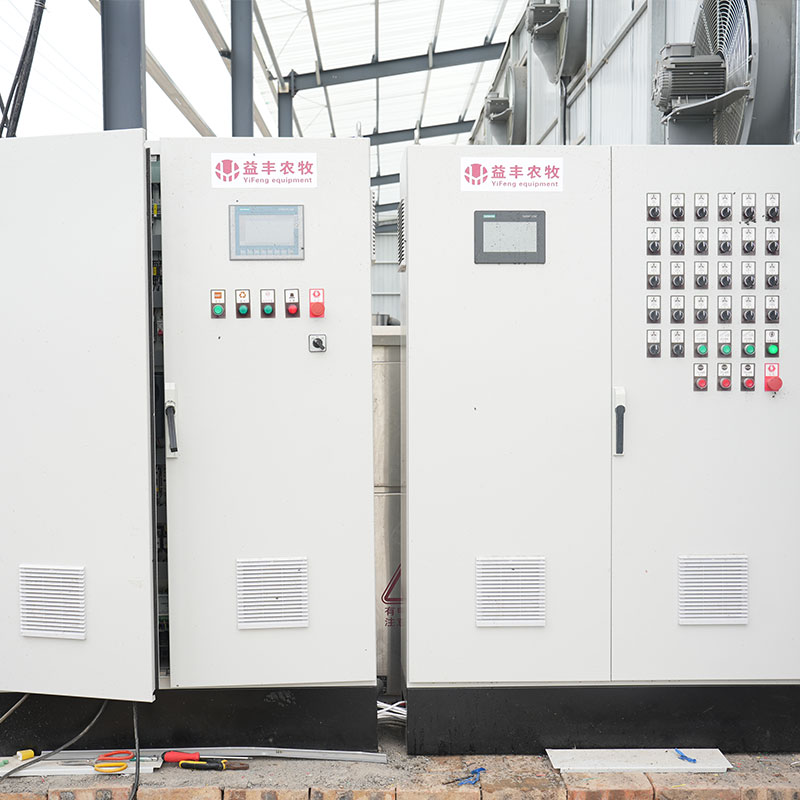
Environmental control system equipment is suitable for large-scale and intensive farming. According to customer requirements, we can provide various types of smart poultry equipment.
1. Our poultry management system is a modular system that manages all aspects of the chicken house, such as climate, temperature, humidity, ammonia, feeding, feed weighing, lighting and ventilation systems, and can monitor the situation of the chicken house in real time through a computer and mobile phone.
2. The management computer is the heart of the poultry farm, allowing you to easily monitor the entire poultry farm.

 WeChat:+8617838608255