1. PAINPOINT DRIVEN OPENING
Managing a modern poultry operation requires precision, yet many facilities face persistent challenges with their core housing infrastructure. Are you contending with inconsistent flock performance, rising operational costs, or labor constraints tied to your current chicken cage system? Common pain points include:
Labor Inefficiency: Manual feeding, watering, and egg collection consume excessive hours, directly impacting your labor budget and limiting scalability.
Feed Conversion Ratio (FCR) Variance: Inconsistent feed delivery and bird stress from poor environmental control can degrade FCR by 25%, a significant cost over a flock’s cycle.
Egg Quality & Safety Concerns: Manual handling increases the risk of cracks, checks, and contamination, diminishing saleable yield.
Uncontrolled Operational Costs: Inefficient manure management systems and nonuniform ventilation lead to higher energy bills and potential health issues.
Downtime for Maintenance: Reactive repairs on aging or poorly designed equipment disrupt daily routines and bird performance.
What if your cage system could be a driver of efficiency rather than a source of problems? The solution lies in purposeengineered, automated chicken cage equipment designed to address these exact operational challenges.
2. PRODUCT OVERVIEW: Automated Layer Cage System
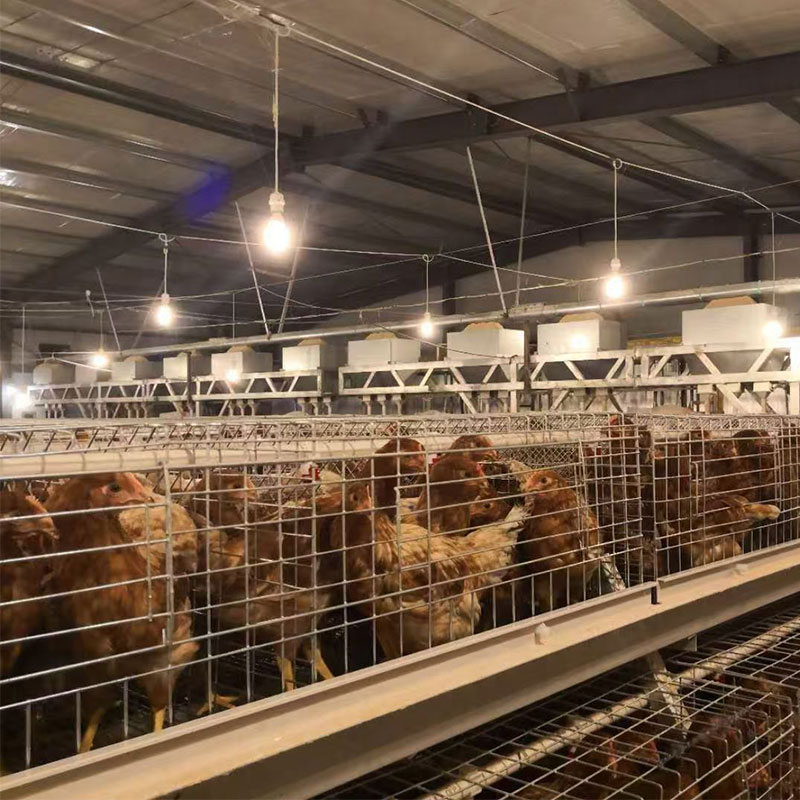
Our automated chicken cage system is a comprehensive housing solution for commercial egg production operations. It integrates structural poultry cages with mechanized systems for core farm functions, creating a controlled environment that optimizes bird welfare and operational output.
Operational Workflow:
1. Automated Feeding: A central silo supplies feed to a chain or auger system that distributes precise rations along each cage tier on a scheduled basis.
2. Precision Environment: Integrated nipple drinking lines provide ondemand water, while the cage design facilitates uniform airflow from attached ventilation systems.
3. Continuous Egg Collection: Gently sloped cage floors allow eggs to roll onto a central conveyor belt, which transports them directly to the packing station without manual handling.
4. Manure Management: A layered design incorporates manure belts beneath each tier. These belts operate on timed cycles to remove waste, maintaining dry litter conditions and controlling ammonia levels.
Application Scope & Limitations:
Scope: Optimized for largescale commercial layer (eggproducing) operations with flocks of 20,000 birds or more. Systems are customizable for barn dimensions and stock density requirements.
Limitations: This is a fixed infrastructure investment designed for new construction or major retrofit projects. Optimal performance requires reliable electrical supply and trained maintenance personnel.
3. CORE FEATURES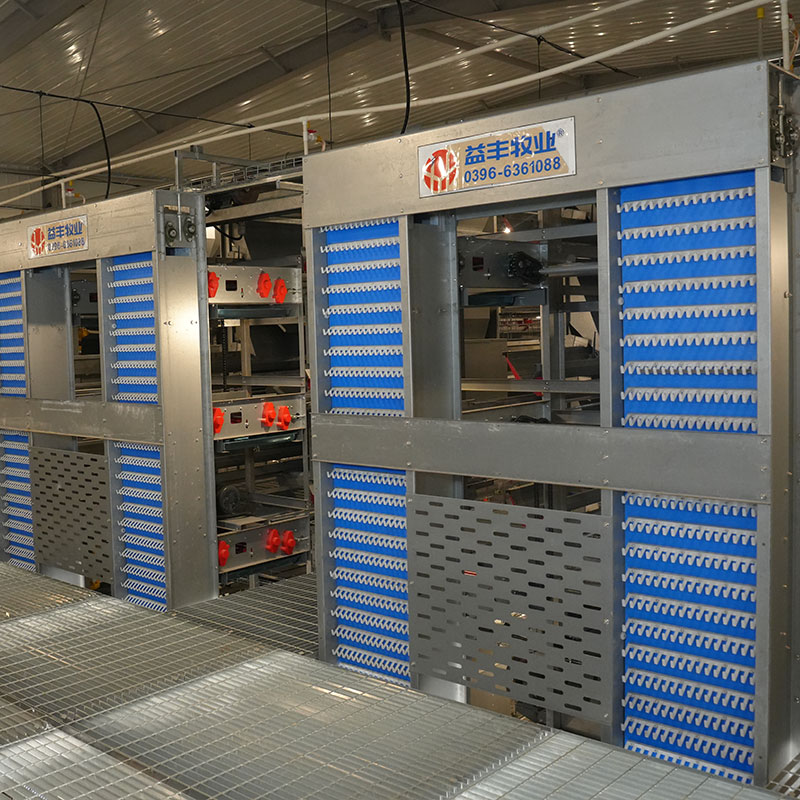
4. COMPETITIVE ADVANTAGES
| Performance Metric | Industry Standard Solution | Our Automated Chicken Cage Solution | Advantage (% Improvement) |
| : | : | : | : |
| Labor Hours per 10k Birds/Week| ~25 hours (manual tasks) | ~6 hours (monitoring & maintenance)| Up to 75% Reduction |
| Feed Conversion Ratio (FCR) Variance| ±0.15 across house| ±0.05 across house| 67% More Consistency |
| Egg Collection Damage Rate (Cracks/Checks)| 23% average| <1% target achievable| Over 50% Reduction |
| Manure Moisture Content at Removal| ~7580%| ~6065%| ~20% Reduction |
| System Lifespan Expectancy (Years)| 1012 years typical galvanized frame| 20+ years heavyduty galvanized frame| ~67% Increase |
_Estimates based on typical operational audits._
5. TECHNICAL SPECIFICATIONS
Capacity/Rating: Configurable for multitier layouts (38 tiers common). Standard module supports 120160 birds per group section depending on breed size requirements.
Power Requirements: Primary system operates on threephase power; total load dependent on house length and number of drives (~515kW for standard installations).
Material Specifications: Cage structure uses hightensile steel wire (Ø3mm/Ø4mm), hotdip galvanized postgalvanization (>80μm). Egg belts use foodgrade PVC; manure belts use reinforced PVC.
Physical Dimensions: Customizable to barn layout. Standard tier width is typically 60cm; length configured in modular sections (e.g., 2m modules).
Environmental Operating Range: Equipment rated for continuous operation in ambient temperatures of 5°C to +40°C at standard agricultural humidity levels.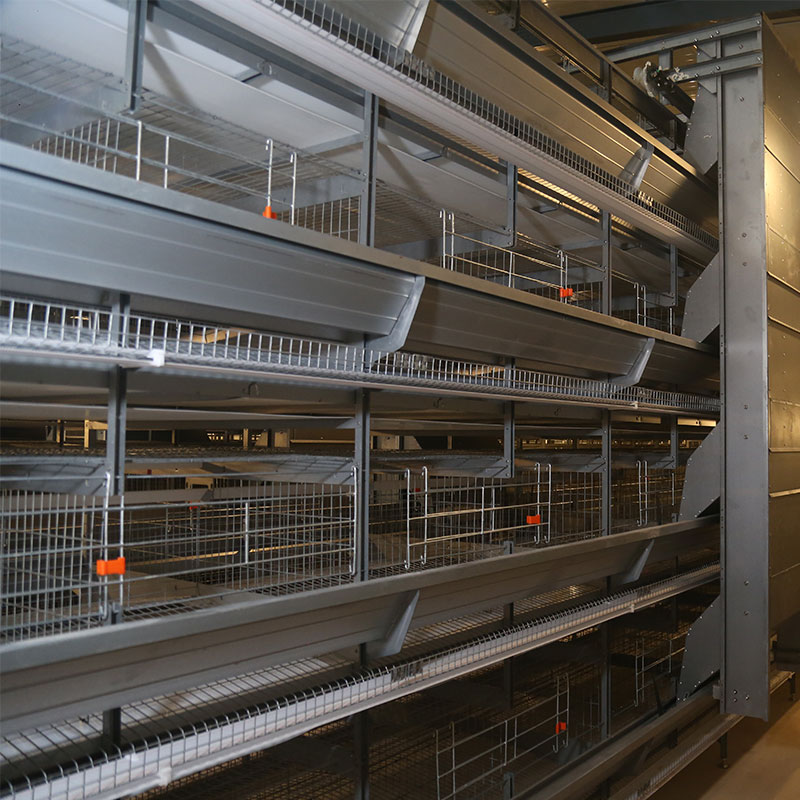
6. APPLICATION SCENARIOS
Challenge: A producer operating an outdated cage system faced high labor costs for egg collection (>30 hrs/week), poor FCR consistency between barns (+/0.18 variance),and frequent maintenance stops.
Solution: Fullhouse retrofit installation of our automated chicken cage system including centralized feeding,cushioned egg conveyors,and timed manure belts.
Results:Labor for routine tasks reduced by70%.FCR variance tightenedto +/0.04 within12 months.Eggs meeting GradeA specification increasedby3%.Full projectROI achievedin under4 years through labor savingsand increasedyield.
Challenge:A new integrator model required buildinga futureproof facility fromthe groundup that maximizedstocking densitywhile adheringto strict animal welfareand biosecurity protocols.
Solution:A turnkey installationof our highdensitylayer cagesystemwith integratedenvironmental controlsensorsand closedloopdrinking lines.The layoutwas engineeredfor optimalairflowand operatoraccess.
Results:The facility achievedtarget stockingdensitywith documentedimprovementsin hendayproduction rate(peakat96%).Uniformityof flockweightand healthmarkers improveddue toprecise environmentalcontrol.Manure drynessfacilitatedhandlingand reducedonsite ammonialevels significantly
7.COMMERCIAL CONSIDERATIONS
Our automated chicken cagesystems arepricedbasedon configuration complexityand scale.Pricingis structuredintotiers:
1.Basic Tier:IncludesgalvanizedAframe structure,cage panels,and manualmanure removal systems.Ideal forbudgetconsciousnew builds where somelaboris available
2.Performance Tier(Most Common):Adds full automation–chain feeding,nipple drinkinglines,e gg conveyors,and sequentialmanurebelts.The completeoperationalsolution
3.Premium Tier:Enhancesthe PerformanceTierwith integratedenvironmental monitoring sensors(data logging),corrosionresistantcoatingsfor harsherclimates,and premiumdrive componentsfor extendedservice intervals
Optional featuresinclude:
Egg counting/batching unitsat collectionpoint
Centralfeed bin levelmonitors
Stainlesssteel componentsfor specific areas
Service packagesrange frombasic commissioningand operator trainingto comprehensiveannualmaintenance contractswith guaranteedresponse times.Financingoptionsare availablethroughpartner institutionsincluding leasetoownagreementsand project financingtailoredfor agriculturalinfrastructure
8.FAQ
Q:What levelof existingbarn infrastructureis requiredfor installation?
A:Thesystemrequiresa solid,shelteredbarn structurewith reliablethreephaseelectrical supply.A levelconcreteflooris essentialfor properalignment.We conductpreinstallationsite assessmentsto verify compatibility
Q.How doesthe systemimpactour daily operationalworkflow?
A.It transformsthe workflowfrommanualtask executionto monitoringandsystemmanagement.Youroperatorswill shift focusfromphysical laborlike collectingeggsto checkingequipmentperformance indicatorsfeed levels,and animalwelfare observation
Q.Can thissystembe integratedwith ourexistingventilationor feedinginfrastructure?
A.Direct integrationwithexistingcentralfeed silosis common.Thecage designis engineeredto work optimallywith modern tunnelventilation systemsWhile standaloneour solutioncan interfacewithmaster environmentalcontrollersdependingon theirprotocols
Q.What arethe keymaintenancerequirementsto ensurelongevity?
A.Daily visualinspectionsof drivesystemsweekly checksof belt alignmenttensionand lubrication schedulesformotorsare recommendedAn annualcomprehensiveinspectionbya qualifiedtechnicianis includedin our servicepackages topreventdowntime
Q.What trainingis providedfor ourstaff?
A.We provideonsitecommissioningtrainingcoveringnormaloperation troubleshootingcommon alarmsroutine maintenanceproceduresandsafety protocolsTraining manualsand digitalresourcesarealso supplied
Q.Are theredifferentcage configurationsfordifferentpoultry breeds(brownvs white layers)?
A Yes criticaldimensionslike wire spacing floor slope partitionheight are adjustedbasedon breed size behaviorande gg size specificationsWe consulton breedspecificrequirementsduringthe designphase
Q.What isthe typicallead timefromorderto commissioning?
A Lead timesvary basedon projectscaleand customizationStandard fullhouseinstallations typicallyhavea lead timeof1624weeksincluding manufacturing shipping customs clearance(if applicable)and installation scheduling
1. Drinking system include the water pipes, water pressure adjuster, drinking nipples, Waterline front-end device, dosing system etc, choose them according to customer's needs.
2. High-quality water drinking pipes, pressure regulating valves and water drinking nipples can effectively prevent the water leakage. Drinking system adopt the closed piping system, which can minimize the water pollution.
3. 360-degree drinking nipples provide adequate drinking water for poultry at all stages.
4. The automatic drinking water system mainly adopts the steel ball drinking nipple. lt uses imported high-grad stainless steel, POM resin, and APS engineering material, which is wearing resistant, and the durability can be used for long time.



1. Automatic feeding machine can be chosen between gantry and ladder feeding machine. Gantry type feeding machine is a relatively economical and practical machine with simple operation, remote control walking character, easy to manage.
2. Mechanical transmission device running smoothly, low noise, long service life.
3. With the use of automatic control, the feeding system can adjust the amount of material.
4. Feeding with arched structure, high carrying capacity, not easily deformed.
5. Saving man power, saving feed, greatly improving the efficiency of Large-scale farming.
6. The walking speed of gantry feeding machine is 9--12 m/min.




1. Manure removing system included scraper type and conveyor belt type, Which can reduce the labor intensity and labor cost, keep the chicken shed dry and clean.
2. A type chicken cage can use scraper type or conveyor belt type.


3. The scraper type is suitable for A type cages, which can clean two or three rows. For the starters, this type is a good choice. lt can not only save some labor cost, but also save some investment in the whole project. The cleaning speed is 6-10 meters per minute.
4. Conveyor belt type is more suitable for large scale farming. The manure removing belt we use is high quality PP material (polypropylene). The walking speed is 2-4 meters per minute.



High Quality Pellets Made by Mobile Pellet Machine
1. It has professional designed angle of the blade. After the dynamic balance test one by one, the blade can operate smoothly.
2. The air volume is consistent in the whole life of the fan. Bearings has advantage of high strength, low noise, durable and so on.
1. The cooling pads uses high-quality wet curtain paper and adopts space cross-linking technology, which has the advantages of high water absorption, high water resistance, anti-toxicity and long service life.
2. The cooling efficiency is over 80%, without surfactant, natural water absorption, fast diffusion speed and long-lasting effect.
3. The product does not contain phenol and other chemical substances that are easy to cause skin allergies. It is non-toxic and harmless to the human body and chicken when installed and used. It is green, safe, energy-saving, environmentally friendly, economical, and easy to install.
4. The frame aluminum alloy has high strength, good corrosion resistance, durability and beautiful appearance.
5. Use a special filter for the cooling pad at the upper water to ensure clean water quality and support efficient water circulation components.
6. Combined with a negative pressure fan, it can effectively lower the indoor temperature.
The window is made of special selected high-quality engineering plastic, with high strength and long service life, together with superior anti-aging and anti-UV performance.
Function: Ventilation of the chicken house, usually used in the winter.
This system can adjust the wind speed and direction, thus the cold air will not reach chicken directly , which can effectively prevent the phenomenon of cold stress in chicken.
Environmental control system equipment is suitable for large-scale and intensive farming. According to customer requirements, we can provide various types of smart poultry equipment.
1. Our poultry management system is a modular system that manages all aspects of the chicken house, such as climate, temperature, humidity, ammonia, feeding, feed weighing, lighting and ventilation systems, and can monitor the situation of the chicken house in real time through a computer and mobile phone.
2. The management computer is the heart of the poultry farm, allowing you to easily monitor the entire poultry farm.

 WeChat:+8617838608255