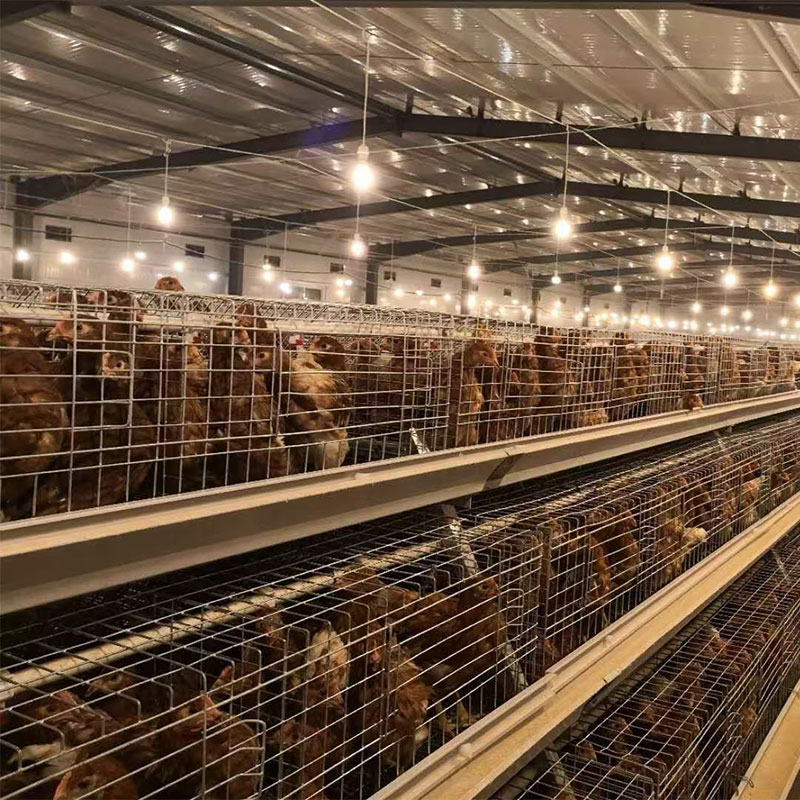
For poultry farmers walking their barns at dawn, the sight of eggs laid in aisles or manure-packed slats represents more than just daily frustration. It’s a direct hit to profitability and flock welfare. The transition from traditional floor rearing to structured cage systems was a pivotal moment in egg production, and the Type-A Animal Husbandry Equipment Egg Chicken Cage system represents the current evolution of that principle. This isn’t merely a cage; it’s an integrated housing environment engineered to address the core challenges of modern, large-scale egg farming.
The fundamental design of the Type-A system is based on the A-frame, a concept that creates a steeply pitched roof within the barn. This isn’t an architectural whim. This shape is the backbone of the system’s manure management. In a conventional flat-tier system, manure from upper levels can fall onto the birds and cages below, creating ammonia issues and a constant hygiene battle. The A-frame’s steep incline positions each tier of cages at a sharp angle, so that all manure drops cleanly through the cage floors, bypassing the lower levels entirely, and lands on a central manure belt or directly into a pit. A farmer running a 50,000-bird house will immediately notice the difference in air quality. The sharp, eye-watering sting of ammonia is drastically reduced, which is better for both the birds’ respiratory health and the farm workers who spend hours inside. This single feature transforms the daily chore of manure handling from a labor-intensive scraping and cleaning operation into a managed process of removal, often automated and scheduled.
At the heart of the system are the cages themselves, typically configured in three, four, or even five tiers. The term "enriched cage" is often used here, and it’s best understood by its components. Unlike the bare-wire cages of the past, these are equipped with specific features that cater to the hen’s behavioral needs. A critical feature is the nesting area. This is a secluded, darkened corner within the cage, often with a flexible plastic curtain. Hens have a strong instinct to lay their eggs in a secure, private place. When this instinct is frustrated, floor eggs become a significant problem. In the Type-A system, the design encourages hens to use these designated nests. The result for the farmer is a dramatic reduction in seconds and cracked eggs, sending a higher proportion of the harvest directly to the premium-grade market. The eggs themselves are then gently conveyed away from the nest on a slow-moving rubber belt. This happens several times a day, preventing the hens from pecking or trampling them and keeping the shells clean from the start.
Adjacent to the nest is the scratch area. This is a section of the cage floor covered with artificial turf or a similar durable matting. It serves a vital purpose. A hen’s natural behavior includes scratching and pecking at the ground. In a barren environment, this instinct can be redirected toward pecking at flock mates, leading to cannibalism and high mortality. The scratch pad gives the birds an outlet for this behavior. Farmers who have introduced these systems often report a noticeable drop in feather pecking incidents and a reduced need for beak trimming, a practice that is increasingly scrutinized. This isn't just about welfare; it's about managing a calmer, less-stressed flock that directs its energy into egg production rather than conflict.
Perching is another innate behavior. In the Type-A cage, a sturdy plastic or metal rod is installed across the width of the living space. At dusk, the birds will naturally jump up to roost. This is more than a comfort; it allows weaker birds to escape more dominant ones temporarily, reducing bullying. It also keeps the birds off the sloped floor for extended periods, which helps minimize manure accumulation in the cage itself overnight. A flock that can perch experiences better foot health and reduced instances of breast blisters, common issues when birds are constantly in contact with the wire floor.
The automation integrated into these systems is where the operational efficiency becomes truly tangible. Consider the feeding system. Instead of a farmer driving a feed cart down the aisle, a chain or trough system runs along the front of each tier of cages. This chain moves a continuous supply of fresh feed past the birds throughout the day. The feed is contained, reducing waste from spillage and preventing contamination from manure or pests. A farmer can adjust the speed and frequency of these feeding cycles based on the age and production level of the flock, ensuring optimal nutrition with minimal manual labor. For a farm manager, this means one employee can oversee the feeding of tens of thousands of birds, a task that once required multiple workers and significant time.
Watering has seen a similar revolution. Nipple drinker systems are standard. These are precisely engineered valves that release water only when a hen pecks at them. Unlike open troughs, which can become contaminated with feed, manure, and algae, nipple drinkers provide a closed, sanitary water source. The result is a lower risk of waterborne diseases like E. coli and a much drier environment overall. A farmer checking the barn will find the litter under the cages relatively dry compared to the muddy, saturated conditions common with cup or trough waterers. This dryness is a key factor in suppressing pathogen growth and controlling humidity within the entire barn.

Perhaps the most back-breaking task eliminated by this system is egg collection. The slow-moving collection belts, often one per tier, run on a set timer. They carry the eggs from the nests to the end of the row, where they transfer onto a main cross-conveyor. This main conveyor gently transports all the eggs from the entire house to a central collection room. Here, they arrive in a single, steady stream, ready for initial grading, cooling, and packaging. This process removes the need for manual collection carts and the associated handling, which is a major source of hairline cracks and downgrades. The labor savings are profound, allowing a small crew to manage the egg output of a very large operation.

Ventilation and climate control are also deeply integrated. The A-frame design works in concert with the barn’s ventilation system. The open space under the peak of the "A" allows warm, moist air and ammonia to rise and be efficiently exhausted by ridge fans. Meanwhile, fresh air is drawn in through side walls, cooling the birds and providing oxygen. This creates a consistent, layered environment. The birds on the top tier experience slightly warmer conditions, while those on the bottom tier are in a cooler, fresher microclimate. A skilled farmer can use this to his advantage, placing younger or more vulnerable birds in the most favorable tier for the current season. This level of environmental control is impossible to achieve with flat-deck systems or floor rearing, where temperature and gas stratification can create dangerous pockets of poor air quality.
Durability and bird density are primary economic drivers. These systems are constructed from heavy-gauge, galvanized steel to withstand the corrosive ammonia-rich environment of a poultry house. A well-maintained Type-A system can have a operational lifespan of 15 years or more. The high-rise, tiered design allows a farmer to stock more birds without expanding the barn’s footprint. Where a floor system might stock a few birds per square meter, a multi-tier cage system can increase that density several times over. This makes the system particularly valuable where land is expensive or barn construction costs are high. The capital investment is significant, but the return comes through intensified production, drastic labor reduction, and improved feed conversion ratios, as less of the bird’s energy is spent on movement and more is directed toward egg production.
The management of the flock within this system requires a different skillset. It shifts from direct, hands-on animal care to a focus on system monitoring and data interpretation. The farmer becomes a systems manager. Daily walks are still essential, but they are for spotting outliers—a single bird that looks ill, a clogged nipple drinker, a section of egg belt that has stopped moving. The focus is on preventative maintenance: listening for unusual noises in the feed motor, checking tension on conveyor belts, and calibrating water pressure. The success of the operation hinges on the reliability of the equipment and the manager’s ability to proactively maintain it.
While the system offers clear biosecurity advantages by separating birds from their manure, it also presents unique health monitoring challenges. Birds are less accessible for individual inspection. This makes it crucial to train staff to observe flock behavior as a whole. A slight drop in water consumption registered by the meter can be the first sign of a health problem. A change in the sound of the birds—less chatter, more coughing—can indicate a respiratory issue. The daily egg count and quality are the ultimate report card. A sudden increase in cracked eggs might point to a calcium deficiency or a problem with the egg collection system’s cushioning. The system provides the tools for a controlled environment, but it demands a vigilant, knowledgeable manager to interpret the signals the flock and the equipment are sending.
The decision to invest in a Type-A Egg Chicken Cage system is a strategic one. It represents a commitment to a capital-intensive, technology-driven model of poultry farming. The benefits are measured in improved bird welfare through targeted behavioral enrichment, profound gains in operational efficiency through automation, and enhanced product quality through gentle, automated egg handling. For the modern poultry farmer aiming for scale, consistency, and sustainability, this system moves beyond simple containment. It provides a structured, controllable, and highly efficient environment where the fundamental biology of the layer hen is supported by precision engineering, turning daily challenges into managed processes and directly impacting the bottom line.
1. Drinking system include the water pipes, water pressure adjuster, drinking nipples, Waterline front-end device, dosing system etc, choose them according to customer's needs.
2. High-quality water drinking pipes, pressure regulating valves and water drinking nipples can effectively prevent the water leakage. Drinking system adopt the closed piping system, which can minimize the water pollution.
3. 360-degree drinking nipples provide adequate drinking water for poultry at all stages.
4. The automatic drinking water system mainly adopts the steel ball drinking nipple. lt uses imported high-grad stainless steel, POM resin, and APS engineering material, which is wearing resistant, and the durability can be used for long time.



1. Automatic feeding machine can be chosen between gantry and ladder feeding machine. Gantry type feeding machine is a relatively economical and practical machine with simple operation, remote control walking character, easy to manage.
2. Mechanical transmission device running smoothly, low noise, long service life.
3. With the use of automatic control, the feeding system can adjust the amount of material.
4. Feeding with arched structure, high carrying capacity, not easily deformed.
5. Saving man power, saving feed, greatly improving the efficiency of Large-scale farming.
6. The walking speed of gantry feeding machine is 9--12 m/min.




1. Manure removing system included scraper type and conveyor belt type, Which can reduce the labor intensity and labor cost, keep the chicken shed dry and clean.
2. A type chicken cage can use scraper type or conveyor belt type.


3. The scraper type is suitable for A type cages, which can clean two or three rows. For the starters, this type is a good choice. lt can not only save some labor cost, but also save some investment in the whole project. The cleaning speed is 6-10 meters per minute.
4. Conveyor belt type is more suitable for large scale farming. The manure removing belt we use is high quality PP material (polypropylene). The walking speed is 2-4 meters per minute.



High Quality Pellets Made by Mobile Pellet Machine
1. It has professional designed angle of the blade. After the dynamic balance test one by one, the blade can operate smoothly.
2. The air volume is consistent in the whole life of the fan. Bearings has advantage of high strength, low noise, durable and so on.
1. The cooling pads uses high-quality wet curtain paper and adopts space cross-linking technology, which has the advantages of high water absorption, high water resistance, anti-toxicity and long service life.
2. The cooling efficiency is over 80%, without surfactant, natural water absorption, fast diffusion speed and long-lasting effect.
3. The product does not contain phenol and other chemical substances that are easy to cause skin allergies. It is non-toxic and harmless to the human body and chicken when installed and used. It is green, safe, energy-saving, environmentally friendly, economical, and easy to install.
4. The frame aluminum alloy has high strength, good corrosion resistance, durability and beautiful appearance.
5. Use a special filter for the cooling pad at the upper water to ensure clean water quality and support efficient water circulation components.
6. Combined with a negative pressure fan, it can effectively lower the indoor temperature.
The window is made of special selected high-quality engineering plastic, with high strength and long service life, together with superior anti-aging and anti-UV performance.
Function: Ventilation of the chicken house, usually used in the winter.
This system can adjust the wind speed and direction, thus the cold air will not reach chicken directly , which can effectively prevent the phenomenon of cold stress in chicken.
Environmental control system equipment is suitable for large-scale and intensive farming. According to customer requirements, we can provide various types of smart poultry equipment.
1. Our poultry management system is a modular system that manages all aspects of the chicken house, such as climate, temperature, humidity, ammonia, feeding, feed weighing, lighting and ventilation systems, and can monitor the situation of the chicken house in real time through a computer and mobile phone.
2. The management computer is the heart of the poultry farm, allowing you to easily monitor the entire poultry farm.

 WeChat:+8617838608255