
Battery Cage Systems: A Comprehensive Guide to Types, Design, and Industry Considerations
For poultry farmers, egg producers, and agricultural professionals, selecting the right housing system is one of the most critical decisions impacting productivity, animal welfare, and operational efficiency. The battery cage system has been a cornerstone of intensive egg production for decades. While its use is evolving amid changing regulations and consumer preferences, understanding its technical design and variations remains essential knowledge within the industry. This indepth guide will explore the primary types of battery cage systems, their structural components, operational implications, and the context in which they are used today. We move beyond simplistic descriptions to provide a detailed, professional analysis grounded in practical poultry science.
A battery cage system is a housing arrangement for egglaying hens (layers) where multiple small, identical cages are arranged in rows and tiers, connected like cells in a battery—hence the name. The system is designed for highdensity confinement and mechanized management. Key universal components include:
The Cage Unit: Typically made of welded wire mesh, forming the floor, walls, and ceiling. The floor is sloped to allow eggs to roll onto a collection belt.
Support Structure: A galvanized steel framework that holds rows and tiers of cages.
Feed Trough: Runs along the front of each cage row, often with an automated filling system.
Watering System: Nipples or cups installed inside each cage for automatic water supply.
Egg Collection System: Conveyor belts that run behind the cages to collect eggs automatically and transport them to a packing area.
Manure Removal System: Either manure belts beneath each tier (for highrise systems) or a deep pit below the entire structure.
The classification of battery cages is primarily based on their tier configuration and manure handling system. Each type presents distinct advantages and challenges.
This is the traditional design that dominated the industry for much of the 20th century.
Layout: Cages are arranged in 3 to 5 tiers.
Manure Handling: Utilizes a deeppit system. Manure drops from all tiers into a deep pit beneath the entire house. This pit is cleaned out periodically (once or twice a year).
Key Features:
Lower initial equipment cost compared to beltequipped systems.
Higher ammonia levels can be a challenge if ventilation is inadequate.
Requires specialized equipment for pit cleanout.
This modern evolution addresses manure management more efficiently.
Layout: Also multitiered (typically 48 tiers).
Manure Handling: Features a continuous manure belt installed beneath each tier of cages. These belts remove manure from the house daily or several times a week.
Key Features:
Dramatically improves indoor air quality by removing manure continuously.
Creates drier manure that is easier to handle and sell as fertilizer.
Higher initial investment but better longterm environmental control.
This design prioritizes animal welfare compliance (notably with California's Proposition 12) while maintaining high density.
Layout: Cages are arranged in staggered tiers so that manure from upper cages falls directly into the pit or onto a removal belt without falling on birds in lower cages.
Key Features:
Eliminates "manure rain," improving hygiene for birds in lower rows.
Often provides slightly more space per hen than very traditional designs.
Becomes a standard design for systems needing to comply with specific enriched space requirements.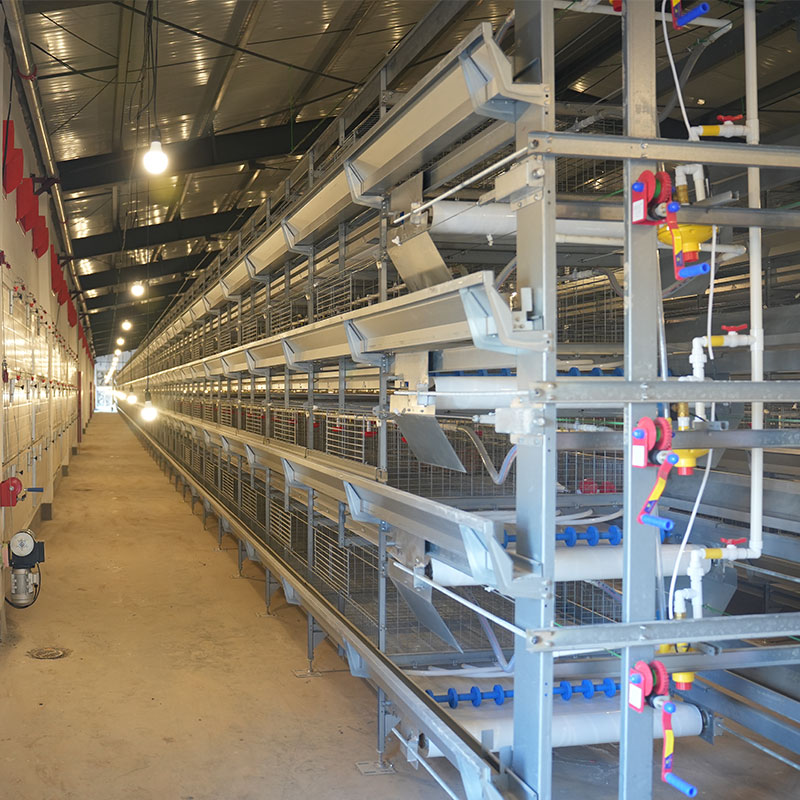
While sometimes categorized separately from "battery cages," enriched colonies are essentially modified cage systems designed to meet newer EU and marketdriven welfare standards. They represent a significant shift in design philosophy within caged production.
Layout: Smaller groups of hens (2060+) in larger enclosures per colony.
Key Features & Furnishings:
Perches: Allow birds to roost.
Nesting Area: A secluded space for egg laying.
Scratch Pad/Astral Turf: An area for scratching and foraging behavior.
Increased Vertical & Horizontal Space: Provides more freedom of movement than conventional cages.
| Feature | Conventional Battery Cage | HighRise/Belt System | Enriched Colony |
| : | : | : | : |
| Stocking Density | Highest | High | Moderately Lower |
| Manure Management| Deep Pit (Infrequent) | Daily Belt Removal | Integrated Belt System |
| Indoor Air Quality| Potentially Poorer | Superior | Good |
| Labor Efficiency| High (except during cleanout) | Very High | High |
| Initial Investment| Lower | Higher | Highest |
| Welfare Provision| Minimal (space & behavior) | Minimal (space & behavior) | Enhanced (perches, nest, scratch) |
| Regulatory Future| Phasing out in many regions | Phasing out under same laws | Compliant with newer EU/US laws |
Choosing a system involves more than just selecting a tier layout. Professional producers must integrate these factors:
1.Bird Health & Biosecurity: All cage systems concentrate birds, requiring impeccable vaccination protocols, ventilation management (+10% minimum), and pest control plans. Manure belt systems offer superior disease vector control.
2.Operational Economics: Calculate total cost per dozen eggs: includes depreciation on equipment (CAPEX), energy for belts/ventilation (OPEX), labor efficiency gains vs. higher feed conversion potential in alternative systems.
3.Egg Quality Metrics: Automated collection minimizes cracks but check points regularly for belt alignment/speed. All wirefloored cages produce cleaner eggs than barnfree range initially.
4.The Regulatory Landscape: This is the dominant driver today.Battery cages are banned in the European Union since 2012.Enriched colonies or cagefree are now market standards across much of North America due to retailer pledges & state laws(CA,M.A.,WA etc.).Any new investment must have at least a 15year compliance horizon.
5.Automation Integration: Modern systems are part of an integrated automation chain linking climate computers feeding data to feed lines linked to egg counters providing flock performance analytics.This integration capability should bea key purchase criterion.
The term "battery cage system" encompasses a range of technologies from basic deeppit configurations to sophisticated enriched colonies with automated environmental controls.The industry's trajectory is clear:moving towards systems that provide more behavioral freedom for hens while maintaining production efficiency.For existing operators understanding your current system type its limitations,and upgrade pathwaysis crucial.For new entrants skipping traditional battery designsin favorof enriched colonyor preparedforcagefree hybrid buildingsisthe only prudent longterm strategy.Informed decisions must balance animal welfare obligations economic realityandthe relentless paceof regulatoryand consumerled changein the food chain.
Q1:What exactly does "battery" meanin battery cage?
A:The term"battery"refers notto an electrical devicebutto an oldermeaningsuggestinga seriesor arrayof identical units.It describes howthe individualcage unitsare connectedin long rowsand multiple tiers forminga standardizedproduction unit muchlikea batteryof cannonsor testsin science.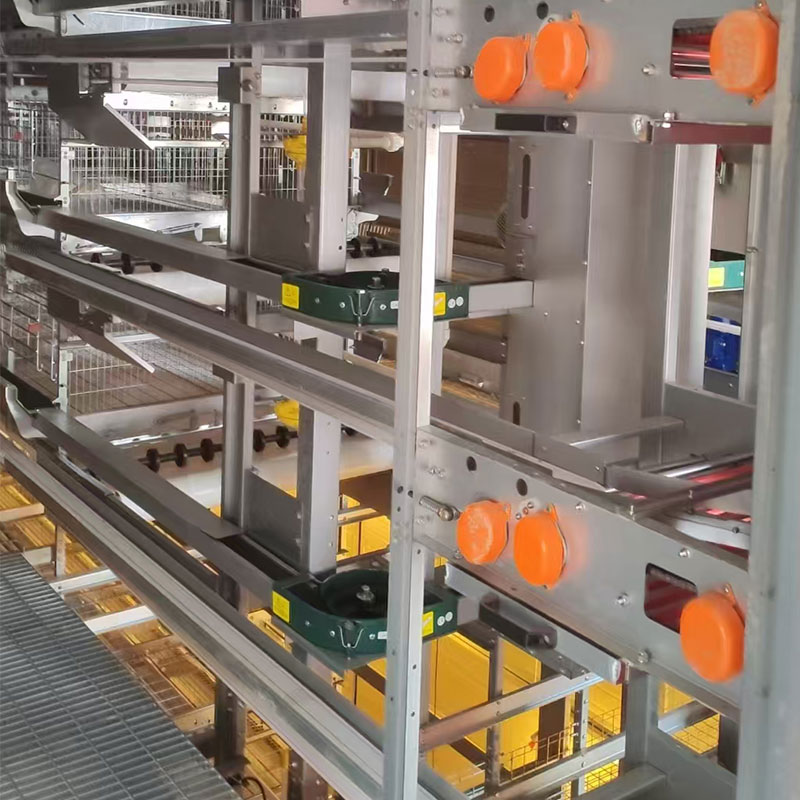
Q2:Whatis themain advantageof usingbattery cagessystems?
A:The primary historical advantageshave beeneconomic efficiencyand diseasecontrol.They allowfor very highstocking densities automatedfeeding wateringandegg collection reducinglabor costsper bird.They also keephens separatefromtheir manurewhichcan reduceexposureto certainparasitesand bacterialdiseasescomparedto somefloorbasedsystems.
Q3:Arethere different sizesof batterycages?
A:Yes traditionallycageswere verysmall oftenhousing38hens.Modernsystems especiallyenrichedcolonycagesare significantlylarger housinglarger groupsof hens(4080+)and providingmore totalspaceper birdas requiredby newerlaws.Cage dimensionsare nowoften dictatedby regulatoryspace requirementsper hen(e.g.square inches).
Q4:Whatis themost commontypeof batterycageused today?
A:In regionswhere conventionalcagesarestill permitted modernhighrise/manurebeltsystemsare themost commonnew installationdue totheir superiorair qualitymanagement.In marketswithwelfare regulations(EU many USstates)theenriched colonycagehasbecomethe standardcagedsystem.It providesmore spaceand amenitieswhile retainingautomation benefits.
Q5:Dobattery cagessystemshurt chickens?
A:Thisisacomplexwelfare question.Conventionalbattery cagesseverelyrestrictnatural behaviorslike wingflapping dustbathing nestingand perchingwhichisawelfare concern.The wirefloorscan leadto foot problemsand lowactivitycan weakenbones.Enrichedcoloniesaddresssomebutnotallofthese concerns.The scientificconsensusand regulatorytrendview conventionalcagesas providingan inadequatewelfare environmenthencephaseouts.
Q6:Arethere alternativesto batterycage systems?
A:Yes themain alternativesare:
1.Barn/FreeRange/Organic Systems: Hensmove freelyinsidea barn(oftenwithmultilevel aviaries)and mayhave accessto outdoors.This allowsfor full expressionof natural behaviorsbut presentsdifferent managementchallengeslike feather pecking higher laborand potentialfor predationor weather exposure
2.CompletelyCageFree Aviaries: Complexmultitieredindoor structureswithlitterscratch areasnestsand perchesbut nooutdoor accessrequired
These alternativesnowconstituteamajorityof new constructionin Westernmarketsdrivenby corporateretail pledges
Disclaimer& Professional Note:This articledescribesthe technicalspecificationsand industrycontextof variouspoultry housingsystems.It doesnot constitutean endorsementof any particularsystem.The choiceof housingsystemisamajor ethical economicand operationaldecisionthat shouldbemadein consultationwith veterinarians agriculturalengineers anda fullunderstandingof allapplicablelocal nationalandinternationalregulations.
1. Drinking system include the water pipes, water pressure adjuster, drinking nipples, Waterline front-end device, dosing system etc, choose them according to customer's needs.
2. High-quality water drinking pipes, pressure regulating valves and water drinking nipples can effectively prevent the water leakage. Drinking system adopt the closed piping system, which can minimize the water pollution.
3. 360-degree drinking nipples provide adequate drinking water for poultry at all stages.
4. The automatic drinking water system mainly adopts the steel ball drinking nipple. lt uses imported high-grad stainless steel, POM resin, and APS engineering material, which is wearing resistant, and the durability can be used for long time.



1. Automatic feeding machine can be chosen between gantry and ladder feeding machine. Gantry type feeding machine is a relatively economical and practical machine with simple operation, remote control walking character, easy to manage.
2. Mechanical transmission device running smoothly, low noise, long service life.
3. With the use of automatic control, the feeding system can adjust the amount of material.
4. Feeding with arched structure, high carrying capacity, not easily deformed.
5. Saving man power, saving feed, greatly improving the efficiency of Large-scale farming.
6. The walking speed of gantry feeding machine is 9--12 m/min.




1. Manure removing system included scraper type and conveyor belt type, Which can reduce the labor intensity and labor cost, keep the chicken shed dry and clean.
2. A type chicken cage can use scraper type or conveyor belt type.


3. The scraper type is suitable for A type cages, which can clean two or three rows. For the starters, this type is a good choice. lt can not only save some labor cost, but also save some investment in the whole project. The cleaning speed is 6-10 meters per minute.
4. Conveyor belt type is more suitable for large scale farming. The manure removing belt we use is high quality PP material (polypropylene). The walking speed is 2-4 meters per minute.



High Quality Pellets Made by Mobile Pellet Machine
1. It has professional designed angle of the blade. After the dynamic balance test one by one, the blade can operate smoothly.
2. The air volume is consistent in the whole life of the fan. Bearings has advantage of high strength, low noise, durable and so on.
1. The cooling pads uses high-quality wet curtain paper and adopts space cross-linking technology, which has the advantages of high water absorption, high water resistance, anti-toxicity and long service life.
2. The cooling efficiency is over 80%, without surfactant, natural water absorption, fast diffusion speed and long-lasting effect.
3. The product does not contain phenol and other chemical substances that are easy to cause skin allergies. It is non-toxic and harmless to the human body and chicken when installed and used. It is green, safe, energy-saving, environmentally friendly, economical, and easy to install.
4. The frame aluminum alloy has high strength, good corrosion resistance, durability and beautiful appearance.
5. Use a special filter for the cooling pad at the upper water to ensure clean water quality and support efficient water circulation components.
6. Combined with a negative pressure fan, it can effectively lower the indoor temperature.
The window is made of special selected high-quality engineering plastic, with high strength and long service life, together with superior anti-aging and anti-UV performance.
Function: Ventilation of the chicken house, usually used in the winter.
This system can adjust the wind speed and direction, thus the cold air will not reach chicken directly , which can effectively prevent the phenomenon of cold stress in chicken.
Environmental control system equipment is suitable for large-scale and intensive farming. According to customer requirements, we can provide various types of smart poultry equipment.
1. Our poultry management system is a modular system that manages all aspects of the chicken house, such as climate, temperature, humidity, ammonia, feeding, feed weighing, lighting and ventilation systems, and can monitor the situation of the chicken house in real time through a computer and mobile phone.
2. The management computer is the heart of the poultry farm, allowing you to easily monitor the entire poultry farm.

 WeChat:+8617838608255