A Comprehensive Guide to Battery Cages for Layers: Types, Systems, and Key Considerations
For poultry farmers and agricultural professionals, selecting the right housing system is one of the most critical decisions impacting flock health, productivity, and operational efficiency. Battery cages for laying hens have been a cornerstone of intensive egg production for decades. While their use is evolving due to animal welfare legislation and consumer preferences, understanding the different types remains essential for making informed decisions, whether managing a conventional facility or transitioning to alternative systems. This guide provides a detailed, expertlevel overview of the various battery cage systems, their technical specifications, applications, and the changing landscape of layer housing.
Battery cages are enclosed housing systems designed to house laying hens in rows and tiers (like the cells in a battery). The primary objectives are to maximize space efficiency, simplify management tasks like feeding and egg collection, and separate birds from their manure to promote hygiene. A standard cage typically includes a sloping wire floor for egg rollout, a feed trough at the front, nipple drinkers, and waste collection belts or pits below.
This article serves informational and commercial investigation intents. Readers are likely poultry farmers, agricultural students, investors, or industry suppliers seeking to understand the technical differences between cage systems, their pros and cons, and regulatory context—not stepbystep installation instructions.
The classification of battery cages is primarily based on their tier configuration, bird capacity per cage (stocking density), and the level of automation integrated. Here’s a breakdown of the primary types.
These are the original designs that have become subject to phaseouts in many regions (like the EU under Directive 1999/74/EC). They are characterized by:
Low Height & Small Area: Provided minimal space per hen.
Basic Amenities: Often lacked enrichment features like perches or nesting areas.
High Stocking Density: Designed for maximum output per square foot of barn space.
Current Status: Largely obsolete in regulated markets but may be found in some regions without stringent welfare laws.
Developed as a welfareenhanced alternative to conventional cages. These are now the standard cage system in jurisdictions with modern welfare regulations (e.g., EU, California under Proposition 12).
Key Furnishings (Per EU Standards):
Nesting Area: A secluded area for laying eggs.
Perches: Raised bars for roosting.
Scratching Area/Litter: A substrate for dustbathing and foraging behaviors.
Claw Shorteners: To prevent overgrowth.
Increased Space Allowance: Provides significantly more usable area per hen than old conventional cages.
Colony Size: Houses larger groups of birds (tens to over a hundred) in a single enclosure compared to smallgroup traditional cages.
This classification relates to the physical arrangement of cage rows.
Design: Multiple tiers arranged directly above one another in a vertical "A" shape.
Manure Management: Droppings fall from upper tiers onto lowertier roofs or directly into a deep pit below all tiers.
Pros: Excellent space utilization (high bird density per building footprint), relatively lower initial cost.
Cons: Poor air quality for birds in lower tiers due to manure exposure; less uniform lighting; being phased out due to welfare concerns.
Design: Tiers are offset so that manure from an upper tier falls directly into a manure pit or onto a conveyor belt without passing through a lower cage.
Pros: Superior hygiene as birds are separated from falling manure; better air quality; easier bird observation on all levels.
Cons: Requires more building volume (height) for the same number of birds compared to Aframe; generally higher cost.
Design: All cages are on a single level/tier above a manure pit or belt system.
Application: More common for pullets (young hens) or breeders rather than commercial layers due to inefficient use of building space.
Pros: Excellent ventilation uniformity; easy access and visibility; simplest management.
Cons: Very low bird density per barn square footage; highest cost per bird housed.
| System Type | Description | Key Features |
| : | : | : |
| Manual | Basic operation requiring daily labor. | Manual egg collection, hand feeding/watering adjustment. Low capital cost, high labor cost. |
| SemiAutomated | Mix of mechanical and manual processes. | Automated feed chain/egg collection belts but manual monitoring/culling. Common in midsized operations. |
| Fully Automated (Closed System) | Computercontrolled environment with minimal daily labor. | Integrated climate control (HVAC), automated feeding & watering with precision tracking, central egg collection & grading belts , manure drying/removal systems . Maximizes consistency & data collection . |
Beyond type selection , consider these operational pillars :
1. Animal Welfare Compliance : This is nonnegotiable . Understand local laws (e.g., , UEP Certified standards , EU regulations ) regarding space , enrichments , beak trimming bans etc .
2. Flock Health & Biosecurity : Stairstep designs enhance hygiene . Allinallout flock management is easier with automated systems .
3. Labor vs . Capital Costs : Automated systems reduce longterm labor but require significant upfront investment and technical maintenance skills .
4.Egg Quality : Systems with gentle egg rollout belts onto central collectors minimize cracks . Quick removal from the cage environment keeps eggs cleaner .
5.Sustainability & Manure Management : Modern systems often include manure drying tunnels beneath cages , reducing volume , odor , ammonia emissions ,and creating a sellable byproduct .
The trend is clear . Major markets are moving towards cagefree production driven by legislation , retailer commitments ,and consumer demand . However ,
"cagefree" does not mean "systemfree." It often involves aviaries or barn systems that are highly complex . For many producers globally ,
enriched colony cages represent a middle ground — offering improved welfare over conventional cages while maintaining some efficiencies
of controlledenvironment housing that can lead to better disease controland resource use comparedto poorly managed cagefree barns .
The worldof battery cagesfor layersis not monolithic.It rangesfromoutdated conventionaldesignsto sophisticated,
welfareenhancedenriched colony systemswith full automation.The optimal choice depends ona matrixof factors:
local regulations,cost structures,labor availability,and longterm market goals.As the industry evolves,
the knowledgeof these systems—their engineering,welfare outcomes,and management needs—remains vitalfor any professionalnavigatingthe futureof egg production.Whether investingin new enriched cagetechnologyor planninga transitionto cagefree,
informeddecisionsstartwith understandingthe toolsavailabletoday .
Q1: What is the difference between battery cagesand colonycages?
A: "Battery cage"is often usedas ageneral termfor all cagedsystems.Technically,"conventionalbatterycages"arethe old,sma llgroupcageswith minimal amenities."Enrichedor furnishedcolonycages"aretheir modern successor,housinglargergroups(acolony)with legallymandatedfurnishingslike nests,a perch,and ascratchingarea.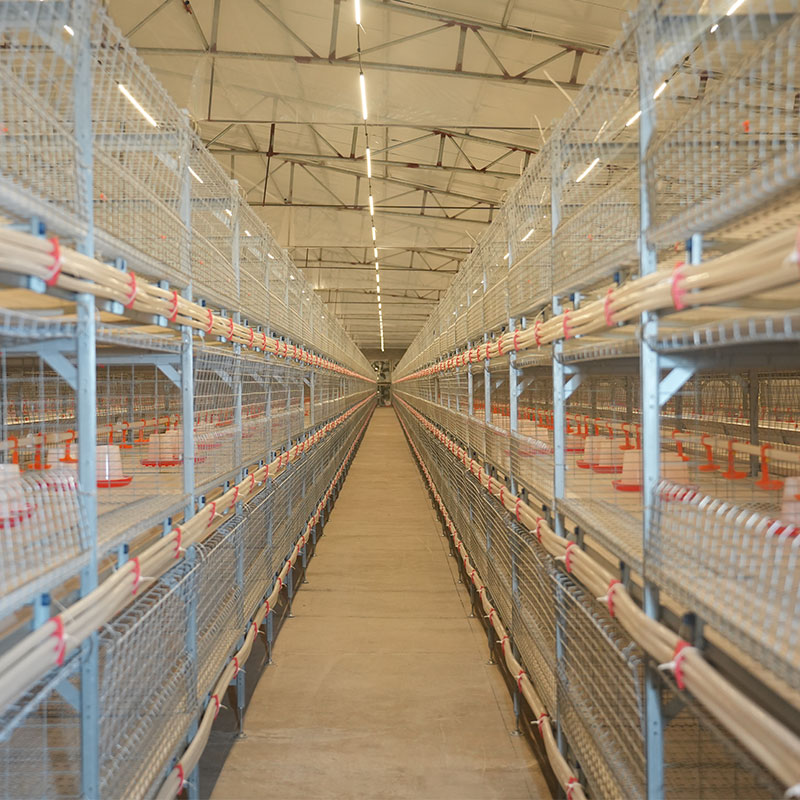
Q2: Are batterycagesillegal?
A: It depends on jurisdiction.Conventionalbatterycagesare bannedinthe EuropeanUnionand severalU.S.states(like Californiaand Massachusetts).However,enrichedcolonycagessystemsarecurrently legaland widelyusedin manyregionsunder specificspaceand enrichmentrequirements.Cagefreemandatesoften applyto future datesor specificretailersupplychains .
Q3:Whatare furnishedorenrichedcagerequirements?
A: PerEU standards(which setthe globalbenchmark),eachhen musthaveat least750cm²of cagearea(600cm²usable),a nest,a perch(15cmper hen),litterfor scratching/dustbathing,and clawshorteningdevices.Minimumcageheightis20cm .
Q4:Whatis themostcommonlayercage systemusedtodayinregulatedmarkets?
A:Theenrichedcolonycageinstairstepconfigurationwith semior fullautomationisthe mostcommonmodernsystemin regionswith stronganimalwelfarelaws.It balanc esregulatorycompliancewith operationalefficiency .
Q5:Dobirdsin enrichedcageshavebetterwelfarethan inconventionalcages?
A:Scientificevidenceand regulatoryassessmentsconcludeyes.Enrichedcagessignificantlyimprovewelfareby allowinghens to expresskey naturalbehaviors(layinginanest,dustbathing,perching)that wereimpossiblein bareconventionalcag es.Theyrepresentamajorstepforwardwhile stillbeingacagedenvironment .
Q6:Whatisthe lifespanofa batterycage system?
A:A wellmaintainedautomatedsystemcan last1520years.Thegalvanizedsteelstructureitselfcan lastdecades,but electroniccomponents,belts,and feedersmay needreplacementor upgrademorefrequently.Depreciation schedulesoften assumea1015yearusefullife .
Q7:Canyouconvertoldconventionalca gestoenrichedsystems?
A:Largelyno.Thespaceallowanceperhenandincreasedcabinetheightfor enrichmentsmake retrofittingexistingconventionalAframecagebanksimpracticalanda safetyrisk.Mostfarmersmustinvestin completelynew equipmentwhen transitioningto enrichedsystems .
Q8:Whatare themainalternativesto anytypecage system?
A:Theprimaryalternativesareall classifiedas"cagefree":1.AviarySystems(multitieredindoorstructureswith perches,nests,litterflooraccess),2.Barn/FreeRangeSystems(singlelevelindoorhousingwith litterfloorandoften popholesfor outdooraccess),and3.OrganicSystems(meetingfreerangerequirementsplusorganicfeedetc.) .
Q9:Aretheredifferenttypesof wiremeshusedincagefloors?
A:Yes.Floorsaretypicallyweldedwiremesh.Thegaug e(thickness),slopeangle(typically812degreesforeggrollout),andsurfacecoating(e.g.,zincgalvanizedor PVCcoatedtoreducefootpadlesions)varybasedon manufacturerandspecificwelfarerequirements .
Q10:Dobatterycagessaveonfeedcostscomparedtocagefree?
A:Typicallyyes.Birdsin wellmanagedcagedsystemshavelowerfeedconversionratios(FCR)becausethey expendlessenergyon movement,thermoregulation(incontrolledenvironments),and donothaveaccess tolitterthatmightbe ingested.Thisisakeyeconomicdriverfortheirsustaineduse .
Q11:Howdoeseggqualitycomparebetweenbatterycage,enrichedcolony,and cagefreesystems?
A:Eggsfrom cagedsystemsgenerallyhavefewercracks(due togenteleggcollectionbelts)andle ssexternalcontamination(separatedfrom manure).Internalquality(yolkcolor,albumenheight)ismore influencedby dietth anhousing.Cagefreeeggsmay havehigherratesof dirtyeggs, cracks,andeven floor eggsif thenestsaren'tmanagedperfectly .
Q12:Whatisthetypicalstockingdensityinan enrichedcolonycage?
A:It'sdefinedby law.Initssimplestform ,EU standardsrequireat least750cm²perhen(about116sq.inches).Forma60hencolonyunit ,thisrequiresaminimumtotalareaof45 ,000 cm²(~6 ,975sq.inches).Actualcommercialdesignsoften provideslightlymorethanthelegalminimum 。
1. Drinking system include the water pipes, water pressure adjuster, drinking nipples, Waterline front-end device, dosing system etc, choose them according to customer's needs.
2. High-quality water drinking pipes, pressure regulating valves and water drinking nipples can effectively prevent the water leakage. Drinking system adopt the closed piping system, which can minimize the water pollution.
3. 360-degree drinking nipples provide adequate drinking water for poultry at all stages.
4. The automatic drinking water system mainly adopts the steel ball drinking nipple. lt uses imported high-grad stainless steel, POM resin, and APS engineering material, which is wearing resistant, and the durability can be used for long time.



1. Automatic feeding machine can be chosen between gantry and ladder feeding machine. Gantry type feeding machine is a relatively economical and practical machine with simple operation, remote control walking character, easy to manage.
2. Mechanical transmission device running smoothly, low noise, long service life.
3. With the use of automatic control, the feeding system can adjust the amount of material.
4. Feeding with arched structure, high carrying capacity, not easily deformed.
5. Saving man power, saving feed, greatly improving the efficiency of Large-scale farming.
6. The walking speed of gantry feeding machine is 9--12 m/min.




1. Manure removing system included scraper type and conveyor belt type, Which can reduce the labor intensity and labor cost, keep the chicken shed dry and clean.
2. A type chicken cage can use scraper type or conveyor belt type.


3. The scraper type is suitable for A type cages, which can clean two or three rows. For the starters, this type is a good choice. lt can not only save some labor cost, but also save some investment in the whole project. The cleaning speed is 6-10 meters per minute.
4. Conveyor belt type is more suitable for large scale farming. The manure removing belt we use is high quality PP material (polypropylene). The walking speed is 2-4 meters per minute.



High Quality Pellets Made by Mobile Pellet Machine
1. It has professional designed angle of the blade. After the dynamic balance test one by one, the blade can operate smoothly.
2. The air volume is consistent in the whole life of the fan. Bearings has advantage of high strength, low noise, durable and so on.
1. The cooling pads uses high-quality wet curtain paper and adopts space cross-linking technology, which has the advantages of high water absorption, high water resistance, anti-toxicity and long service life.
2. The cooling efficiency is over 80%, without surfactant, natural water absorption, fast diffusion speed and long-lasting effect.
3. The product does not contain phenol and other chemical substances that are easy to cause skin allergies. It is non-toxic and harmless to the human body and chicken when installed and used. It is green, safe, energy-saving, environmentally friendly, economical, and easy to install.
4. The frame aluminum alloy has high strength, good corrosion resistance, durability and beautiful appearance.
5. Use a special filter for the cooling pad at the upper water to ensure clean water quality and support efficient water circulation components.
6. Combined with a negative pressure fan, it can effectively lower the indoor temperature.
The window is made of special selected high-quality engineering plastic, with high strength and long service life, together with superior anti-aging and anti-UV performance.
Function: Ventilation of the chicken house, usually used in the winter.
This system can adjust the wind speed and direction, thus the cold air will not reach chicken directly , which can effectively prevent the phenomenon of cold stress in chicken.
Environmental control system equipment is suitable for large-scale and intensive farming. According to customer requirements, we can provide various types of smart poultry equipment.
1. Our poultry management system is a modular system that manages all aspects of the chicken house, such as climate, temperature, humidity, ammonia, feeding, feed weighing, lighting and ventilation systems, and can monitor the situation of the chicken house in real time through a computer and mobile phone.
2. The management computer is the heart of the poultry farm, allowing you to easily monitor the entire poultry farm.

 WeChat:+8617838608255