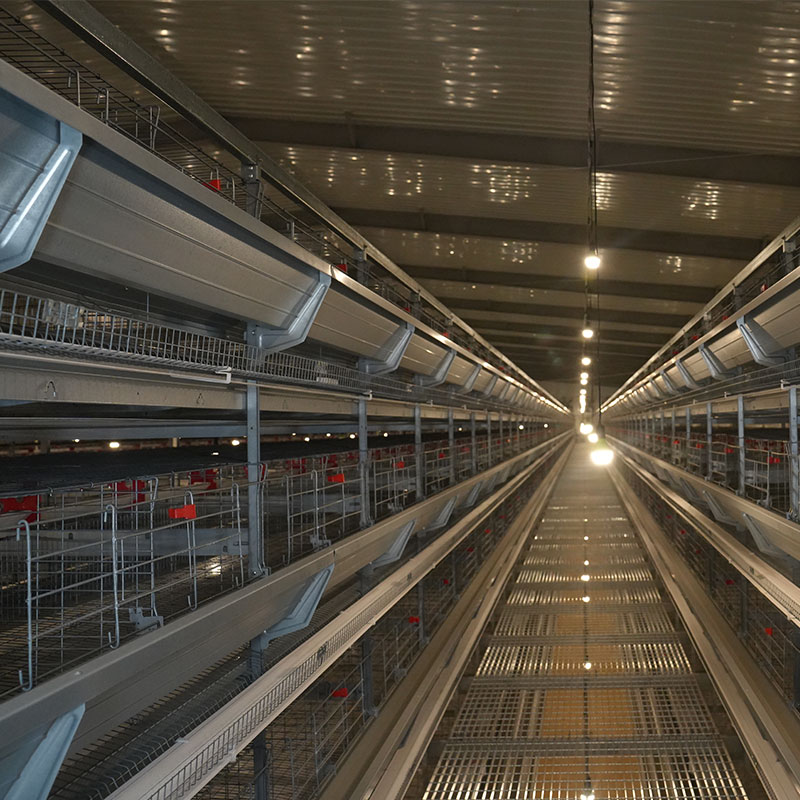
The decision to house broilers in cages represents a fundamental shift in management strategy, moving birds from the litter to a structured, multi-tiered environment. This choice is not a singular one; it is a gateway to several distinct systems, each with its own operational logic, cost implications, and management requirements. For the modern poultry farmer, selecting the right type of cage system is less about finding the "best" option and more about identifying the optimal fit for their specific operational goals, available capital, and labor resources. The landscape is primarily defined by three systems: the Conventional Battery Cage, the High-Density Cage, and the Enriched or Colony Cage.
The most recognizable system, and the one that historically dominated the industry, is the Conventional Battery Cage. The term "battery" simply refers to the long rows of identical cages connected together, much like a battery of artillery guns. Walking through a house equipped with this system, you see a series of repetitive, rectangular wire cages stacked in tiers, usually three or four high. Each cage might hold a small group of five to ten birds. The design is a study in space efficiency and simplicity. Feed troughs run along the front of each tier, and nipple drinker lines are installed within easy reach inside the cage. Below the cages, a continuous manure belt runs the length of the row.
The primary advantage here is operational control and bird uniformity. Because the birds are contained in small, consistent groups, a manager can quickly assess the health and feed consumption of each unit. Sick or underperforming birds are easier to spot and remove. The automated manure belts, which remove droppings daily, create a significant separation between the bird and its waste. This drastically reduces the microbial load in the air, a key factor in lowering the incidence of diseases like coccidiosis and necrotic enteritis, which are spread through contact with litter. For a farmer battling persistent gut health issues in a floor-raised flock, this separation can feel like a revolution, often leading to a dramatic reduction in medication costs and mortality rates.

However, this control comes with trade-offs that have drawn increasing scrutiny. The space allowance per bird is minimal, designed to meet but not exceed the minimum legal requirements. This restricts natural behaviors like wing-flapping, perching, or full dust-bathing. The uniformity of the environment, while good for monitoring, offers no complexity or enrichment. Furthermore, the skeletal structure of the birds can be a concern. The wire mesh floor provides consistent support, but the lack of varied terrain means leg bones may not develop the same density as those of birds that jump on and off perches. A farmer might notice that when loading out, the birds from a conventional system have a slightly higher incidence of leg weakness during catching compared to those from a system with perches.
Driven by the relentless economics of cost-per-bird, the High-Density Cage system emerged as an evolution of the conventional model. At first glance, it may look similar, but the critical difference is in the numbers. Where a conventional system might have three tiers, a high-density system will often have four, five, or even six. The cages themselves are not necessarily larger for the individual bird; instead, the system maximizes the vertical space of the poultry house. This is achieved through more sophisticated engineering: stronger support frames, advanced ventilation systems to manage the increased biomass, and highly precise feed and water delivery mechanisms.
The economic driver is undeniable. By stacking more tiers, a farmer can place significantly more birds in the same building footprint. This dramatically improves the capital efficiency of the housing asset. If a standard 40x400-foot house can hold 40,000 birds in a three-tier system, a five-tier high-density system could push that number to over 60,000. For an integrator or a large-scale farmer focused on volume and maximizing fixed-cost absorption, this is a powerful financial argument. The cost of feed delivery, climate control, and labor is spread across a much larger number of saleable pounds of meat.
Managing this environment, however, requires a higher level of skill and vigilance. The concentration of birds creates a much higher thermal mass. The birds themselves become the primary source of heat, and managing temperature, especially in the later stages of growth, becomes a delicate balancing act. Ventilation is no longer just about providing fresh air; it is about creating powerful, targeted air streams to pull heat and moisture away from the birds in the top tiers and ensure those at the bottom have adequate air exchange. A power failure or ventilation malfunction in a high-density system can lead to catastrophic bird losses from heat stress much faster than in a less populated house. Furthermore, the increased height adds a layer of complexity to daily bird inspection. Checking the welfare of birds in the top tier of a six-high system requires better lighting, elevated walkways, or more diligent use of monitoring technology.
Responding to market demands and animal welfare legislation, the Enriched or Colony Cage system represents a different philosophical approach. This system moves away from the small-group model toward housing birds in much larger groups within a single, complex enclosure. While still a cage, it is designed to provide resources that allow for the expression of more natural behaviors.
A walk through a barn with enriched cages reveals a different scene. The units are larger, often spanning the full width of the aisle and holding dozens of birds. The wire mesh floor is standard, but now it is punctuated with key features. A raised, rubberized perch runs the length of the cage, giving birds a place to roost off the floor at night. In one corner, a darkened, enclosed area serves as a scratch pad and nesting area, providing a private space for egg-laying hens (and in the case of broiler breeders, which are sometimes housed in similar systems). At another point, a area might contain a dust-bathing substrate, such as peat or rice hulls.
The goal is to improve bird welfare outcomes by providing behavioral outlets. Birds can perch, which improves leg bone strength and provides a resting posture that reduces foot pad lesions. The availability of a nesting area reduces stress and frustration. For a farmer marketing to a consumer base that is increasingly concerned about animal welfare, this system provides a tangible story and a product that can command a premium or meet specific certification standards.
The compromises are operational and economic. These systems are more expensive to install due to their increased complexity and the cost of the additional features. They also house fewer birds per square foot of building space than a high-density system, representing a trade-off between welfare and volumetric efficiency. Management must also adapt. While the manure belt system is still present, the dust-bathing substrate requires maintenance to keep it clean and effective. Ensuring all birds, including those lower in the social order, have access to resources like the nest box can require careful observation.
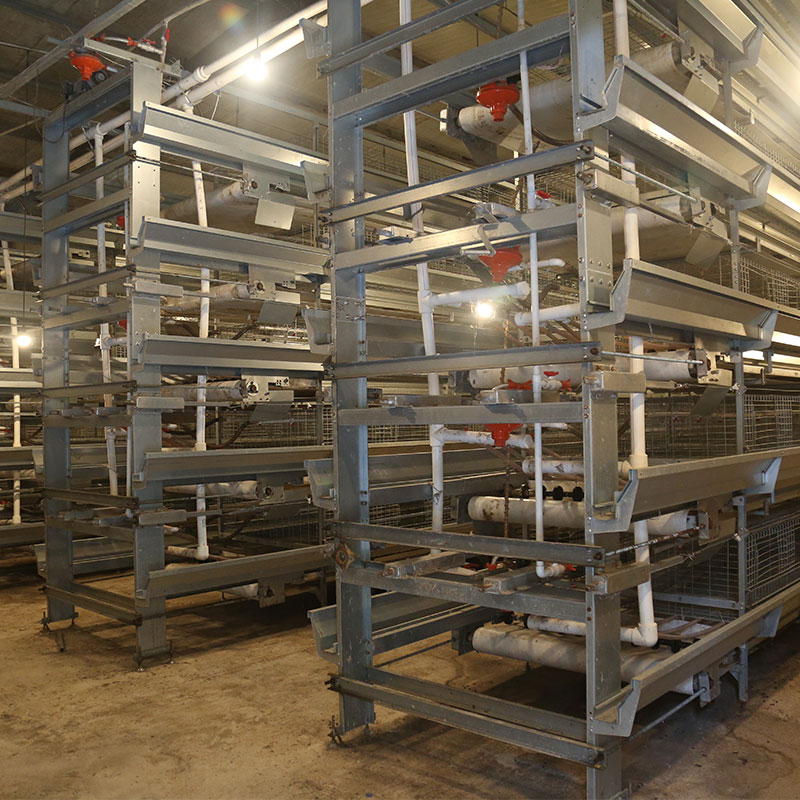
Beyond these three primary categories, several other considerations cut across all systems. The choice of flooring is critical. Most cages use a welded wire mesh floor, but the gauge of the wire, the size of the openings, and the coating (often a durable plastic) all matter. A floor with openings that are too large can lead to foot injuries or bumblefoot, while one that is too solid won't allow manure to pass through effectively, soiling the birds and the cage. A well-designed floor allows droppings to fall through easily while providing a stable, comfortable surface for the birds to stand on.
The manure removal system is another cornerstone of cage operation. Two main types prevail: the belt system and the deep pit. Manure belts, which are sheets of heavy-duty plastic or canvas that run on rollers beneath each tier, are the most common. They are programmed to run once or twice a day, transporting the manure to one end of the house where it is deposited into a cross-conveyor or a trailer. This daily removal is excellent for moisture and ammonia control. The deep pit system, where manure accumulates in a pit below the cages for the entire grow-out, is less common for broilers due to the shorter grow-out cycle and the rapid manure accumulation. It is more typical in layer operations. Belt systems require consistent maintenance—tracking alignment, tension, and roller function—to prevent costly tears or jams.
Ventilation design is intrinsically linked to the cage system chosen. In a multi-tiered cage house, air does not move in a simple horizontal pattern. It must be designed to travel vertically through the tiers. This is often achieved with tunnel ventilation, where large fans at one end of the house pull air along the length of the building, but with additional ceiling inlets or perforated air tubes that force the air down through the layers of cages. Stale air, heat, and moisture are pulled from the manure belts and out of the house. In a high-density system, computer-controlled variable speed fans and cooling pads are essential to fine-tune this environment, reacting in real-time to minute changes in temperature and humidity.
The decision matrix for a farmer is complex. It involves running the numbers on initial capital expenditure versus long-term operational savings. A high-density system demands a larger upfront investment in the cage system itself and the supporting ventilation infrastructure, but it can lower the cost per bird placed. An enriched system may have a higher upfront cost without the same volumetric payoff, relying on a premium product price to justify the investment. Labor is another factor; while all cage systems reduce labor for litter management, they may increase maintenance labor for mechanical systems like manure belts and feeders.
There is no universal answer. The farmer who is part of a large integrated operation, focused on producing a consistent, cost-effective commodity bird for a mainstream market, will likely lean towards the efficiencies of a high-density system. The farmer who owns their processing and markets directly to consumers, restaurants, or grocery chains with a welfare-focused branding, may find the investment in an enriched system to be a core part of their business model. The conventional system remains a viable, well-understood workhorse, particularly for those making a first transition from floor production who want to balance improved bird health with manageable complexity.
Ultimately, the choice of broiler cage system is a strategic business decision that dictates the daily rhythm of the farm for years to come. It determines the health challenges a farmer will face, the skills their workforce must possess, the capital structure of their business, and the market opportunities available to them. It is a decision that requires looking beyond the wire and steel to the entire ecosystem of the operation it will create.
1. Drinking system include the water pipes, water pressure adjuster, drinking nipples, Waterline front-end device, dosing system etc, choose them according to customer's needs.
2. High-quality water drinking pipes, pressure regulating valves and water drinking nipples can effectively prevent the water leakage. Drinking system adopt the closed piping system, which can minimize the water pollution.
3. 360-degree drinking nipples provide adequate drinking water for poultry at all stages.
4. The automatic drinking water system mainly adopts the steel ball drinking nipple. lt uses imported high-grad stainless steel, POM resin, and APS engineering material, which is wearing resistant, and the durability can be used for long time.



1. Automatic feeding machine can be chosen between gantry and ladder feeding machine. Gantry type feeding machine is a relatively economical and practical machine with simple operation, remote control walking character, easy to manage.
2. Mechanical transmission device running smoothly, low noise, long service life.
3. With the use of automatic control, the feeding system can adjust the amount of material.
4. Feeding with arched structure, high carrying capacity, not easily deformed.
5. Saving man power, saving feed, greatly improving the efficiency of Large-scale farming.
6. The walking speed of gantry feeding machine is 9--12 m/min.




1. Manure removing system included scraper type and conveyor belt type, Which can reduce the labor intensity and labor cost, keep the chicken shed dry and clean.
2. A type chicken cage can use scraper type or conveyor belt type.


3. The scraper type is suitable for A type cages, which can clean two or three rows. For the starters, this type is a good choice. lt can not only save some labor cost, but also save some investment in the whole project. The cleaning speed is 6-10 meters per minute.
4. Conveyor belt type is more suitable for large scale farming. The manure removing belt we use is high quality PP material (polypropylene). The walking speed is 2-4 meters per minute.



High Quality Pellets Made by Mobile Pellet Machine
1. It has professional designed angle of the blade. After the dynamic balance test one by one, the blade can operate smoothly.
2. The air volume is consistent in the whole life of the fan. Bearings has advantage of high strength, low noise, durable and so on.
1. The cooling pads uses high-quality wet curtain paper and adopts space cross-linking technology, which has the advantages of high water absorption, high water resistance, anti-toxicity and long service life.
2. The cooling efficiency is over 80%, without surfactant, natural water absorption, fast diffusion speed and long-lasting effect.
3. The product does not contain phenol and other chemical substances that are easy to cause skin allergies. It is non-toxic and harmless to the human body and chicken when installed and used. It is green, safe, energy-saving, environmentally friendly, economical, and easy to install.
4. The frame aluminum alloy has high strength, good corrosion resistance, durability and beautiful appearance.
5. Use a special filter for the cooling pad at the upper water to ensure clean water quality and support efficient water circulation components.
6. Combined with a negative pressure fan, it can effectively lower the indoor temperature.
The window is made of special selected high-quality engineering plastic, with high strength and long service life, together with superior anti-aging and anti-UV performance.
Function: Ventilation of the chicken house, usually used in the winter.
This system can adjust the wind speed and direction, thus the cold air will not reach chicken directly , which can effectively prevent the phenomenon of cold stress in chicken.
Environmental control system equipment is suitable for large-scale and intensive farming. According to customer requirements, we can provide various types of smart poultry equipment.
1. Our poultry management system is a modular system that manages all aspects of the chicken house, such as climate, temperature, humidity, ammonia, feeding, feed weighing, lighting and ventilation systems, and can monitor the situation of the chicken house in real time through a computer and mobile phone.
2. The management computer is the heart of the poultry farm, allowing you to easily monitor the entire poultry farm.

 WeChat:+8617838608255