
For poultry farmers, the housing system is the cornerstone of flock health, productivity, and operational efficiency. Among the most widely adopted solutions worldwide are layer cages. However, the term "layer cage" is not a onesizefitsall concept. Choosing the right type is a critical business decision that impacts everything from egg quality and bird welfare to labor costs and profitability.
This definitive guide is designed for poultry farmers, farm managers, and agricultural professionals seeking a deep, expertlevel understanding of modern layer cage systems. We will move beyond basic definitions to explore the engineering principles, operational advantages, and specific applications of each cage type. By aligning your choice with your farm's scale, budget, and ethical standards, you can build a more sustainable and successful operation.
The search for "types of layer cages" typically stems from a commercial/informational intent. Users are likely evaluating options for a new installation or an upgrade. Their underlying questions are:
What are my available options?
What are the pros and cons of each system?
Which system is best for my specific goals (maximizing yield, improving welfare, reducing costs)?
What are the latest trends and technologies?
Before diving into types, three pillars should guide your selection:
1. Bird Welfare & Regulations: Compliance with local animal welfare laws (e.g., EU directives, U.S. United Egg Producers guidelines) is nonnegotiable.
2. Economic Viability: Consider initial investment, durability (galvanization quality), maintenance costs, and return on investment.
3. Management & Labor: Evaluate feeding/watering systems, manure removal automation, egg collection efficiency, and required labor input.
These are the classic, often smaller cages that defined intensive egg production for decades.
Structure: Multiple rows and tiers of small wire cages arranged in an Aframe or stepped configuration.
Typical Density: Historically very high; now often modified to meet minimum space requirements.
Key Features: Simplicity; eggs roll onto a collection conveyor; manure drops through the cage floor to a pit or belt.
Pros:
Lowest initial cost per bird.
High stock density per building footprint.
Excellent feed conversion ratio due to restricted movement.
Easy bird monitoring and individual health checks.
Cleanest eggs due to immediate separation from manure.
Cons:
Severely restricted behavioral expression (no perching, scratching, nesting).
Faces increasing regulatory bans and market rejection on welfare grounds.
Higher risk of bone fragility due to lack of movement.
Best For: Regions where still legally permitted and where lowestcost production is the absolute priority.
Designed as a welfareenhanced alternative to conventional cages, meeting newer legislative standards in many regions.
Structure: Larger enclosures housing small groups (hens) or larger colonies (tens of birds). Multitier systems are common.
Mandatory Furnishings:
Nesting Area: A secluded space for laying eggs.
Perches: For roosting at night.
Scratching Area / Litter Box: For dustbathing and foraging behaviors.
Claw Shorteners: To manage nail growth.
Pros:
Allows for important natural behaviors prohibited in conventional cages.
Compliant with EU Directive 1999/74/EC and similar standards.
Maintains many efficiencies of automated systems (autofeeding, egg collection).
Generally better bone strength than in conventional cages.
Cons:
Higher capital cost than conventional cages.
Lower stocking density reduces total building capacity.
Managing litter areas within a cage can be challenging; wet litter can become a hygiene issue.
Best For: Farmers operating in markets with strict welfare legislation who still require high levels of automation and control.
A multitiered indoor system without traditional enclosed cages. Birds have freedom to move vertically and horizontally within a shed.
feeders,
drinkers,
nest boxes,
dust baths
Birds access all levels via slats
ramps
Pros:
natural behaviors
flying
perching
scratching
market
certification requirements
major retailers foodservice companies
Cons:
Best For: Producers targeting cagefree premium egg markets willing invest superior stockmanship management practices
These innovative designs aim capture benefits both aviary conventional systems offering flexibility
Structure Typically feature retractable or convertible elements example upper levels function aviary daytime birds roam freely night enclosures close secure smaller compartments easier manage reduce floor eggs improve feed control
Pros
Reduces floor eggs significant problem pure aviaries
Allows controlled feeding periods improving FCR
Enhances bird security nighttime reducing piling smothering risks
Flexible adapt flock behavior
Cons
More mechanically complex higher initial investment
Requires precise daily operation
Best For Forwardthinking farmers seeking balance welfare economics particularly largescale cagefree production
While not "cages" traditional sense housing component crucial These barns must provide perches nest boxes litter area comply organic freerange standards
Key Housing Features
Pop holes sufficient number size allow easy bird access range
Robust ventilation insulation protect birds while indoors
Enrichment devices mitigate behavioral issues during periods confinement weather
Pros
Commands highest price point meets growing consumer demand ethical production highest perceived welfare standard potential biodiversity benefits ranging area managed correctly
Cons
Highest risk exposure pathogens parasites predators vastly more variable climate conditions significantly higher land requirement labor intensive lowest stocking density greatest challenge maintaining consistent egg quality cleanliness
Best For Dedicated producers premium brand building direct consumer sales strong understanding pasture land management biosecurity 
| Feature | Conventional Cage | Enriched Colony Cage | Aviary System | FreeRange Barn |
| : | : | : | : | : |
| Space/Bird | Lowest | Moderate | High | Highest (Indoor + Outdoor) |
| Capital Cost | Lowest | ModerateHigh | High | Highest |
| Labor Efficiency| Very High | Very High | Moderate | Low |
| Egg Cleanliness| Excellent | Very Good | Good (risk floor eggs) | Variable |
| Feed Conversion Ratio| Best (Most Efficient) | Very Good | Good | Lower (Less Efficient) |
| Welfare Score| Basic | Improved | Good/Very Good | Excellent (if wellmanaged) |
| Market Alignment| CostLeader Markets | Regulated Welfare Markets| CageFree Markets Premium Retail Foodservice |
\Welfare Score Note: This is a simplified indicator based on behavioral freedom actual welfare depends critically on stockmanship management all systems
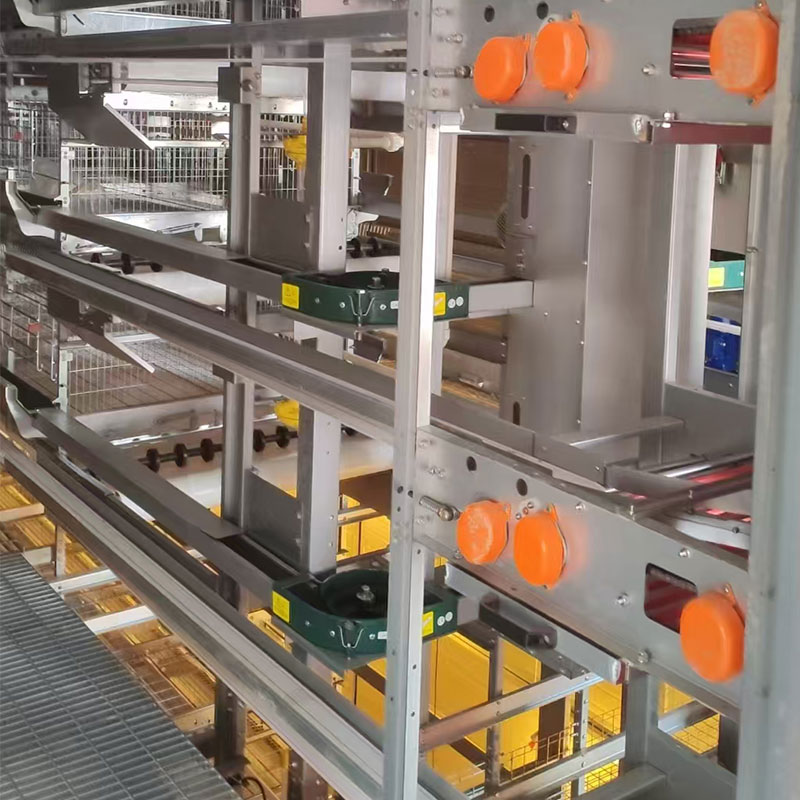
Modern layer housing regardless type increasingly integrates Industry technologies driving next efficiency frontier:
Investing these technologies not future luxury but presentday necessity remain competitive ensure consistent highquality production sustainable manner
Selecting ideal layer housing system requires careful balancing act between animal welfare economic reality market demands regulatory landscape There no single perfect answer only best fit your specific circumstances
Conduct thorough selfassessment Define your primary goal Is producing lowest cost dozen supplying major retailer requiring cagefree eggs building brand around pastureraised organic eggs Your target market dictates viable options Next honestly evaluate your management capability resources Aviary freerange systems demand significantly higher level daily husbandry skill than automated cage system
Finally view housing as longterm investment Consider not just today regulations but where consumer sentiment legislation likely head next decade Choosing flexible upgradable system like combi design provide valuable adaptability Ultimately most successful farmers those who pair appropriate technology with exceptional daily care their flocks regardless system chosen
Here we address some most common People Also Ask questions related types layer cages based real search queries providing authoritative expert answers
Q1 What difference between battery cages enriched colony cages
A The key difference lies space provisions behavioral enrichments Battery cages small wire enclosures providing only basic food water space Enriched colony cages sometimes called furnished colonies significantly larger include legally mandated features private nesting area perches scratching area allow hens express important natural behaviors They represent step forward hen welfare while maintaining controlled environment
Q2 Are battery cages illegal
A Legality varies country In European Union conventional battery banned since 2012 Many U.S states passed laws phasing them certain markets Australia timeline phaseout underway Always check your specific national regional legislation current status
Q3 What best layer cage system overall
A There no universally "best" system The optimal choice depends entirely your farms priorities If maximizing egg output minimal cost primary goal conventional enriched cages may suitable region If meeting cagefree market demands paramount aviary combi system necessary If building premium brand freerange organic required Each system has tradeoffs between welfare economics management intensity
Q4 How many hens fit enriched colony cage
A Capacity defined law manufacturers EU standard minimum 750 sq cm usable area per hen group sizes vary Typically commercial enriched colony units house between 40 80 hens one enclosure ensuring they can access all furnishings
Q5 Do chickens suffer cages
A This complex ethically charged question From physiological standpoint welldesigned managed modern enriched aviary system can support healthy hens low mortality good productivity However behavioral standpoint all cage systems restrict full range natural behaviors like full flight dustbathing extensive foraging Debate centers whether benefits disease control injury prevention outweigh behavioral restrictions Noncage systems offer freedom but introduce other risks like feather pecking parasites requiring excellent management
Q6 What alternative battery cages
A Main alternatives enriched colony cages discussed above various cagefree systems including multitier aviaries singletier barns freerange pastures Each offers progressively more space behavioral opportunities but comes with its own set managerial challenges costs
Q7 How much does layer cage cost
A Cost varies dramatically scale automation type material Small manual units start few hundred dollars Largescale automated tier enriched colony aviary systems run tens hundreds thousands dollars complete house Key consider total cost per bird housed over lifespan equipment not just initial price tag
Q8 What manure handling used modern layer houses
A Most modern intensive houses use automated manure belts run beneath each tier belts transport manure out house either directly drying storage tunnel or into removal system This crucial for maintaining air quality hygiene reduces labor compared older deeppit scraper systems Dried manure valuable byproduct fertilizer compost
1. Drinking system include the water pipes, water pressure adjuster, drinking nipples, Waterline front-end device, dosing system etc, choose them according to customer's needs.
2. High-quality water drinking pipes, pressure regulating valves and water drinking nipples can effectively prevent the water leakage. Drinking system adopt the closed piping system, which can minimize the water pollution.
3. 360-degree drinking nipples provide adequate drinking water for poultry at all stages.
4. The automatic drinking water system mainly adopts the steel ball drinking nipple. lt uses imported high-grad stainless steel, POM resin, and APS engineering material, which is wearing resistant, and the durability can be used for long time.



1. Automatic feeding machine can be chosen between gantry and ladder feeding machine. Gantry type feeding machine is a relatively economical and practical machine with simple operation, remote control walking character, easy to manage.
2. Mechanical transmission device running smoothly, low noise, long service life.
3. With the use of automatic control, the feeding system can adjust the amount of material.
4. Feeding with arched structure, high carrying capacity, not easily deformed.
5. Saving man power, saving feed, greatly improving the efficiency of Large-scale farming.
6. The walking speed of gantry feeding machine is 9--12 m/min.




1. Manure removing system included scraper type and conveyor belt type, Which can reduce the labor intensity and labor cost, keep the chicken shed dry and clean.
2. A type chicken cage can use scraper type or conveyor belt type.


3. The scraper type is suitable for A type cages, which can clean two or three rows. For the starters, this type is a good choice. lt can not only save some labor cost, but also save some investment in the whole project. The cleaning speed is 6-10 meters per minute.
4. Conveyor belt type is more suitable for large scale farming. The manure removing belt we use is high quality PP material (polypropylene). The walking speed is 2-4 meters per minute.



High Quality Pellets Made by Mobile Pellet Machine
1. It has professional designed angle of the blade. After the dynamic balance test one by one, the blade can operate smoothly.
2. The air volume is consistent in the whole life of the fan. Bearings has advantage of high strength, low noise, durable and so on.
1. The cooling pads uses high-quality wet curtain paper and adopts space cross-linking technology, which has the advantages of high water absorption, high water resistance, anti-toxicity and long service life.
2. The cooling efficiency is over 80%, without surfactant, natural water absorption, fast diffusion speed and long-lasting effect.
3. The product does not contain phenol and other chemical substances that are easy to cause skin allergies. It is non-toxic and harmless to the human body and chicken when installed and used. It is green, safe, energy-saving, environmentally friendly, economical, and easy to install.
4. The frame aluminum alloy has high strength, good corrosion resistance, durability and beautiful appearance.
5. Use a special filter for the cooling pad at the upper water to ensure clean water quality and support efficient water circulation components.
6. Combined with a negative pressure fan, it can effectively lower the indoor temperature.
The window is made of special selected high-quality engineering plastic, with high strength and long service life, together with superior anti-aging and anti-UV performance.
Function: Ventilation of the chicken house, usually used in the winter.
This system can adjust the wind speed and direction, thus the cold air will not reach chicken directly , which can effectively prevent the phenomenon of cold stress in chicken.
Environmental control system equipment is suitable for large-scale and intensive farming. According to customer requirements, we can provide various types of smart poultry equipment.
1. Our poultry management system is a modular system that manages all aspects of the chicken house, such as climate, temperature, humidity, ammonia, feeding, feed weighing, lighting and ventilation systems, and can monitor the situation of the chicken house in real time through a computer and mobile phone.
2. The management computer is the heart of the poultry farm, allowing you to easily monitor the entire poultry farm.

 WeChat:+8617838608255