The choice of housing system represents one of the most critical capital investments and management decisions a poultry farmer will make. The infrastructure you select dictates daily workflows, bird welfare outcomes, feed conversion ratios, and ultimately, the long-term economic viability of your operation. While the fundamental purpose of any layer cage is to house hens for efficient egg collection, the variations in design, configuration, and technology create vastly different farming experiences.
Gone are the days of a single, standard cage option. Modern poultry farming demands systems that align with specific operational scales, labor availability, and market requirements. Understanding the nuances between these systems is not about memorizing technical specifications, but about visualizing how each system would function on your farm, with your team, and for your bottom line.
The Conventional Battery Cage System
Often considered the traditional backbone of large-scale egg production, the conventional battery cage system is characterized by its repetitive, linear design. Picture a long, narrow shed housing row upon row of identical wire cages, typically stacked in tiers ranging from three to eight levels high. Each individual cage houses a small group of hens—often between five and ten birds—providing just enough space for them to stand and access feed and water.
The operational logic here is one of density and automation. A farmer using this system prioritizes maximizing bird numbers within a given footprint. The eggs laid roll gently away from the hens down a sloped wire floor, landing on a continuous collection belt that runs the length of the row. This eliminates the need for manual egg gathering from the cages themselves. Similarly, manure drops through the wire mesh floor onto belts or into deep pits beneath the cages, where it can be allowed to dry or be removed mechanically at intervals, significantly reducing ammonia levels and labor for daily cleaning.
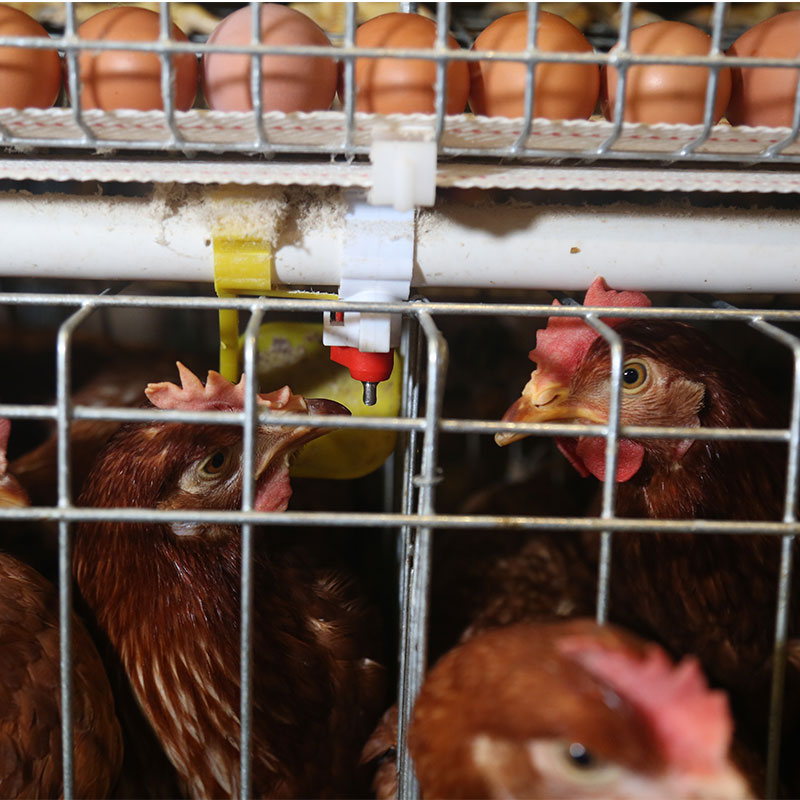
For a farm with 100,000 birds, this automation is not a luxury but a necessity. The egg collection belt can be timed to deliver thousands of eggs to a central packing area with minimal human handling. The feed lines are automated, and water is supplied via nipple drinkers to each cage. The major management focus shifts from individual bird care to system maintenance: ensuring the belts are running, the feeders are dispensing correctly, and the barn’s ventilation is meticulously controlling temperature and humidity.
However, this system faces increasing scrutiny and regulatory pressure. The limited space provision does not allow for natural behaviors like wing-flapping, dustbathing, or perching. In many regions, legislation such as the European Union’s ban on conventional cages has rendered this system obsolete for new installations. Its continued use is largely in regions without such animal welfare legislation and where the primary driver is the lowest possible cost per egg.
The Enriched or Furnished Colony System
The enriched cage system emerged as a direct response to welfare concerns surrounding conventional cages. Imagine a system that retains the automated efficiencies of the battery cage but provides a significantly enhanced environment within each unit. These are not just slightly bigger cages; they are redesigned living spaces.
A typical enriched colony unit might house 60 to 80 hens, giving them substantially more floor space per bird. But the critical difference is in the furnishings. Inside each colony, you will find:
Perches: Raised bars running the length of the cage allow all hens to roost off the ground at night, a fundamental natural behavior.
A Nesting Area: A darkened, enclosed corner with a soft, artificial turf mat provides a private place for hens to lay their eggs. This is a crucial welfare improvement, as seeking seclusion for laying is a strong instinct. It also improves egg quality, resulting in fewer floor eggs and cleaner shells.
A Scratching Area: A section of the floor is often covered with a durable plastic mat, known as an astroturf scratcher. Some systems incorporate a dispensing mechanism that drops a small amount of litter, like oats or husks, onto this area. This encourages foraging and scratching behavior, reducing feather pecking and boredom.
Claw-shortening Devices: Rough strips on the feed trough help naturally wear down the hens’ claws, preventing them from becoming overgrown and causing injuries.
For a farmer, the transition to enriched colonies means retaining the core benefits of automation—manure belts, egg belts, and centralized feeding—while proactively addressing animal welfare. The eggs roll from the private nest into the same automated collection system, ensuring they remain clean. The manure handling is identical. The key operational differences involve managing the new features. The scratching pads may require occasional cleaning, and the feed-dispensing mechanisms for litter need to be maintained.
This system represents a middle ground. It meets and often exceeds new animal welfare legislation without abandoning the efficiency and bird health management (e.g., controlled environment, separation from manure) that cages provide. It is a future-proof investment for farmers who need to comply with evolving standards while operating at a commercial scale.
The Aviary System (Cage-Free)
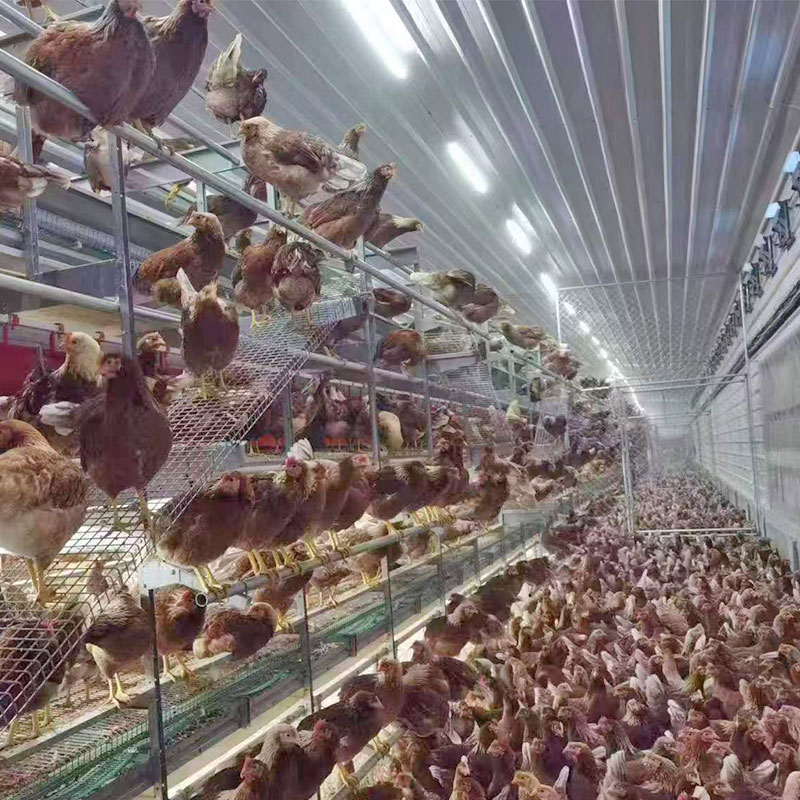
The aviary system represents a fundamental philosophical and operational shift from cage-based production. In an aviary, the birds are not confined to cages at all but are free to move throughout the entire barn. The term "aviary" can be misleading; it is not simply an empty shed. It is a highly structured environment designed to encourage vertical movement and specific behaviors.
Walk into an aviary barn, and you will see multi-tiered platforms, often made of wire mesh, that resemble large, open-sided shelves stacked from the floor to the ceiling. These tiers are equipped with feeders, drinkers, perches, and nesting boxes. Hens jump and fly between these levels, spending their day foraging, perching, and socializing. The floor is usually covered with a litter material like wood shavings or rice hulls, which allows for dustbathing—a vital natural behavior for maintaining feather health.
The nesting boxes are arranged in long banks, usually along the walls. They are designed to be dark and inviting to encourage hens to lay inside them. The eggs are typically collected automatically from these nests via a conveyor belt, a critical feature that prevents eggs from being laid in the litter and becoming soiled or broken.
For the farmer, management changes dramatically. While feed and water can remain automated, daily tasks involve a much closer relationship with the flock. Farmers must become experts in litter management, regularly turning the floor litter to keep it dry and friable and prevent the buildup of ammonia and pathogens. They must walk the flock daily to observe behavior, health, and welfare indicators. Because the birds have freedom of movement, identifying and treating a sick bird requires more skill; it is harder to spot an individual hen that isn’t thriving within a large, mobile group.
Aviaries require more square footage per bird than cage systems, meaning a larger building is needed to house the same number of hens. They also demand a higher level of stockmanship. However, they fulfill the requirements for marketing eggs as "cage-free" and are often a prerequisite for various animal welfare certifications, allowing farmers to access premium markets.
The Free-Range and Organic System
Free-range takes the aviary concept a step further by providing hens with access to the outdoors. The indoor housing is typically an aviary system, managing all the complexities that come with it. The defining feature is the "pop hole"—a small, hen-sized door located along the walls of the barn that allows birds to come and go as they please during daylight hours.
The outdoor area, or range, must be primarily covered with growing vegetation. Its management is a new discipline for the farmer. The range must be rotated or managed carefully to prevent it from becoming a barren, muddy area. Providing shelter, such as trees or man-made structures, encourages hens to venture further from the barn, improving range utilization. Predator control becomes a paramount concern, requiring secure fencing and often the use of guardian animals.
Organic egg production adds another layer of requirements on top of free-range standards. The feed provided must be 100% certified organic, grown without synthetic pesticides or fertilizers. The use of antibiotics is strictly prohibited; if a bird becomes sick and requires treatment, it must be removed from the organic flock. The outdoor access requirements are also typically more stringent, with specific mandates on the amount of space per bird and the quality of the range.
The operational reality for a free-range or organic farmer is one of intense management across a broader canvas. It’s not just about managing a barn; it’s about managing an entire ecosystem. The payoff is the ability to command the highest market prices for eggs, appealing to consumers who prioritize animal welfare and environmental sustainability. This system is often chosen by smaller, diversified farms or larger operations specifically built to service a niche market.
Technical Considerations: Beyond the Basic Design

Choosing between these systems involves weighing several practical technical factors that will affect your daily routine for years to come.
Manure Handling: This is a primary differentiator. Manure belts are common in cage systems. A belt runs beneath each tier of cages, catching droppings. These belts are activated periodically (e.g., once every few days) to transport the manure to one end of the barn for collection. This keeps the hens separated from their waste, drastically improving air quality and reducing disease transmission. In contrast, deep-pit systems involve a large pit under the cages that collects manure for up to a year or more, where it dehydrates before being removed. Aviary and free-range systems rely on litter-based management on the floor, which requires regular maintenance to prevent moisture buildup.
Ventilation: High-density cage systems, especially multi-tiered ones, create a complex air-flow environment. A hot, panting hen on the top tier and a cooler hen on the bottom tier exist in the same airspace. Sophisticated tunnel ventilation systems are essential, pulling air along the length of the barn to create a wind-chill effect and ensure uniform temperature and humidity. Poor ventilation quickly leads to heat stress, respiratory issues, and ammonia burns. Aviaries, with their more open structure, can have different but equally important ventilation needs to keep the litter dry.
Feeding Systems: The choice between a chain feeder and a pan feeder system has practical implications. A chain feeder is a continuous loop that drags feed along a trough. It allows all birds to eat simultaneously and is simple and robust. A pan feeder consists of individual circular pans spaced along a pipe that delivers feed. They can reduce feed wastage as hens flick less feed out of a contained pan, but they have more moving parts that can require maintenance.
The decision is not merely a technical selection but a strategic one that defines the character of your farm, your market position, and your daily relationship with your flock. There is no universal "best" system, only the best system for your specific goals, resources, and vision for your farming operation.
1. Drinking system include the water pipes, water pressure adjuster, drinking nipples, Waterline front-end device, dosing system etc, choose them according to customer's needs.
2. High-quality water drinking pipes, pressure regulating valves and water drinking nipples can effectively prevent the water leakage. Drinking system adopt the closed piping system, which can minimize the water pollution.
3. 360-degree drinking nipples provide adequate drinking water for poultry at all stages.
4. The automatic drinking water system mainly adopts the steel ball drinking nipple. lt uses imported high-grad stainless steel, POM resin, and APS engineering material, which is wearing resistant, and the durability can be used for long time.



1. Automatic feeding machine can be chosen between gantry and ladder feeding machine. Gantry type feeding machine is a relatively economical and practical machine with simple operation, remote control walking character, easy to manage.
2. Mechanical transmission device running smoothly, low noise, long service life.
3. With the use of automatic control, the feeding system can adjust the amount of material.
4. Feeding with arched structure, high carrying capacity, not easily deformed.
5. Saving man power, saving feed, greatly improving the efficiency of Large-scale farming.
6. The walking speed of gantry feeding machine is 9--12 m/min.




1. Manure removing system included scraper type and conveyor belt type, Which can reduce the labor intensity and labor cost, keep the chicken shed dry and clean.
2. A type chicken cage can use scraper type or conveyor belt type.


3. The scraper type is suitable for A type cages, which can clean two or three rows. For the starters, this type is a good choice. lt can not only save some labor cost, but also save some investment in the whole project. The cleaning speed is 6-10 meters per minute.
4. Conveyor belt type is more suitable for large scale farming. The manure removing belt we use is high quality PP material (polypropylene). The walking speed is 2-4 meters per minute.



High Quality Pellets Made by Mobile Pellet Machine
1. It has professional designed angle of the blade. After the dynamic balance test one by one, the blade can operate smoothly.
2. The air volume is consistent in the whole life of the fan. Bearings has advantage of high strength, low noise, durable and so on.
1. The cooling pads uses high-quality wet curtain paper and adopts space cross-linking technology, which has the advantages of high water absorption, high water resistance, anti-toxicity and long service life.
2. The cooling efficiency is over 80%, without surfactant, natural water absorption, fast diffusion speed and long-lasting effect.
3. The product does not contain phenol and other chemical substances that are easy to cause skin allergies. It is non-toxic and harmless to the human body and chicken when installed and used. It is green, safe, energy-saving, environmentally friendly, economical, and easy to install.
4. The frame aluminum alloy has high strength, good corrosion resistance, durability and beautiful appearance.
5. Use a special filter for the cooling pad at the upper water to ensure clean water quality and support efficient water circulation components.
6. Combined with a negative pressure fan, it can effectively lower the indoor temperature.
The window is made of special selected high-quality engineering plastic, with high strength and long service life, together with superior anti-aging and anti-UV performance.
Function: Ventilation of the chicken house, usually used in the winter.
This system can adjust the wind speed and direction, thus the cold air will not reach chicken directly , which can effectively prevent the phenomenon of cold stress in chicken.
Environmental control system equipment is suitable for large-scale and intensive farming. According to customer requirements, we can provide various types of smart poultry equipment.
1. Our poultry management system is a modular system that manages all aspects of the chicken house, such as climate, temperature, humidity, ammonia, feeding, feed weighing, lighting and ventilation systems, and can monitor the situation of the chicken house in real time through a computer and mobile phone.
2. The management computer is the heart of the poultry farm, allowing you to easily monitor the entire poultry farm.

 WeChat:+8617838608255