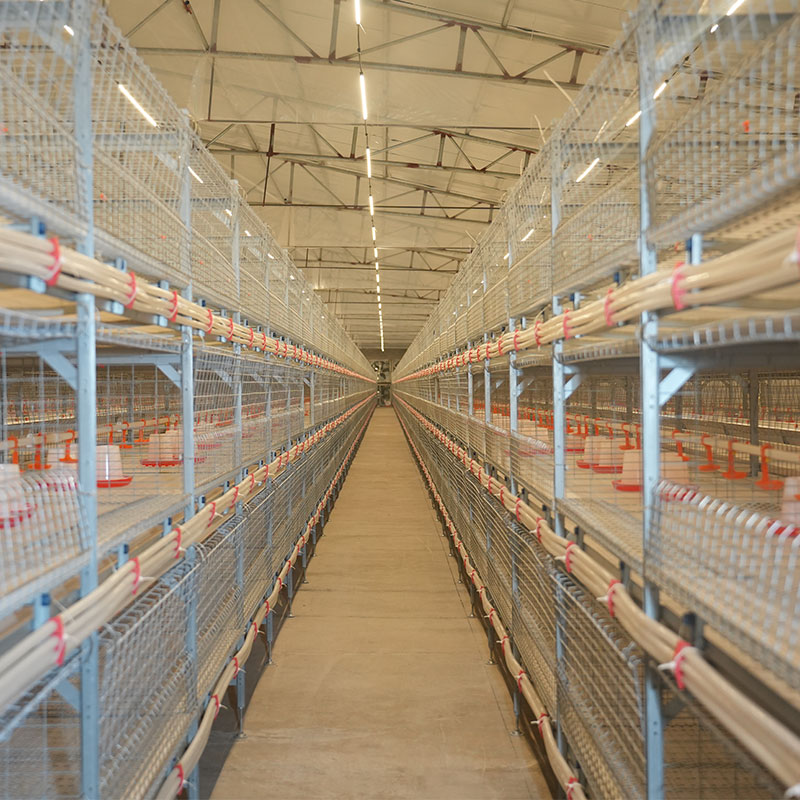
For poultry farmers managing flocks of five thousand birds or more, the moment of transport represents one of the most critical and high-stress points in the entire production cycle. Birds that have been carefully raised to target weights face a gauntlet of handling, confinement, and environmental shifts that can directly impact their welfare, and consequently, their value upon arrival at the processing plant. The design of the transport system is not merely a matter of logistics; it is the final determinant of product quality. The integrated system of a Wholesale Chicken Transport Cage, often used with a component known as a Turnover Box, represents a significant evolution in addressing these challenges.
This system moves beyond the traditional, often cumbersome, process of manually catching birds and loading them into multi-level coops. Instead, it is engineered as a cohesive unit where the coop itself and the loading mechanism are designed to work in concert. The core components include the main transport cage, a robust, stackable structure, and the turnover box, a detachable container that serves as the primary interface between the farmer and the transport system.
The Problem with Traditional Loading Methods
To understand the value of this system, one must first consider the conventional process. In a standard setup, catchers manually gather birds, carrying them by the legs in handfuls, and then place them through the small doors of a stacked transport cage. This method is labor-intensive and slow. Each bird is handled multiple times, leading to increased stress. The physical strain on workers is immense, leading to fatigue and a higher potential for rough handling. Birds often flap their wings in panic, which can cause bruising on their wings and breasts—damage that is only discovered after processing, resulting in down-graded carcasses and direct financial loss.
Furthermore, the small access doors on standard coops force workers to reach and stretch, making it difficult to place birds gently at the far end of the compartment. This often leads to birds being dropped or thrown, increasing the risk of injury. The process is also inefficient from a biosecurity standpoint, as workers move between houses and coops, potentially tracking pathogens. Dust and feathers stirred up during this chaotic process are inhaled by both birds and workers, compromising respiratory health.
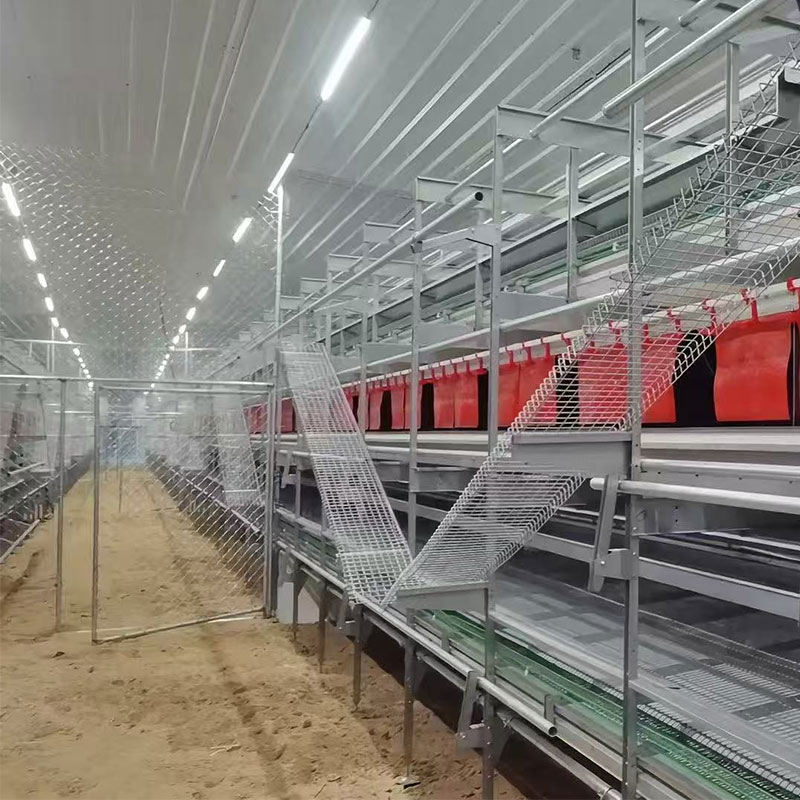
The Integrated System: A Closer Look at the Components
The wholesale transport cage with a turnover box re-engineers this process from the ground up.
The Main Transport Cage: This is not a novel concept, but its design is optimized for integration. These are typically made from galvanized steel for corrosion resistance and are built to withstand stacking, both empty and when fully loaded. The key design feature relevant to this system is the large opening on one end, often a full side of the compartment, which is securely latched during transit. This large opening is what the turnover box mates with.
The Turnover Box: The Heart of the Innovation
The turnover box is a game-changer. Imagine a large, open-topped tub or container, roughly the same dimensions as the internal compartment of the transport cage. It has a solid floor and sides, and one of its large side panels is hinged, acting as a door. This box is mounted on a simple, mobile trolley or frame.
The operational sequence is where the benefits become clear:
1. Positioning and Loading: The empty turnover box is wheeled directly into the poultry house. Because it is low to the ground and has a completely open top, catchers can place birds into it with minimal lifting and far greater care. Instead of carrying birds long distances to a stationary coop, workers can move the box through the house, reducing the time each bird is handled. The open design allows for a more controlled placement, significantly reducing wing flapping and the associated bruising.
2. Transport to the Coop: Once the turnover box is filled with a predetermined number of birds—a number that matches the capacity of a single compartment in the main transport cage—it is wheeled out to the loading area where the transport coops are staged on a truck or a loader.
3. The "Turnover" Operation: This is the signature maneuver. The filled turnover box is lifted—manually by two workers or with the aid of a small mechanical hoist—and positioned against the large, opened door of the main transport cage. The box is then rotated, or "turned over." The hinged side of the box is unlatched, and as it rotates, this side becomes a smooth ramp. The birds slide gently and as a group from the box directly into the cage compartment. There is no individual grabbing, no throwing, and no reaching. The transition is swift and collective.
4. Reset and Repeat: The now-empty turnover box is closed, lowered, and wheeled back into the house for the next load, while the main cage door is secured. This cycle repeats until the truck is fully loaded.
Practical Benefits for Bird Welfare and Product Quality
The most immediate impact of this system is on the physical condition of the birds. By virtually eliminating the manual handling and tossing of individual birds, the incidence of bruising is drastically reduced. A bird that is not flapping violently in a catcher’s grip does not collide with hard surfaces or other birds with the same force. This translates directly to a higher percentage of Grade A carcasses at the plant. For a farmer sending ten thousand birds to market, a reduction in bruising of just one percent can represent a substantial financial saving, far outweighing the initial investment in the specialized equipment.
Stress is not just about physical injury. The chaotic noise and activity of traditional catching is a major psychological stressor. Elevated stress levels in birds lead to the release of hormones like corticosterone, which can negatively affect meat quality, sometimes resulting in pale, soft, and exudative (PSE) or dark, firm, and dry (DFD) meat. The quieter, more methodical process of loading via turnover boxes creates a calmer environment. Birds moved as a group in a confined, dark space (the box) tend to remain calmer than birds being individually snatched from their litter. This calmer transit experience helps maintain better meat quality and can even reduce mortality rates in transit, another direct economic factor.
Operational and Labor Efficiency Gains
From an operational perspective, the system offers compelling advantages. The speed of loading is significantly increased. While the initial purchase of multiple turnover boxes represents a capital cost, the time saved per truckload is considerable. What might have taken a crew of catchers several hours can be reduced by a third or more. This allows trucks to get on the road faster, reducing waiting times for drivers and ensuring birds spend less time in transit coops overall.
The system also addresses the chronic issue of labor fatigue and injury. Poultry catching is physically demanding work. The constant bending, lifting, and carrying of heavy, struggling birds leads to high rates of musculoskeletal injury and high employee turnover. The turnover box system changes the nature of the work. The lifting is consolidated to a single, coordinated action of moving the full box, which can be assisted with equipment. The repetitive, high-impact stress on individual workers' bodies is reduced. This can lead to a more stable, experienced, and efficient workforce, as the job becomes more manageable and less injurious.
Biosecurity and Disease Management
Biosecurity is a constant concern in modern poultry production. Traditional loading is a dirty process. Workers trek through litter, then onto trucks and coops, potentially carrying pathogens from one house to another or from a previous farm onto a new site. The turnover box system can streamline biosecurity protocols.

The main transport cages remain on the truck. Only the turnover boxes enter the poultry house. This means the number of items that need to be thoroughly cleaned and disinfected between flocks is significantly reduced. A farm can have a set of turnover boxes that are cleaned after each use, while the complex, multi-level transport cages are cleaned at a central facility. It is far easier and more effective to power-wash and disinfect a series of open-topped boxes than it is to clean the intricate interiors of stacked coops with their numerous small partitions and perches.
Considerations for Implementation
Adopting this system is not without its considerations. The initial investment is higher than that for traditional coops alone. A farmer must purchase not only the modified transport cages with their large access doors but also a sufficient number of turnover boxes and potentially their trolleys to maintain an efficient loading rhythm.
The system also requires a slight shift in process and training. Workers need to be trained in the safe and proper technique for operating the turnover boxes, particularly the lifting and rotating maneuver to ensure it is done smoothly and safely for both the birds and themselves. The process relies on a good workflow between the crew inside the house filling the boxes and the crew at the truck managing the loading operation.
Furthermore, the system works best with a coordinated transport logistics plan. The efficiency gains are fully realized when the truck and coops are positioned for optimal access, and the flow of filled boxes from the house is consistent.
For large-scale poultry operations, the decision to invest in a wholesale chicken transport system with turnover boxes is a strategic calculation. The capital expenditure must be weighed against the tangible returns: reduced bruising and downgrades at the processing plant, lower bird mortality, improved worker satisfaction and retention, faster loading times, and enhanced biosecurity. The system represents a move toward viewing the final stage of production not as a separate, brute-force operation, but as an integrated, carefully managed component of the supply chain where animal welfare and economic efficiency are directly aligned. It is an investment in preserving the quality and value of the product that has been weeks in the making.
1. Drinking system include the water pipes, water pressure adjuster, drinking nipples, Waterline front-end device, dosing system etc, choose them according to customer's needs.
2. High-quality water drinking pipes, pressure regulating valves and water drinking nipples can effectively prevent the water leakage. Drinking system adopt the closed piping system, which can minimize the water pollution.
3. 360-degree drinking nipples provide adequate drinking water for poultry at all stages.
4. The automatic drinking water system mainly adopts the steel ball drinking nipple. lt uses imported high-grad stainless steel, POM resin, and APS engineering material, which is wearing resistant, and the durability can be used for long time.



1. Automatic feeding machine can be chosen between gantry and ladder feeding machine. Gantry type feeding machine is a relatively economical and practical machine with simple operation, remote control walking character, easy to manage.
2. Mechanical transmission device running smoothly, low noise, long service life.
3. With the use of automatic control, the feeding system can adjust the amount of material.
4. Feeding with arched structure, high carrying capacity, not easily deformed.
5. Saving man power, saving feed, greatly improving the efficiency of Large-scale farming.
6. The walking speed of gantry feeding machine is 9--12 m/min.




1. Manure removing system included scraper type and conveyor belt type, Which can reduce the labor intensity and labor cost, keep the chicken shed dry and clean.
2. A type chicken cage can use scraper type or conveyor belt type.


3. The scraper type is suitable for A type cages, which can clean two or three rows. For the starters, this type is a good choice. lt can not only save some labor cost, but also save some investment in the whole project. The cleaning speed is 6-10 meters per minute.
4. Conveyor belt type is more suitable for large scale farming. The manure removing belt we use is high quality PP material (polypropylene). The walking speed is 2-4 meters per minute.



High Quality Pellets Made by Mobile Pellet Machine
1. It has professional designed angle of the blade. After the dynamic balance test one by one, the blade can operate smoothly.
2. The air volume is consistent in the whole life of the fan. Bearings has advantage of high strength, low noise, durable and so on.
1. The cooling pads uses high-quality wet curtain paper and adopts space cross-linking technology, which has the advantages of high water absorption, high water resistance, anti-toxicity and long service life.
2. The cooling efficiency is over 80%, without surfactant, natural water absorption, fast diffusion speed and long-lasting effect.
3. The product does not contain phenol and other chemical substances that are easy to cause skin allergies. It is non-toxic and harmless to the human body and chicken when installed and used. It is green, safe, energy-saving, environmentally friendly, economical, and easy to install.
4. The frame aluminum alloy has high strength, good corrosion resistance, durability and beautiful appearance.
5. Use a special filter for the cooling pad at the upper water to ensure clean water quality and support efficient water circulation components.
6. Combined with a negative pressure fan, it can effectively lower the indoor temperature.
The window is made of special selected high-quality engineering plastic, with high strength and long service life, together with superior anti-aging and anti-UV performance.
Function: Ventilation of the chicken house, usually used in the winter.
This system can adjust the wind speed and direction, thus the cold air will not reach chicken directly , which can effectively prevent the phenomenon of cold stress in chicken.
Environmental control system equipment is suitable for large-scale and intensive farming. According to customer requirements, we can provide various types of smart poultry equipment.
1. Our poultry management system is a modular system that manages all aspects of the chicken house, such as climate, temperature, humidity, ammonia, feeding, feed weighing, lighting and ventilation systems, and can monitor the situation of the chicken house in real time through a computer and mobile phone.
2. The management computer is the heart of the poultry farm, allowing you to easily monitor the entire poultry farm.

 WeChat:+8617838608255